


Staffordshire Spaniel Figurines
Staffordshire spaniel figurines bring traditional English pottery into the home as pairs or solo mantel pieces.

Staffordshire Spaniel Figurines
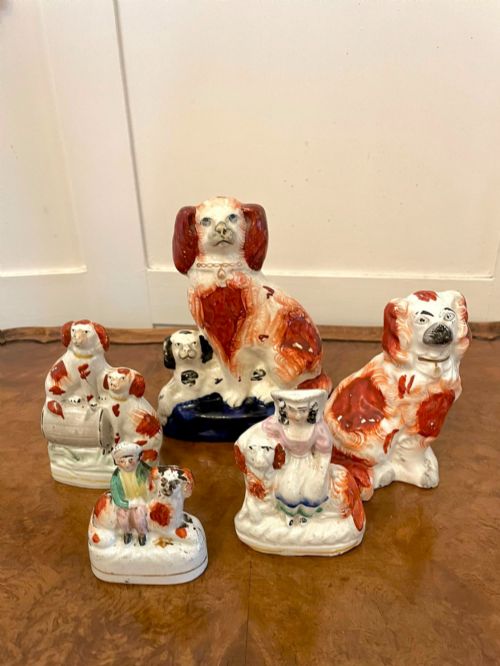
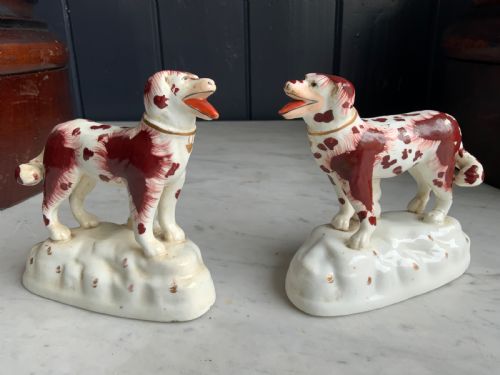
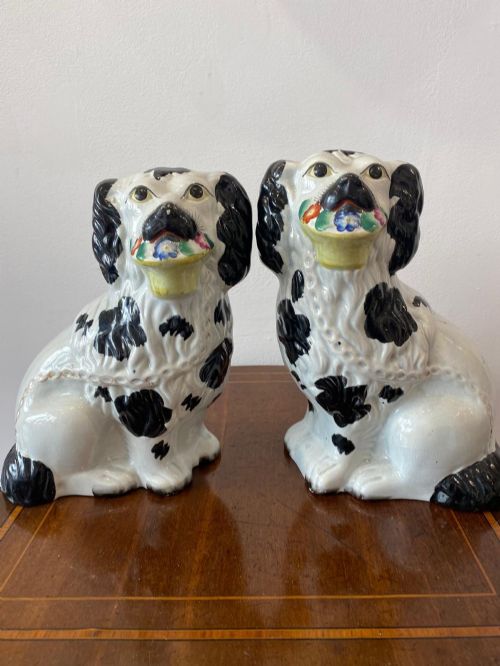
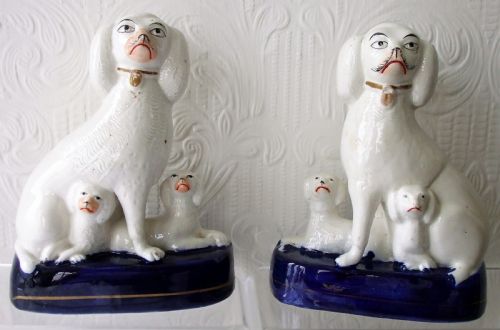
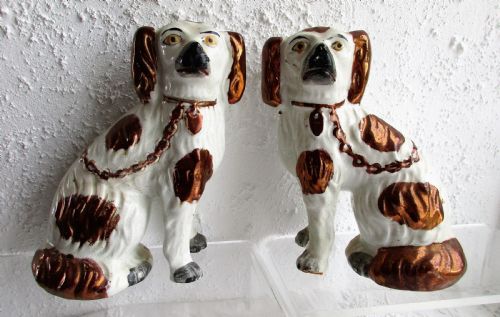
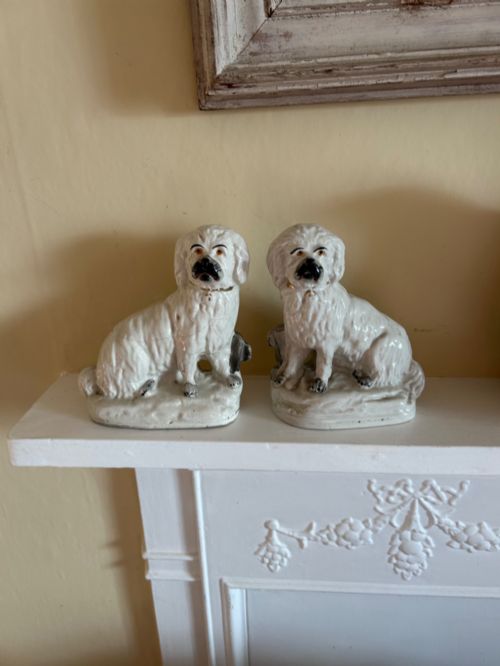
Staffordshire spaniel figurines are ceramic and earthenware pottery pieces that take the form of seated dogs, most often found as matched pairs intended for domestic mantel display. Buyers searching for staffordshire spaniel figurines encounter seated spaniels, King Charles spaniels, poodles with pups, Maltese terriers, and spaniels resting on blue cushions.
The objects span the nineteenth century, with Victorian pieces forming the core of the selections alongside Regency examples and later productions from nineteen hundred. Makers and potteries such as Beswick and Royal Doulton also appear within the ceramic groupings.
Forms extend beyond simple figures to include clock groups and musician figures accompanied by dogs. Most entries take the form of decorative figurines and pottery figures modelled in various sizes.
Materials and technique
Potters shaped these figures using earthenware, ceramic, and stoneware materials, forming the bodies through traditional moulding techniques. Glaze finishes, including lead glaze, coat the clay bodies to provide a smooth, protective surface.
Quality and finish
The application of enamel paint and gilt details varies from neat, precise brushwork to rushed decoration. Rich copper lustre and evenly applied lead glaze separate standard production pieces from finer studio work.
Royal Doulton·Beswick
The Staffordshire Spaniel Figurines Glossary
- Earthenware
- Porous pottery fired at lower temperatures than stoneware, requiring a glaze to achieve impermeability. This material forms the primary body of nineteenth century figures.
- Lead glaze
- A glossy coating containing lead oxide that produces a smooth, shiny finish upon firing. It gives these figurines their characteristic glossy sheen.
- Copper lustre
- A metallic glaze technique producing a reflective, coppery sheen across the ceramic surface. Pieces with this finish catch the light distinctively on the mantel.
- Gilt
- A thin layer of gold or gold leaf applied to ceramic details like collars and lockets. It adds metallic contrast to the painted enamel colours.
- Comforter spaniels
- A term for pairs of pottery dogs placed on either side of a fireplace. They represent the popular household pets kept during the Victorian era.
Staffordshire Spaniel Figurines: Frequently Asked Questions
What are Staffordshire spaniel figurines?
Staffordshire spaniel figurines are pottery and ceramic dog figures produced in England during the nineteenth century. Potters shaped them as decorative ornaments for home interiors.
Most examples appear as symmetrical pairs designed to sit at either end of a fireplace mantelpiece. They represent popular breeds like King Charles spaniels and poodles.
Where were they displayed?
These ceramic figures sat on mantelpieces in Victorian living rooms and parlours. People arranged them facing inward toward the centre of the fireplace.
They also stood on sideboards, chests of drawers, and tabletops as domestic ornaments. Their symmetrical design made them suitable for balancing shelf arrangements.
Are they always found in pairs?
Many listings offer matched pairs because makers produced them to sit on opposite sides of a hearth. The symmetry served a decorative purpose in period room layouts.
Single figures and larger collections also exist within the pottery groupings. Some sets include additional elements like clock groups or musicians.