




Staffordshire Flatback Pottery Ornament
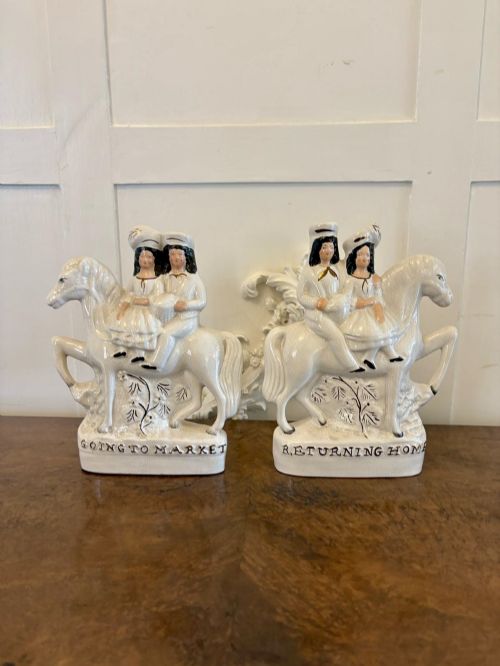
A Staffordshire flatback pottery ornament brings the robust theatricality of the Victorian era straight onto a mantelpiece.
Staffordshire Flatback Pottery Ornament
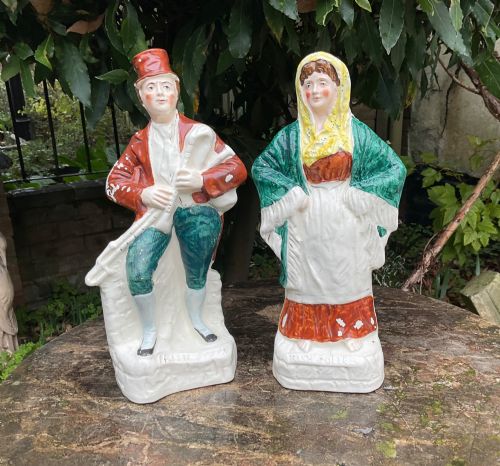
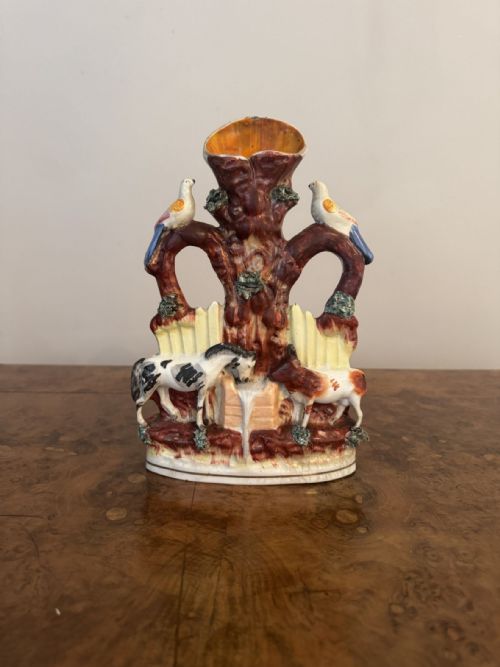
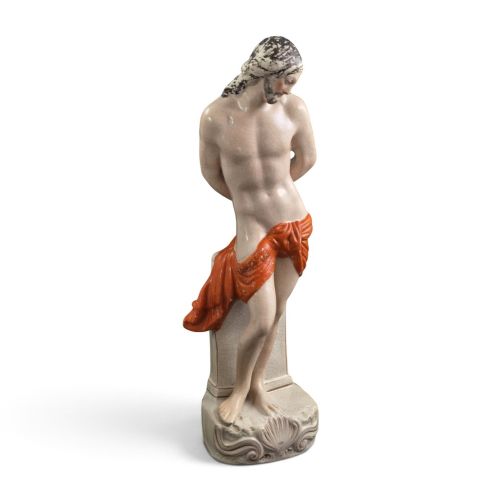
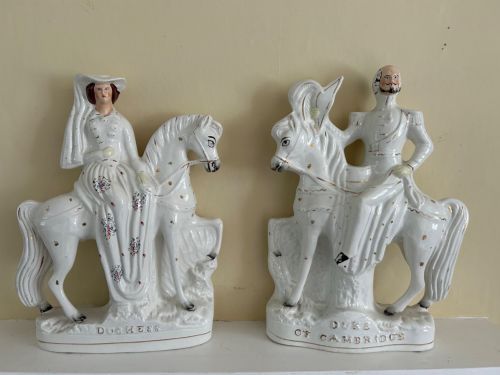
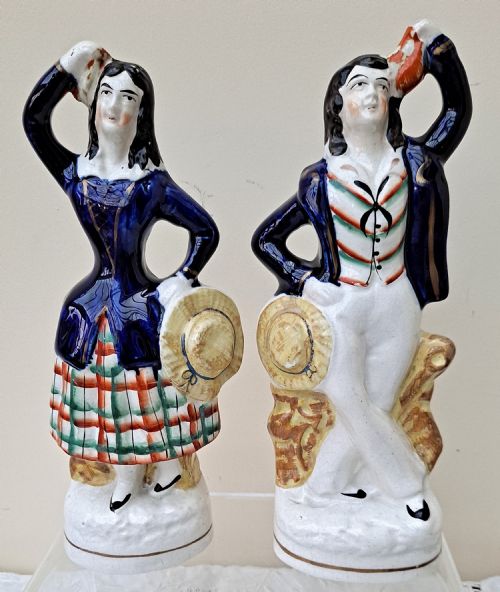
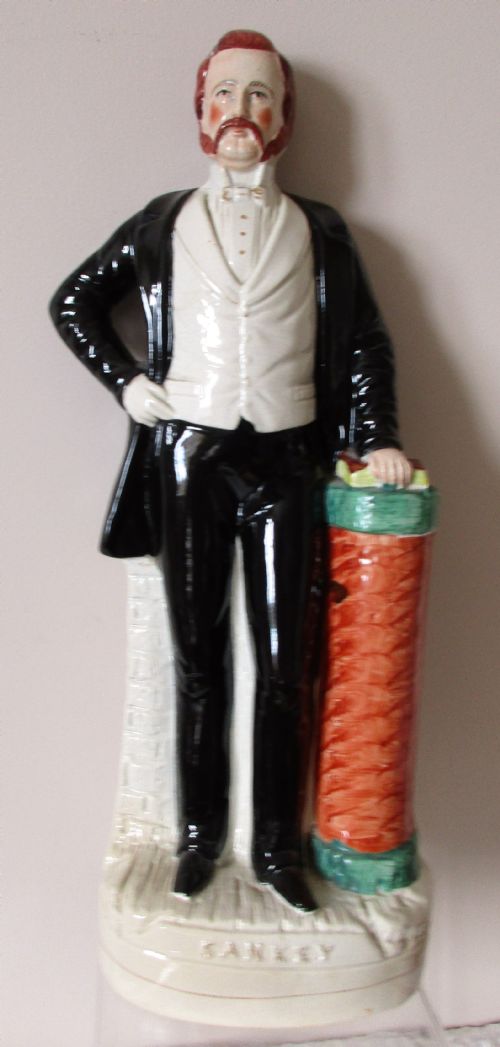
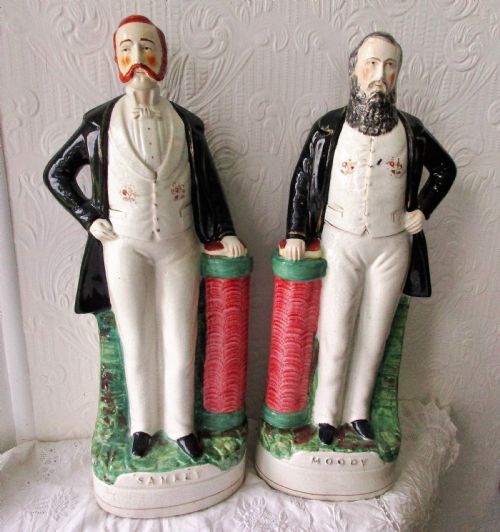
A staffordshire flatback pottery ornament presents moulded figures, royalty, literary characters, and domestic animals designed to be viewed from the front on high shelves. These pieces date from the nineteenth century, spanning the Victorian period from around eighteen fifty to nineteen hundred. Buyers commonly encounter pairs of portraits, theatrical subjects, or spill vases shaped as stags, castles, and cottages.
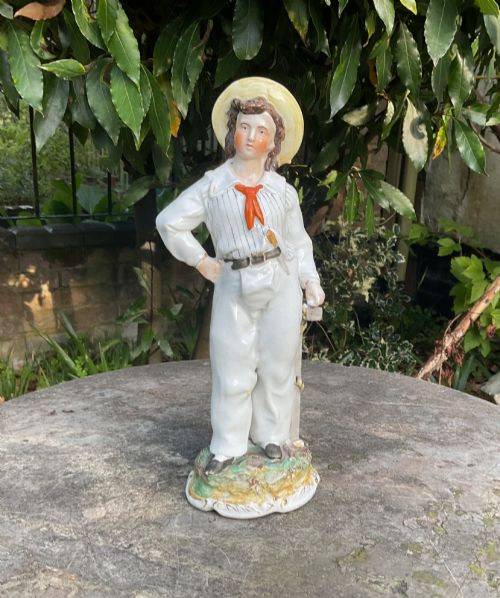
Makers shaped these earthenware figures with flat unglazed backs because they sat against parlour walls where nobody would see the reverse. The subjects record contemporary fascinations, from Crimean War heroes and royal weddings to temperance figures and legendary outlaws like Robin Hood. Collectors find single portrait figures as well as matched pairs representing famous couples or companion pieces.
Materials and Manufacture
Potters built these ornaments using earthenware clay shaped in press moulds, leaving the backs flat and plain. After initial firing, artisans applied enamel paint and lead glaze over the ceramic body, often highlighting details with gilt.
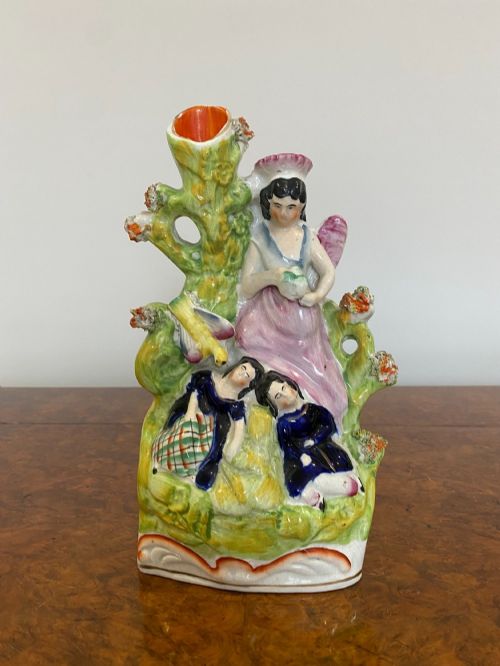
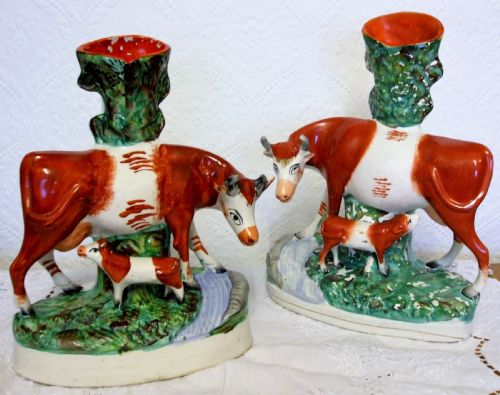
The glazing process trapped bright pigments beneath a glossy finish, creating the characteristic shiny surface seen on Victorian figures. Many examples incorporate a central opening at the top to function as spill vases for holding wooden matches.
Staffordshire Flatback Pottery Ornament Retail Price Guide 2026
Typical asking prices for staffordshire flatback pottery ornament among the pieces listed under this phrase on Sellingantiques today, from the lower quarter to the upper quarter. They describe what is for sale here now, not the wider market.
Listings feature nineteenth-century earthenware figures glazed with lead and decorated in enamel paint and gilt.
Judging Quality
Quality rests in the crispness of the moulding and the delicacy of the hand painting applied to the face and garments. Finer examples retain bright enamel colours and clean gilding without excessive smudging from the kiln.
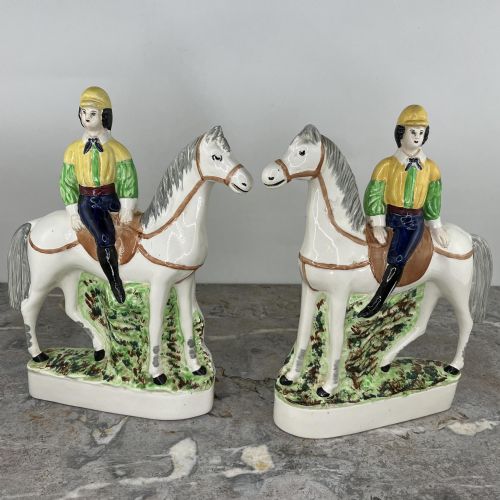
Larger scale and well-modelled details, particularly on equestrian groups and complex theatrical pairs, distinguish superior pieces from simpler mass-produced domestic wares.
The Staffordshire Flatback Pottery Ornament Glossary
- Flatback
- A ceramic figure moulded with a flat, finished reverse designed to stand against a wall. This construction saved clay and production time in Victorian potteries.
- Spill vase
- A hollow pottery vessel incorporating a holder for tapers used to light pipes and candles. These often take the form of tree trunks beside animal or human figures.
- Earthenware
- Porous pottery fired at lower temperatures than stoneware or porcelain. It forms the standard ceramic body for nineteenth-century Staffordshire figures.
- Lead glaze
- A shiny coating applied to pottery before a secondary kiln firing. It provides a protective, glossy finish that enhances the underlying enamel paint.
Staffordshire Flatback Pottery Ornament: Frequently Asked Questions
What subjects do these figures show?
The subjects range from royal portraits and military commanders to theatrical characters, literary figures, and country couples. Common themes include Queen Victoria, Prince Albert, and scenes from current events.
Animals and buildings also appear frequently, including pairs of cows, deer, castles, and cottages. Many pieces commemorate specific historical events or popular stories of the nineteenth century.
How were spill vases used?
Spill vases served a practical purpose in nineteenth-century homes by holding thin wooden spills used to transfer fire from the hearth to lamps and candles. They combined domestic utility with decorative portraiture.
Potters integrated the tubular vase section behind or beside the main figure so the object functioned as both ornament and container.
How do I date a flatback piece?
Dating relies on the historical subjects depicted, the clothing styles, and the ceramic characteristics typical of the Victorian era between eighteen fifty and nineteen hundred. Royal wedding commemoratives and war memorials provide firm chronological markers.
The style of the modelling, the composition of the earthenware body, and the brightness of the enamel paints help distinguish mid-century work from later Victorian production.
Why are the backs left flat?
The flat back allowed the ornaments to sit flush against mantelpieces and parlour walls where space was limited. This method also reduced the weight and production cost of large earthenware pieces.
Potters concentrated their detailed moulding and hand painting entirely on the front view where the ornament faced the room.