


Staffordshire China Plate
A staffordshire china plate brings historical transfer prints and rich earthenware bodies straight to the dining table.
Staffordshire China Plate
When searching for a staffordshire china plate, collectors encounter a range of forms spanning from decorative dishes and serving platters to entire dinner services and tea sets. The selection relies heavily on pieces originating from the nineteenth century, including Georgian and Victorian eras, alongside later twentieth-century productions from the 1920s and 1930s.
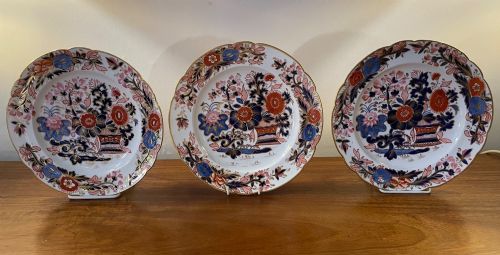
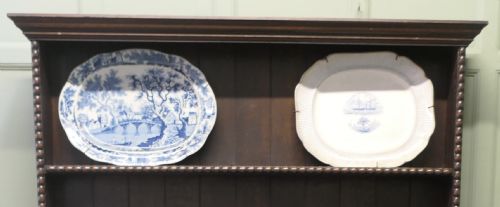
The most common versions met on this page are blue and white transfer-printed earthenware plates and large meat platters, often displaying topographical views, botanical studies, or classical scenes. Alongside these, examples featuring the Imari palette or pearlware bodies appear regularly, reflecting the diverse output of Staffordshire potteries.
Materials and Techniques
Makers utilised ceramic, earthenware, pearlware, and ironstone as the primary bodies for shaping these dishes, often finished with a clear glaze to seal the surface. Porcelain also appears in select tea sets and dishes, providing a finer, more translucent alternative to the robust utilitarian wares.
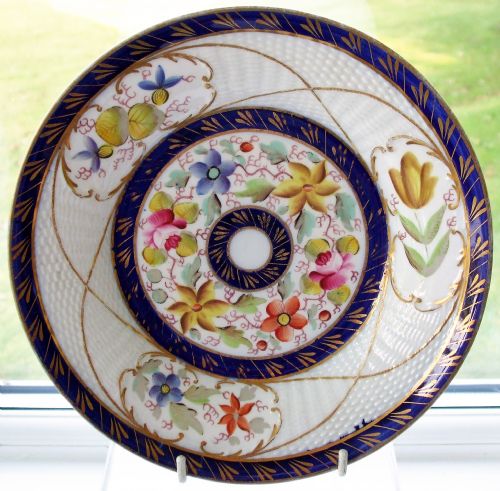
Decoration relied on transfer printing in blue and white, hand-applied enamel colours, and occasional touches of gold leaf. Skilled artisans transferred intricate engraved designs onto the ceramic body before firing, creating crisp architectural details and fluid landscapes.
Listings feature earthenware, ironstone, and pearlware bodies, alongside decorative styles ranging from Georgian Chinoiserie to Art Deco.
Standards of Production
The clarity and depth of the transfer print separate standard utility wares from superior examples, where the engraved lines remain sharp and the blue pigment sits evenly beneath the glaze. Finer pieces demonstrate meticulous control during the firing process, resulting in minimal warping and a clean, uniform ceramic body.
Artistic execution in the hand-painted enamels and gold leaf applications dictates the upper tier of the range. Pieces bearing named patterns from documented makers display a higher standard of artistic ambition compared to anonymous factory output.
New Hall Porcelain·Booths·Elkin and Newbon·William Adams·Brameld and Co·John Davenport·Gladstone potteries·Doric China Longton Stafford
The Staffordshire China Plate Glossary
- Pearlware
- A refined earthenware developed in the late eighteenth century featuring a subtle bluish glaze that pooled in crevices. This material bridged the gap between creamware and true porcelain.
- Transfer printing
- A method of applying complex decorative designs to ceramics using an engraved copper plate and thin tissue paper. It allowed factories to produce uniform pictorial scenes efficiently.
- Ironstone
- A heavy, durable ceramic patented in the early nineteenth century designed to resist chipping and cracking. It served as a sturdy alternative to porcelain for heavy-duty meat platters and soup bowls.
- Imari palette
- A decorative scheme utilising underglaze blue combined with iron red and gold leaf, inspired by Japanese export wares. Staffordshire potteries adopted this style for early nineteenth-century tea sets and plates.
- Charger
- A large decorative plate or platter used historically for serving food or as an under-dish at formal banquets. These oversized pieces highlight expansive transfer-printed landscapes.
Staffordshire China Plate: Frequently Asked Questions
How do I date a transfer-printed plate?
Dating relies primarily on the style of the border, the depth of the blue pigment, and the specific ceramic body used, such as early pearlware versus later ironstone. Makers' marks stamped or impressed on the reverse provide definitive clues when present.
Matching the recorded pattern name against historical factory records also narrows down the decade of production.
Can I use antique meat platters for serving food?
These platters were originally designed for culinary use, particularly for presenting joints of meat at the dining table during the Georgian and Victorian periods. Their sturdy earthenware and ironstone construction makes them robust enough for modern presentation.
Hand washing is strongly recommended to protect the historic glaze and any delicate enamel or gold leaf details from detergent damage.
What is the difference between earthenware and ironstone?
Earthenware is a porous, lower-fired ceramic body that requires a complete glaze to remain waterproof, typical of early nineteenth-century plates. Ironstone is a denser, heavily vitrified earthenware formula developed to withstand rigorous daily use.
Ironstone pieces generally feel heavier in the hand and show greater resistance to staining and chipping than standard earthenware.
Why do some blue and white pieces look blurry?
Blurriness in transfer printing usually occurs when the ink spreads slightly beneath the glaze during the high-temperature firing process. This characteristic frequently appears on earlier nineteenth-century wares where the technology was still being refined.
Collectors often view minor blurring as an authentic indicator of age rather than a manufacturing defect.