


Staffordshire Ceramic Flatbacks
Staffordshire ceramic flatbacks are mantelpiece ornaments shaped to stand against a wall, bringing Victorian portraiture and folk charm into any room.
Staffordshire Ceramic Flatbacks
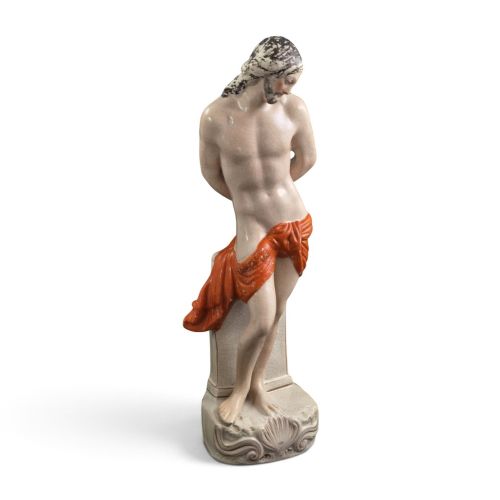
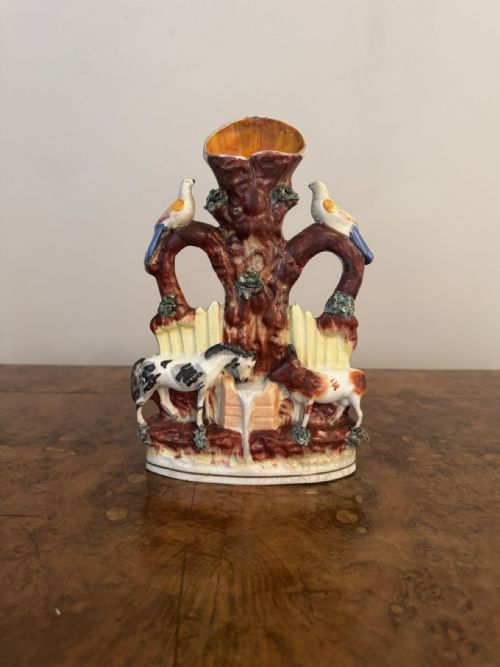
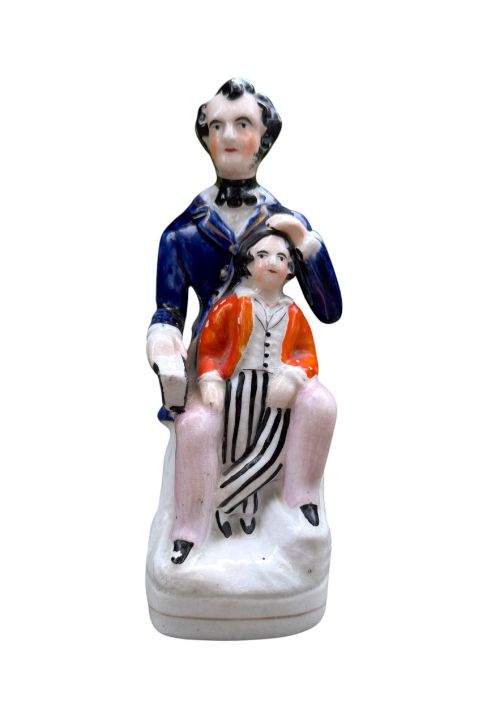
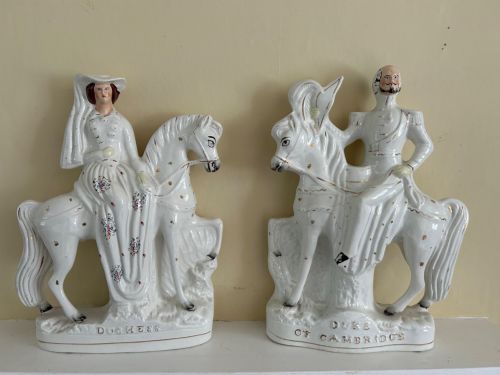
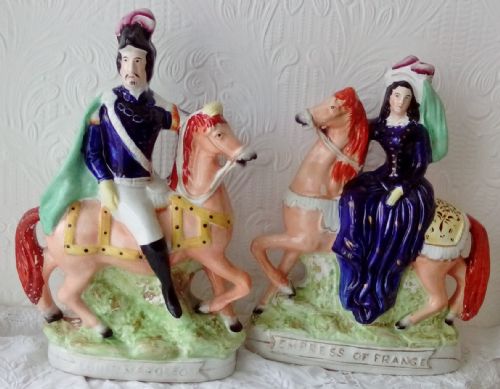
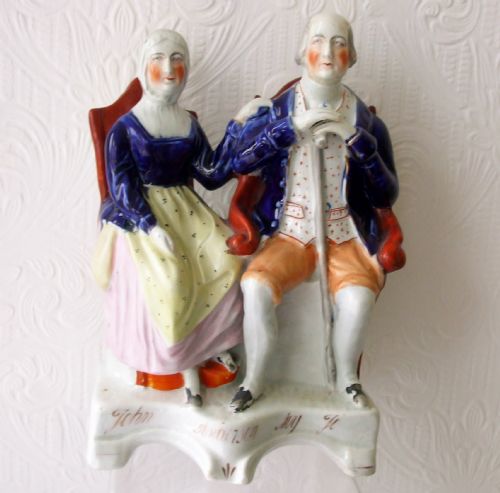
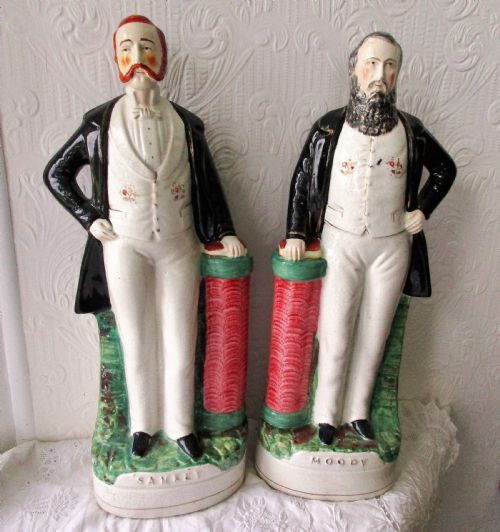
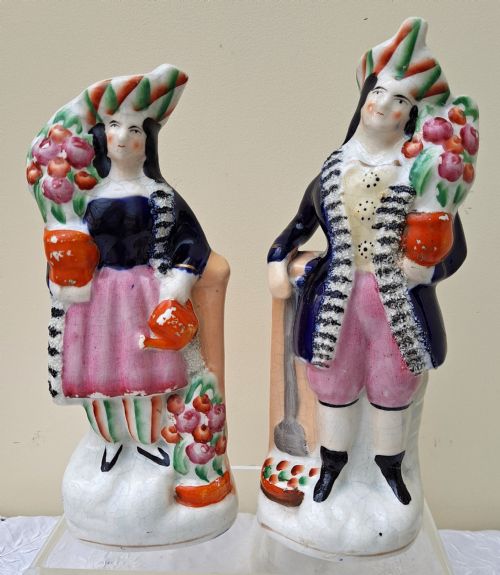
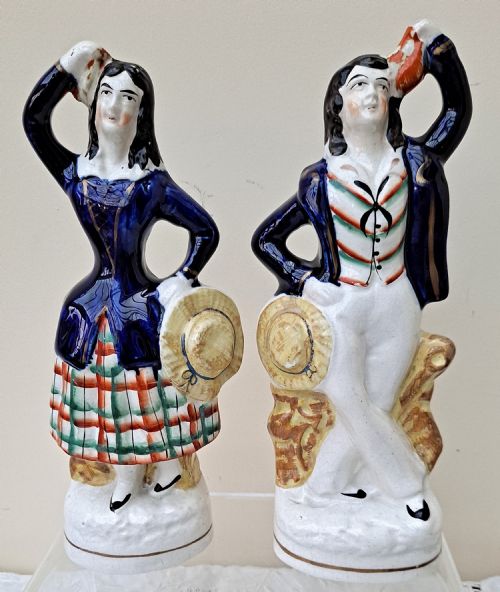
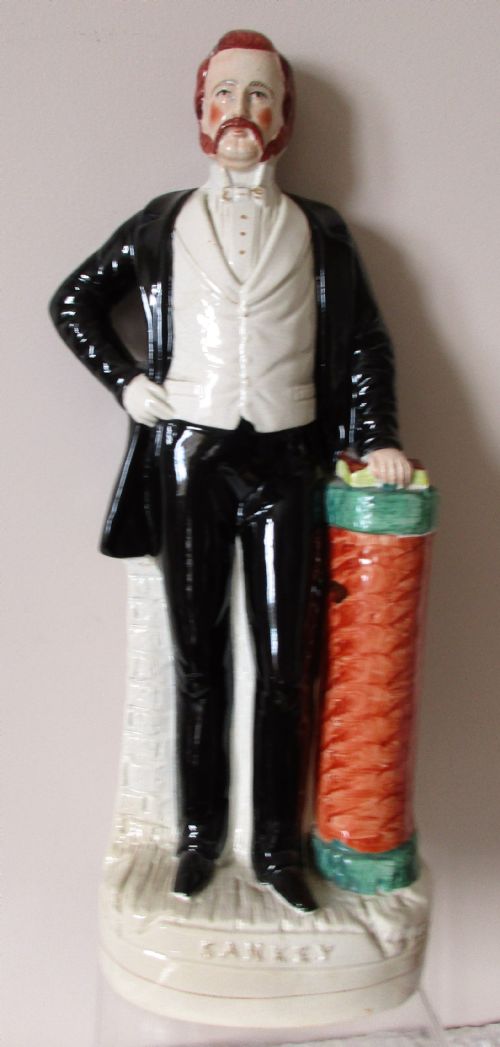
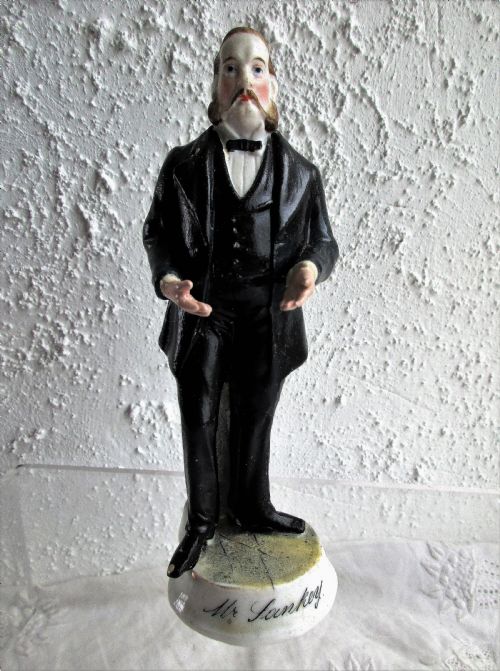
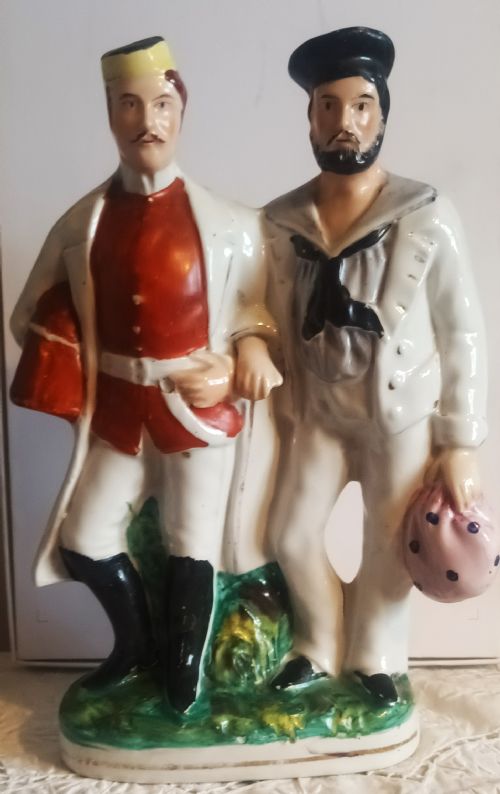
Staffordshire ceramic flatbacks comprise earthenware figures, spill vases, and cottages made during the nineteenth century. These pieces depict royal personages, theatrical characters, literary subjects, and country couples designed specifically for display on mantels where the unglazed or minimally finished back faced the wall.
The most common examples on this page date from the Victorian era, spanning decades such as eighteen fifty to nineteen hundred. Collectors encounter single figures, pairs of theatrical or royal subjects, and architectural forms including castles and cottages.
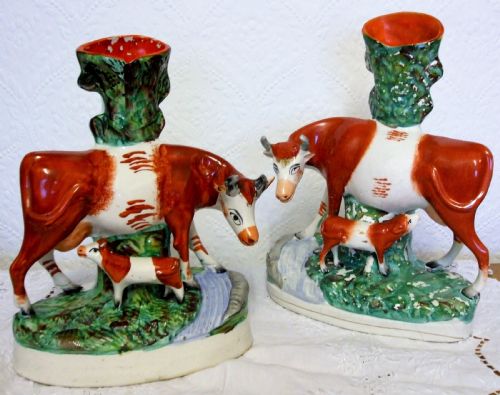
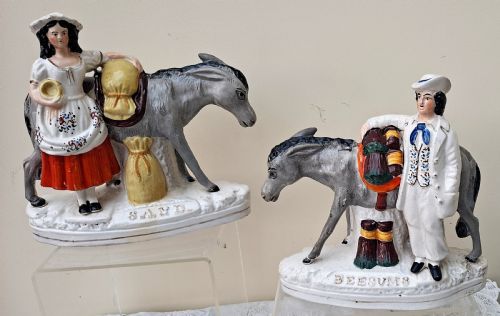
Makers shaped these ornamental pieces as historical portrait figures, equestrian groups, and animal studies like cow and calf spill vases. Each form reflects the popular taste and decorative interests of nineteenth century British households.
Materials and production methods
Potters built these figures using earthenware clay, shaping them primarily in press moulds during the nineteenth century. The resulting ceramic bodies received lead glaze or enamel paint decoration to bring colour and detail to the surface.
Painters applied enamel colours and gilt highlights by hand over the glaze, giving each piece individual character. Artisans then fired the earthenware in kilns to set the glaze and fix the painted decoration.
Listings span the nineteenth century, featuring Victorian earthenware figures, spill vases, and ceramic cottages decorated with enamel paint and glaze.
Judging quality and execution
The sculptural ambition also defines the tier of a piece, separating standard portrait figures from large, detailed theatrical groups or architectural spill vases. Superior pieces maintain clean proportion and careful detailing across the entire ceramic surface.
The Staffordshire Ceramic Flatbacks Glossary
- Flatback
- A pottery figure modelled with a detailed front and a flat, undecorated reverse intended to sit against a wall.
- Spill vase
- A hollow ceramic cylinder incorporated into a figure group designed to hold wooden spills for lighting fires.
- Earthenware
- A porous pottery body fired at lower temperatures, commonly used for nineteenth century Staffordshire figures.
- Enamel paint
- Coloured decoration applied over the fired glaze to provide bright hues on portrait and theatrical figures.
- Lead glaze
- A glossy coating applied to ceramic surfaces before firing to give a smooth finish and seal the earthenware body.
Staffordshire Ceramic Flatbacks: Frequently Asked Questions
What are Staffordshire flatbacks?
Staffordshire flatbacks are nineteenth century earthenware figures designed with flat backs to sit neatly on mantelpieces against a wall.
Potters produced them in various forms, including royal portraits, literary heroes, animals, and architectural models like castles.
How were these figures displayed?
Victorian households placed these ceramic ornaments on mantel shelves, sideboards, and drawing room tables where they could be viewed from the front.
Because the backs were left plain or flat, they stood flush against interior walls.
How do I date a flatback figure?
Dating relies on stylistic clues, historical subjects, and the specific types of earthenware and glazes used during the nineteenth century.
Subjects depicting contemporary events or rulers like Queen Victoria or Crimean War heroes help narrow the period of manufacture.
What subjects are most common?
Common subjects include British royalty, theatrical performers, literary characters, temperance figures, and country couples with animals.
Potters also frequently modelled architectural forms such as cottages, castles, and watch holders.