

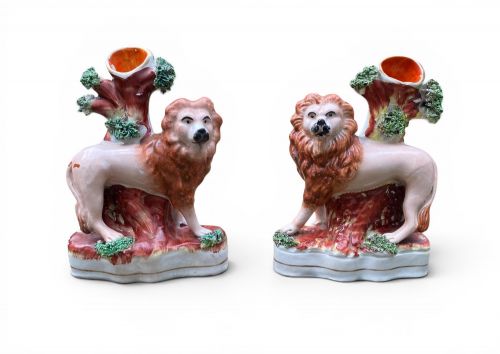


19th Century Staffordshire Pair
A 19th century staffordshire pair brings robust earthenware character to a mantelpiece through matched figures modelled for symmetry and display.
19th Century Staffordshire Pair
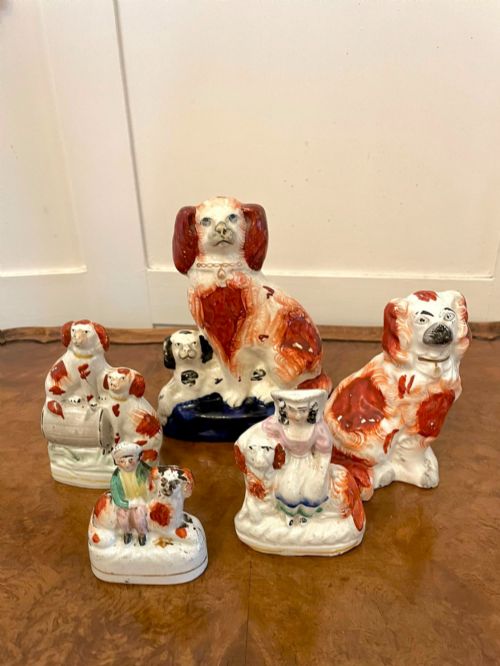
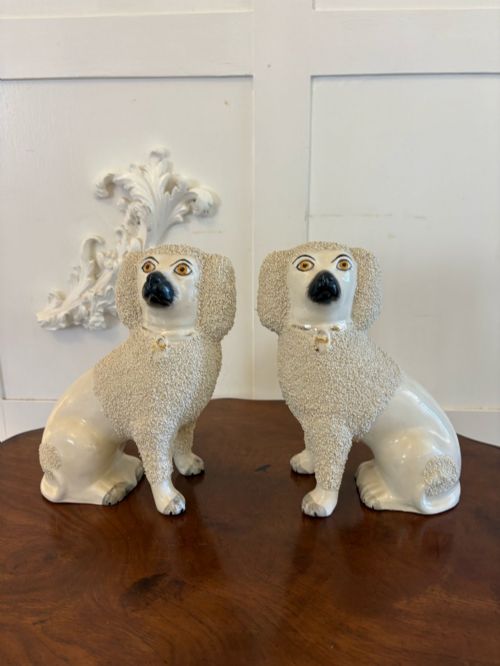
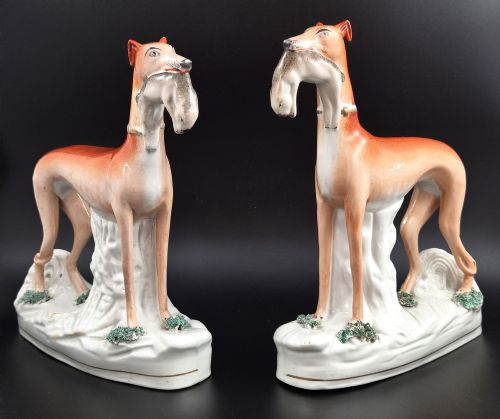
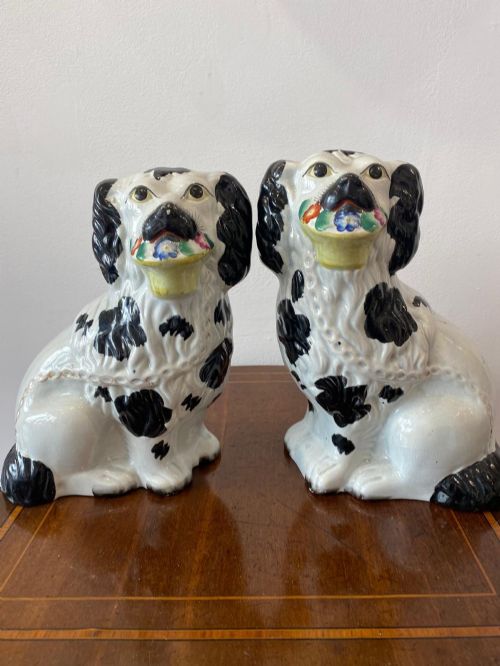
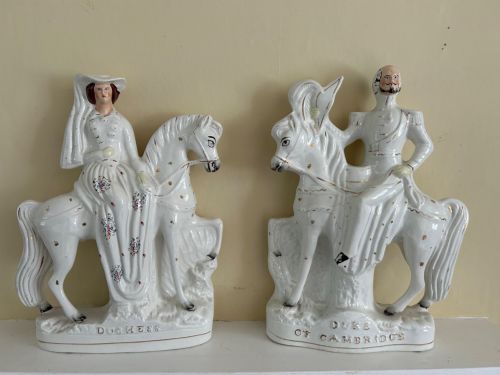
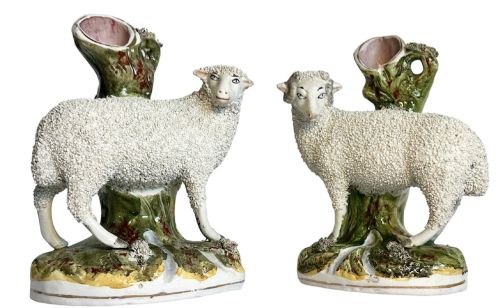
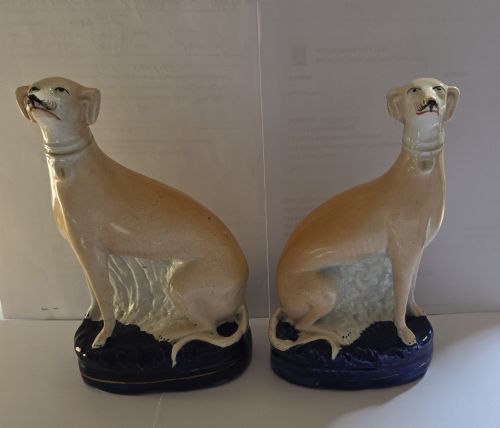
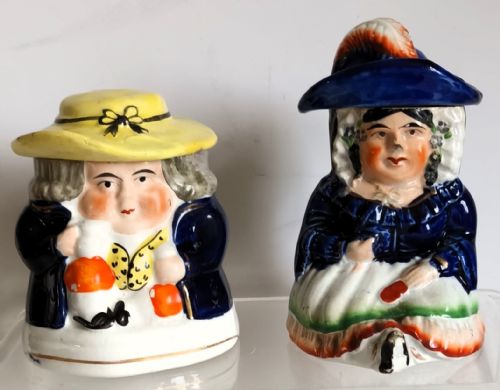
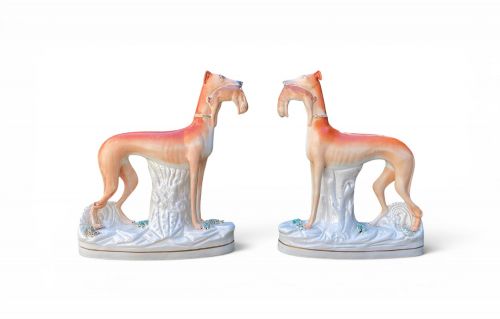
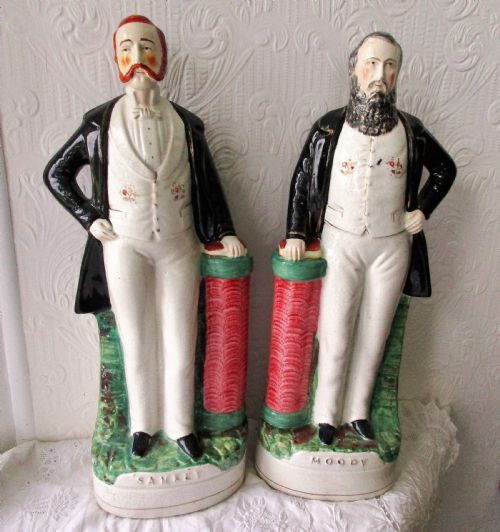
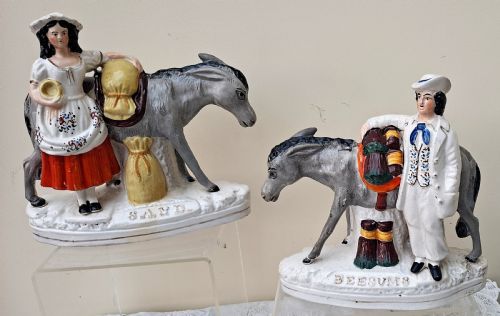
A 19th century staffordshire pair comprises matched ceramic figures modelled as seated spaniels, greyhounds, lions, sheep, or portrait characters intended for Victorian domestic display. The most common version met on this page is the earthenware dog, often rendered as a spaniel or poodle with copper lustre or painted markings.
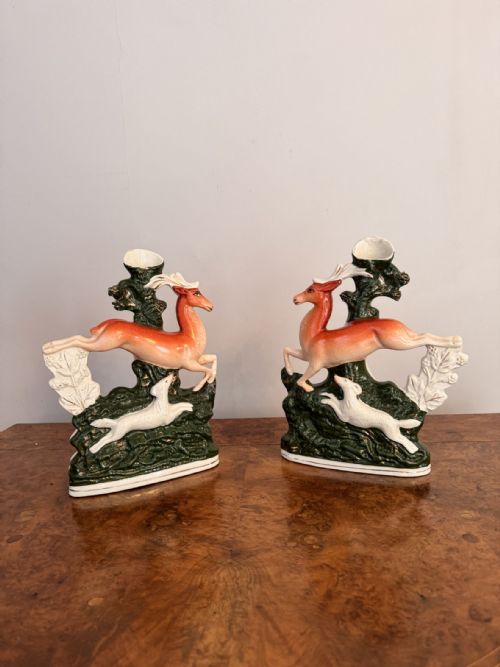
Makers produced these dual pieces to sit at either end of a mantelpiece or sideboard, balancing the domestic interior with symmetrical subjects. Beyond animals, the forms extend to spill vases, milk cows, tobacco jars, and flatback portrait figures representing historical or literary subjects.
Materials and production
Potters shaped these figures from local earthenware and ironstone, utilising press moulds to form the front and back sections before joining the clay seams. Artisans applied lead glaze over the ceramic body to create a smooth, reflective surface that protected the underlying body.
Decoration relied on hand-painted enamel colours and gold leaf highlights, or rich treacle glazes for monochrome brown finishes. Firing took place in coal-burning kilns, which often left small kiln stilt marks on the unglazed bases.
Listings feature earthenware and ceramic materials decorated with lead glaze, enamel, and gold leaf across Victorian styles.
Assessing quality
Thomas Parr·Wooley
The 19th Century Staffordshire Pair Glossary
- Flatback
- A figure moulded with a finished front and a flat, unpainted reverse intended for display against a wall or mantelpiece. This construction saved clay and simplified the firing process.
- Spill vase
- A hollow cylindrical holder incorporated into the figure design to store wooden taper splills used for lighting fires or pipes. These functional elements often take the form of tree trunks behind animals.
- Earthenware
- A porous, opaque ceramic fired at lower temperatures than stoneware or porcelain. It requires a glaze coating to become completely watertight.
- Treacle glaze
- A dark, translucent brown lead glaze applied thickly over pottery to produce a rich, glossy finish. It was frequently used on lions, bears, and novelty vessels.
- Pearlware
- A refined earthenware developed with a small amount of cobalt in the glaze to give the ceramic body a bluish-white tint. It bridges the transition between creamware and later white ironstone.
19th Century Staffordshire Pair: Frequently Asked Questions
What animals appear most often?
Spaniels and poodles dominate the surviving dog figures, reflecting Victorian pet-keeping habits and interior trends.
Greyhounds, lions, sheep, and cows also appear regularly as matched pairs.
How were these figures used?
Owners placed matched pairs symmetrically on mantelpieces, sideboards, or chests of drawers to ornament the Victorian parlour.
Some variants incorporated functional elements such as spill holders, inkwells, or tobacco jars.
How do I spot a flatback?
A flatback figure has a smooth, unglazed or partially glazed reverse side designed to sit flat against a wall.
This technique reduced the weight and cost of larger decorative ornaments.
What causes crazing in the glaze?
Crazing occurs when the surface glaze contracts at a different rate than the underlying ceramic body over decades of temperature fluctuation.
Fine networks of tiny cracks develop in the glossy coating as the piece ages.