


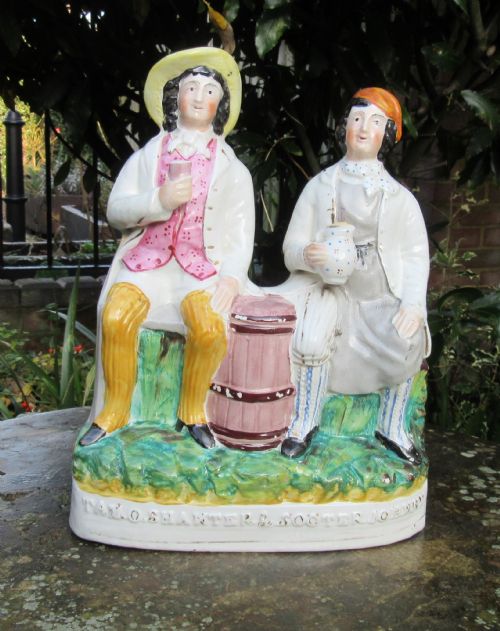

Scottish Ceramic Figures
These scottish ceramic figures are charming Victorian Staffordshire pieces depicting highlanders, lairds, and musicians, bringing distinct regional character to any mantelpiece.
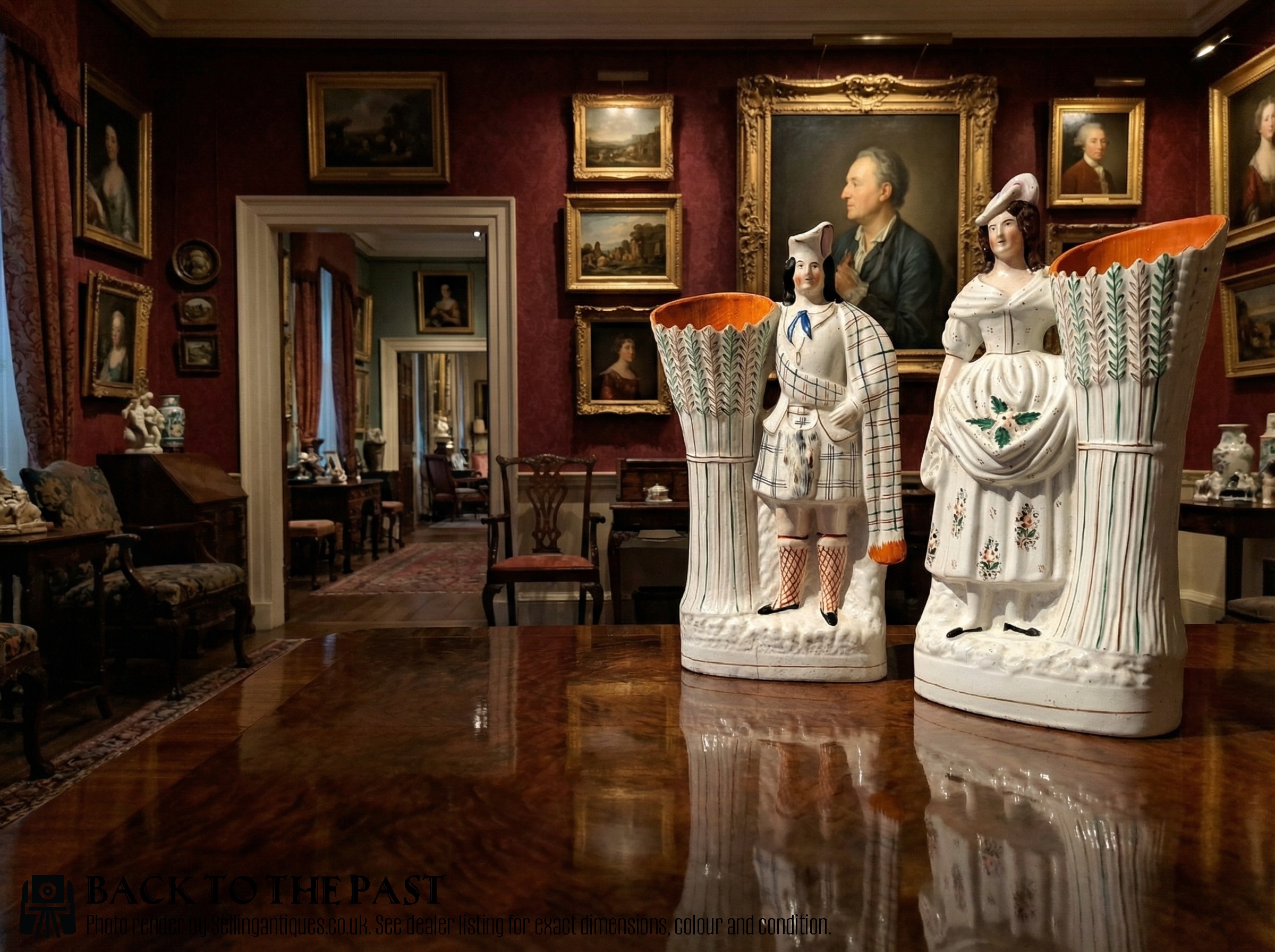
Scottish Ceramic Figures
When you search for scottish ceramic figures, you encounter a delightful array of nineteenth century Staffordshire pottery produced to capture popular Scottish subjects.
The pieces on this page lean heavily towards Victorian flatback figures, spill vases, and watch holders depicting Highlanders, harvesters, and notable literary characters.
Makers shaped these earthenware objects to satisfy a Victorian appetite for romanticized northern themes, resulting in decorative figurines that range from single subjects to imposing pairs.
How they were made
Potters shaped these earthenware figures in moulds, creating the characteristic hollow flatbacks designed to stand neatly against a wall.
Artisans applied enamel paint and lead glaze over the ceramic body, occasionally adding touches of gold leaf to highlight details on clothing and accessories.
Some spaniel dogs sport glass eyes that catch the room's light, watching over the hearth with startling realism.
What varies in quality
The distinction between ordinary and superior pieces rests largely on the crispness of the moulding and the care taken with the enamel painting.
Larger figures and well-matched pairs generally demonstrate a finer standard of artistic execution in the facial expressions and surface decoration.
The Scottish Ceramic Figures Glossary
- Flatback
- A figure moulded with a finished front and a plain, unpainted flat rear designed to sit flush against a wall. This technique saved materials and made the objects lighter.
- Spill vase
- A hollow ceramic tube attached to a figure, specifically designed to hold wooden spills for lighting pipes or candles. These combine practical utility with decorative sculpture.
- Watch holder
- A specialised mantel ornament featuring a small hook or recess to suspend a pocket watch securely. They often depict architectural ruins or figures framing the timepiece.
- Earthenware
- A porous pottery body fired at lower temperatures, commonly used for nineteenth century Staffordshire figures. It required a glaze to ensure the surface was waterproof.
Scottish Ceramic Figures: Frequently Asked Questions
What are flatback figures?
Flatback figures are ceramic ornaments moulded with a detailed front and a flat, unpainted back. This clever design allowed the pieces to sit flush against mantelpieces and walls where space was limited.
Potters utilised this method extensively during the Victorian era to produce larger decorative subjects without adding excessive weight or cost.
How were spill vases used?
Spill vases served a very practical daily purpose in nineteenth century homes before the invention of safety matches. They held thin wooden splints called spills, which people used to transfer fire from the hearth to lamps, candles, or pipes.
Potters integrated these tubes into sculptural figures, combining everyday utility with decorative domestic art.
Where were these figures made?
These ceramic pieces originated primarily in the Staffordshire potteries of England, despite depicting Scottish subjects. Staffordshire workshops capitalized on the romantic Victorian fascination with Scottish culture, literature, and folklore.
Potters modeled highlanders, lairds, and characters like Tam O'Shanter to appeal to buyers across Britain.
How do I care for antique earthenware?
Caring for nineteenth century earthenware involves gentle handling and keeping the pieces away from direct sunlight and moisture. Dust them softly with a dry cloth rather than using liquid cleaners, which can harm the old enamel paint and lead glaze.
Display them securely on stable surfaces where they will not be bumped or knocked over.