

Staffordshire Blue and White
Staffordshire blue and white pottery encompasses transfer-printed earthenwares, ironstones, and porcelains from the nineteenth century that bring historic domestic scenes to any room.
Staffordshire Blue and White
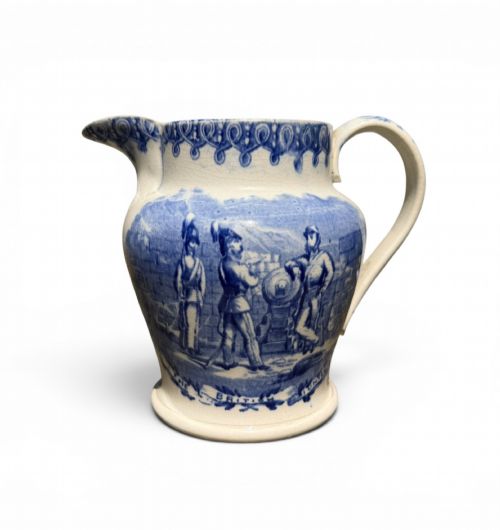
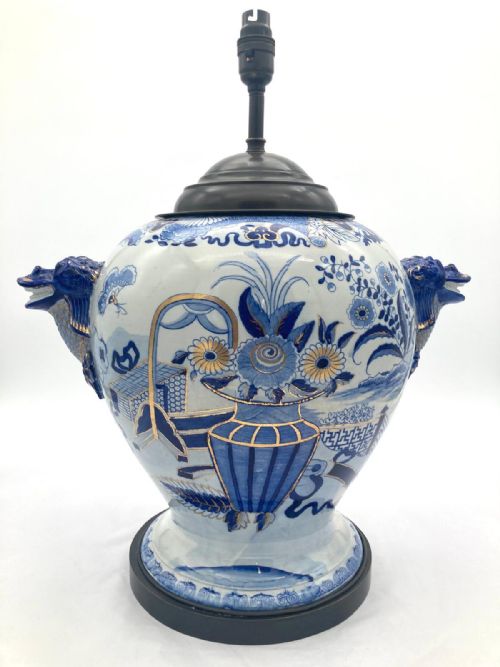
Staffordshire blue and white covers a diverse array of utilitarian and decorative domestic objects produced across the nineteenth century, including large serving platters, vegetable tureens, soup ladles, and footbaths. Pieces range from Georgian folk art patterns to Victorian chinoiserie designs, reflecting the changing tastes of English households.
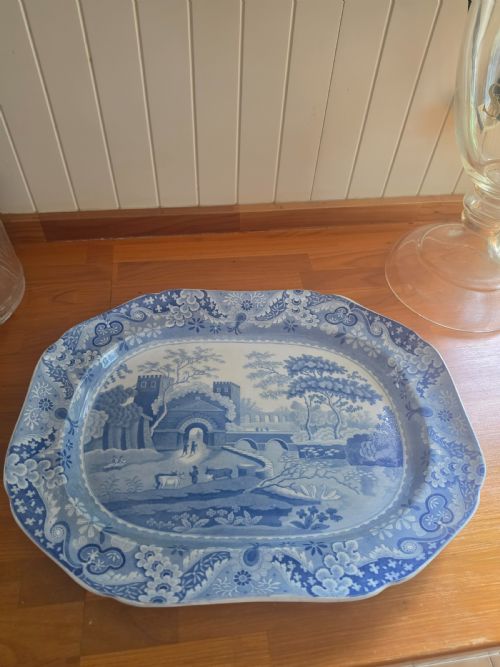
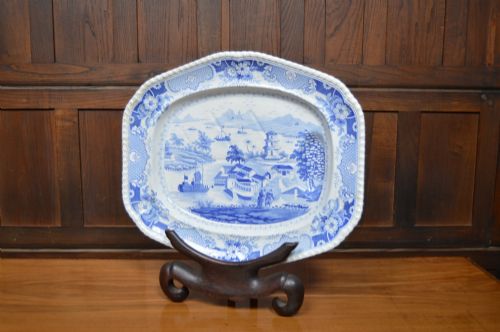
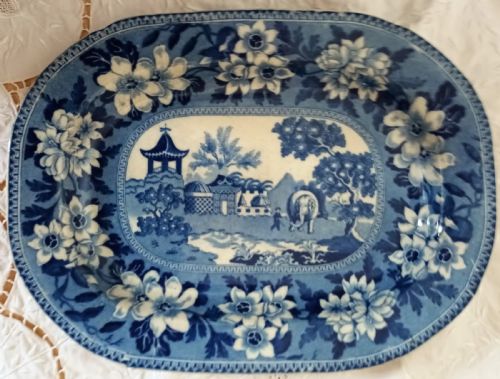
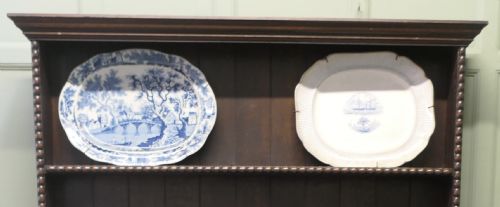
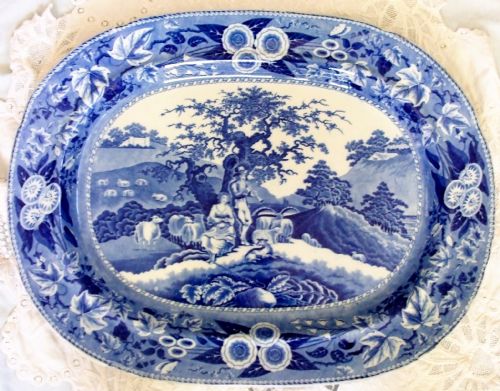
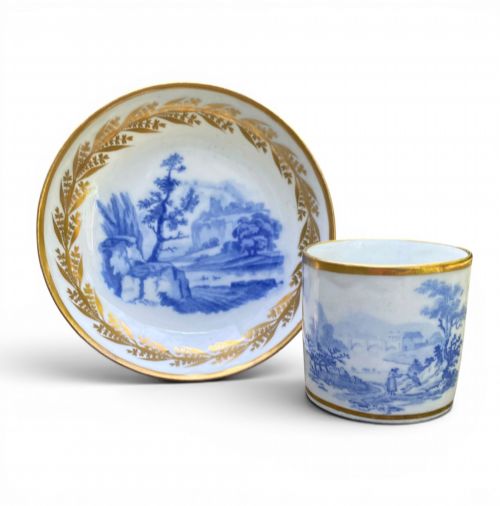
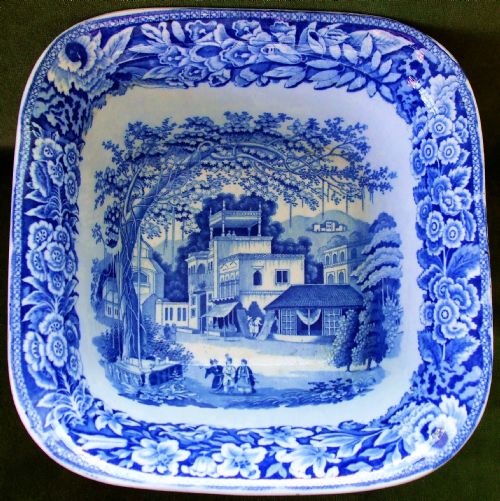
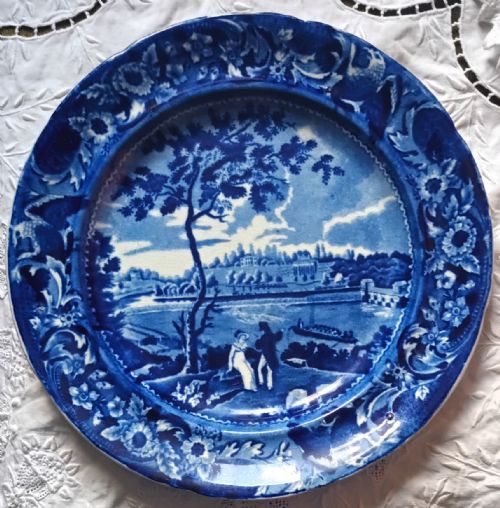
The most common forms encountered on this page are meat plates, platters, and transfer-printed dishes featuring architectural views, pastoral landscapes, or exotic river scenes. These items originated primarily from Staffordshire potteries during the Georgian, Regency, and Victorian periods.
Materials and Technique
Potters utilised earthenware, pearlware, and ironstone as bodies, shaping them into plates, tureens, and figurines before applying a fluid ceramic glaze. Lead glaze provided a smooth protective coat over the clay body.
Decoration relied heavily on transfer printing, a technique that transferred copperplate engravings onto paper and then onto the ceramic surface before firing. This allowed intricate patterns like the Canton River Scene and various pastoral views to be reproduced consistently.
Listings feature earthenware, ironstone, and pearlware forms spanning the Georgian, Regency, and Victorian periods.
Distinctions in Execution
Quality rests in the crispness of the transfer print and the clarity of the underlying white ceramic body, distinguishing sharp engravings from blurred or smudged impressions. Superior pieces display deep, uniform cobalt blue tones without pooling or fading in the glaze.
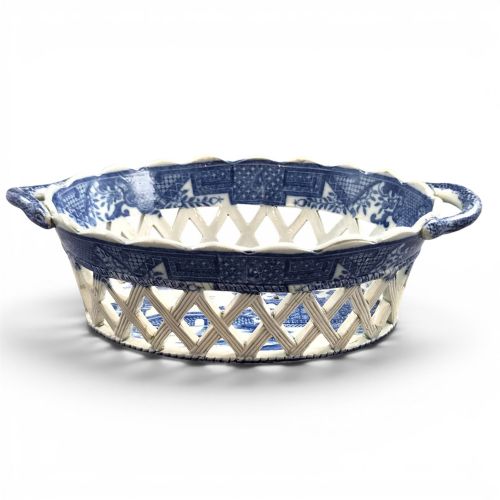
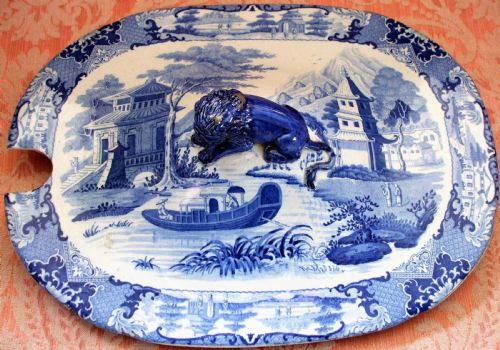
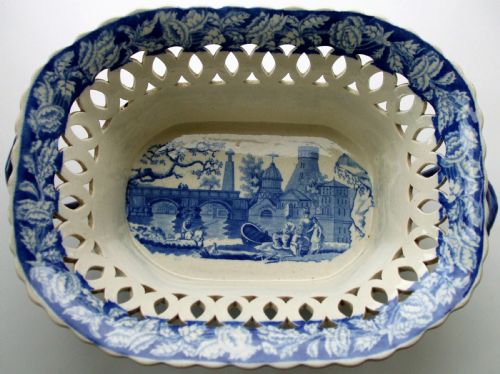
The refinement of the vessel's form and the complexity of its design, such as reticulated borders on chestnut baskets or sculptural elements on tureens, elevate certain examples above standard utilitarian wares.
Spode·J.W.R.·Robert Hamilton·John Rogers and Son·J. and R. Clews·J. and R. Riley·Stubbs·William Adams and Sons·Mintons·John and Richard Riley·Heathcote·John Ridgway
The Staffordshire Blue and White Glossary
- Transferware
- Pottery decorated by transferring a printed design from an engraved copper plate onto the ceramic surface. This technique revolutionised mass production in the nineteenth century.
- Pearlware
- A refined earthenware developed by Josiah Wedgwood featuring a bluish-white glaze that pooled slightly in crevices. It bridged the gap between creamware and later white earthenwares.
- Flow blue
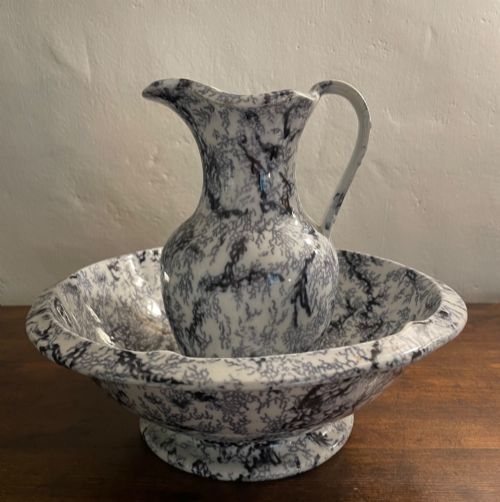
- A style of Staffordshire pottery where the cobalt blue design intentionally blurred or bled into the white glaze during firing. This effect created a soft, hazy appearance favoured by Victorian makers.
- Reticulated
- Having an openwork or net-like pattern formed by piercing the clay before firing. Such decoration is frequently seen on baskets and fine dessert services.
- Tureen
- A deep covered serving bowl used for soups, sauces, or vegetables. These vessels often included matching stands and ladles.
Staffordshire Blue and White: Frequently Asked Questions
What is Staffordshire blue and white pottery?
Staffordshire blue and white pottery consists of ceramic tableware and decorative objects produced in the English potteries during the nineteenth century. These pieces feature cobalt blue designs transferred onto earthenware, ironstone, or pearlware bodies.
Items range from large meat platters and footbaths to small pickle dishes and child's sets. The designs typically depict landscapes, architectural ruins, or exotic scenes inspired by global trade.
How do I date these blue and white pieces?
Dating relies on examining the ceramic body, the style of the transfer print, and any maker's marks stamped or printed on the base. Early nineteenth-century pieces often use pearlware bodies with greenish-blue glaze pooling.
Later Victorian items transition to harder ironstones and brighter white earthenwares. Specific pattern names and registered design marks can also narrow down the production year.
Were these items used for dining or display?
Most Staffordshire blue and white items were created for practical domestic use in Georgian and Victorian dining rooms and kitchens. Meat platters, tureens, soup ladles, and cheese domes served everyday culinary functions.
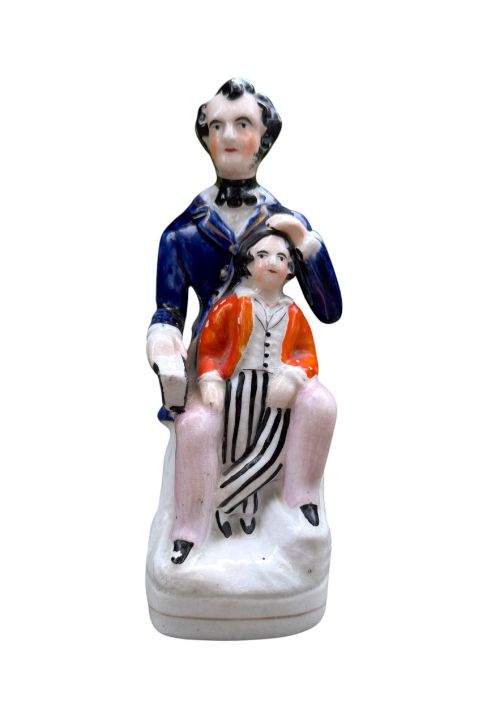
Larger chargers, footbaths, and figural groups served decorative purposes in grander households. Over time, utilitarian items transitioned into collectable display pieces.
How should I care for antique transferware?
Antique transferware requires gentle handling and should be washed by hand in warm water with mild soap. Avoid harsh scrubbers, automatic dishwashers, and harsh detergents that can damage the nineteenth-century glaze.
Display pieces away from direct sunlight and extreme temperature fluctuations to protect the ceramic body and prevent crazing in the glaze.