


Georgian Reticulated Ceramic Basket
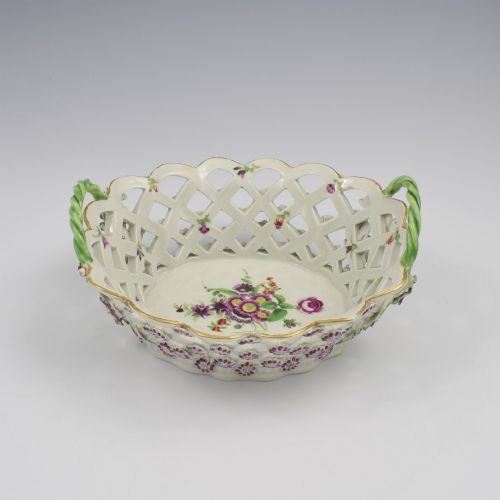
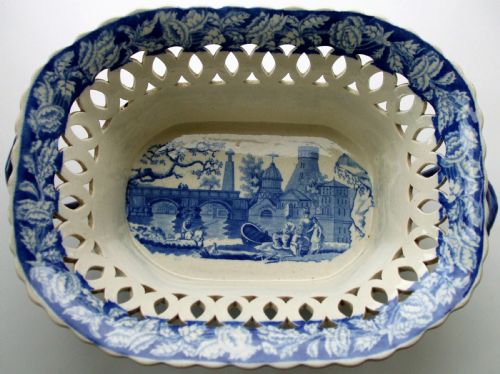
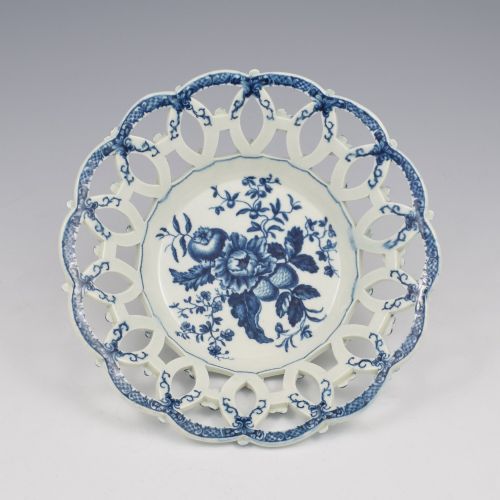
These georgian reticulated ceramic basket examples bring openwork elegance to a dining table, offering pierced lattice walls designed for serving fruit or chestnuts.
Georgian Reticulated Ceramic Basket
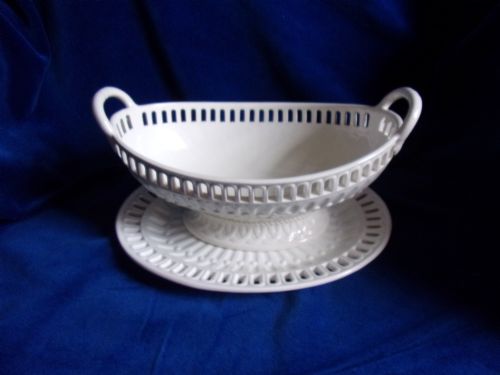
A georgian reticulated ceramic basket represents the pinnacle of late eighteenth and early nineteenth century tableware, designed primarily as chestnut or fruit baskets for formal dessert courses. These pieces combine utilitarian serving functions with intricate pierced and openwork walls, often accompanied by matching under-trays or stands.
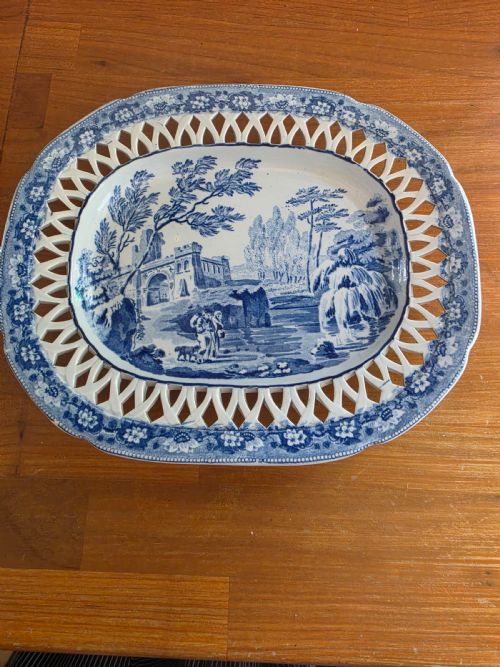
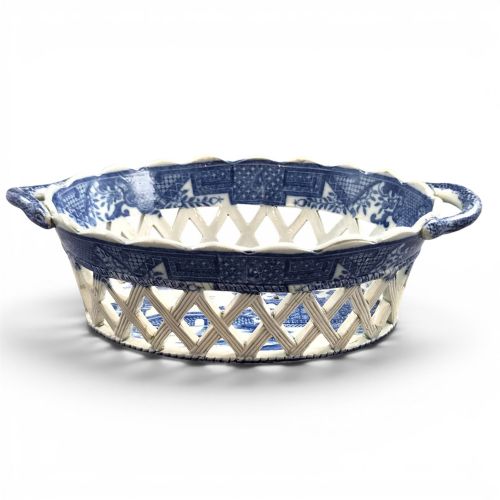
The selections available here showcase forms spanning the eighteenth century through the Regency period, encompassing creamware, pearlware, earthenware, and fine porcelain. Makers utilised transfer printing, hand-painted polychrome enamel, and Chinese export commissions to decorate surfaces with botanical motifs, willow patterns, and river scenes.
Materials and manufacture
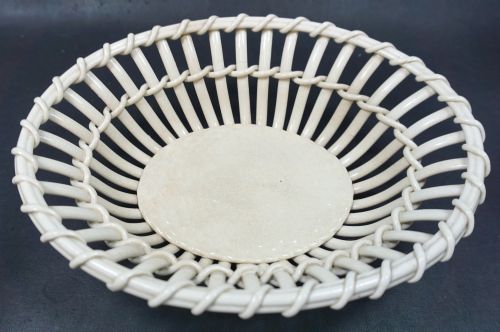
Potters constructed these baskets using ceramic bodies such as creamware, pearlware, and porcelain, shaping the openwork lattices by hand-piercing the damp clay before firing. Glazes were applied to seal the porous earthenware and pearlware, creating smooth surfaces suitable for intricate blue and white transfer printing or gold leaf detailing.
Porcelain bodies, notably from early Worcester works, received delicate polychrome enamel painting applied over or under the glaze. Ironstone and earthenware versions incorporated moulded twig handles and applied floral details to reinforce the rustic yet refined aesthetic.
Blue and white transfer printing dominates the decorative techniques recorded in these pieces.
Distinctions in quality
Quality rests upon the crispness of the reticulation and the precision of the hand-pierced lattice work, where sharp, clean apertures separate superior vessels from softer, blurred forms. The delicacy of applied floral work and the alignment of matching stands further divide standard production from exceptional studio outputs.
Decoration also dictates standing, with finely transfer-printed scenes or meticulous hand-painted polychrome enamels commanding greater attention than plain glazed bodies. The preservation of original under-trays and the crispness of maker signatures or pattern names complete the hierarchy.
Davenport·Wedgwood·Spode·Dr Wall Worcester·J and R Clews·Mason
The Georgian Reticulated Ceramic Basket Glossary
- Reticulated
- Pierced or netted openwork decoration resembling a network or lattice, commonly found along the walls of ceramic baskets.
- Creamware
- A refined earthenware developed in Yorkshire featuring a pale buttery lead glaze over a light-coloured body.
- Pearlware
- An improved earthenware introduced by Josiah Wedgwood with a bluish-tinted glaze that made the underlying ceramic body appear whiter.
- Chestnut basket
- A specialised covered or open vessel used during Georgian dessert courses for serving roasted chestnuts or fresh fruit.
- Transfer printing
- A method of applying detailed designs to pottery from an engraved copper plate using tissue paper and pigment.
Georgian Reticulated Ceramic Basket: Frequently Asked Questions
What were these baskets used for?
These vessels served a distinct role during Georgian and Regency dessert courses, holding delicate items like roasted chestnuts or fresh seasonal fruit.
Placed at the centre of the table on matching stands, they combined practical service with elaborate table decoration.
How do I care for my basket?
Display these fragile ceramic pieces away from direct sunlight and areas subject to rapid temperature fluctuations.
Dust them gently with a soft, dry brush and avoid washing them in water to protect the historic glaze and ironstone bodies.
How do I date a piece?
Examine the ceramic body, glaze colour, and decoration style to determine the period of manufacture.
Creamware and pearlware compositions point toward the turn of the nineteenth century, while fine porcelain bodies often indicate earlier eighteenth-century origins.
Are stands usually included?
Many chestnut baskets were originally paired with matching ceramic trays or under-basins to catch debris during service.
Surviving examples occasionally retain these complete sets, though many pieces now exist independently from their original stands.