
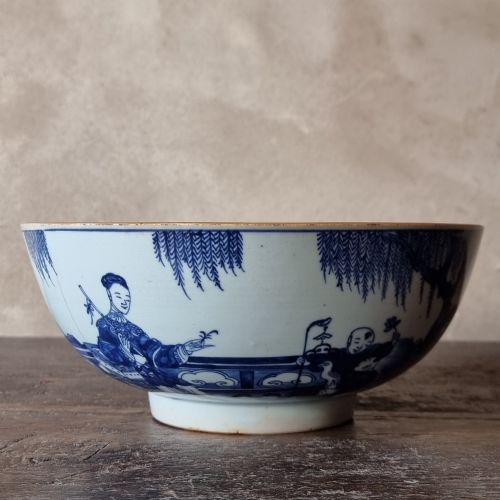
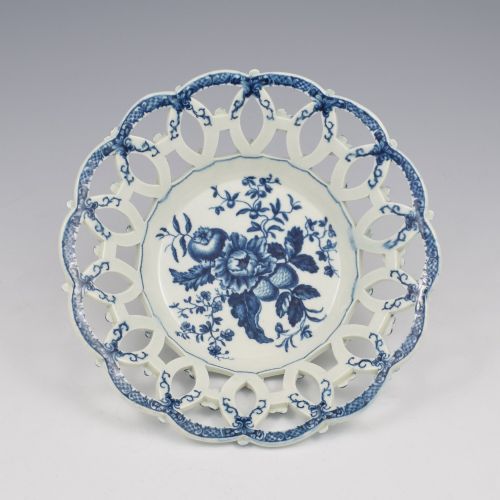


Blue White Centerpiece Bowl
A blue white centerpiece bowl brings cobalt decoration to the table, offering centuries of ceramic artistry for daily display.
Blue White Centerpiece Bowl
A blue white centerpiece bowl encompasses large serving vessels, punch bowls, jardinières, and fruit bowls designed to anchor a room or table. The evidence reveals forms ranging from Georgian punch bowls and 18th-century Chinese export porcelain to Victorian fruit bowls and Edwardian examples.
Buyers will encounter diverse origins spanning Chinese export wares, English pearlware and porcelain, French faience, and continental pieces. Styles stretch across Qing Dynasty, Victorian, Georgian, and revival aesthetics, united by their decorative scale and utility.
How they were made
These vessels rely on ceramic and porcelain bodies finished with cobalt underglaze, cobalt glaze, or hand-painted enamel. Artisans applied cobalt pigments beneath the glaze to achieve the characteristic blue and white coloration seen across centuries of production.
Many examples incorporate supplementary ornamentation such as gilt, gilding, and metal or ceramic basketry elements. The pieces combine potting techniques with detailed hand-painting, particularly evident in floral, armorial, and Chinoiserie motifs.
The listings show periods ranging from the 18th century through the Victorian era, Edwardian period, and 1900.
What varies in quality
Quality rests upon the crispness of the cobalt underglaze painting and the refinement of the ceramic body. Finer examples display precise brushwork, balanced forms, and controlled kiln temperatures that prevent running in the blue pigment.
The sophistication of the secondary decoration, such as hand-applied gilding, enamel highlights, and complex pierced work on baskets, separates standard production from exceptional pieces. The pedigree of the maker or the historical period also shapes the character of the object.
Doulton Burslem·Samson·Gien faience·Sevres
The Blue White Centerpiece Bowl Glossary
- Cobalt Underglaze
- A blue pigment applied to ceramic pieces before glazing and firing at high temperatures. This technique ensures the colour remains permanent and protected beneath the glassy surface.
- Pearlware
- An earthenware developed in the late eighteenth century featuring a subtle bluish glaze that pooled in recesses. It bridged the gap between creamware and true porcelain.
- Jardiniere
- A large ornamental pot or bowl designed to hold growing plants or floral arrangements. These vessels often match the scale of traditional table centrepieces.
- Comport
- A raised dish or bowl used for serving fruit or sweetmeats at the table. They frequently stand on a short pedestal or foot.
- Imari
- A style of ceramic decoration originating in Japan and later copied in Europe, typically employing cobalt blue, iron red, and gold. It appears on export porcelain vessels.
Blue White Centerpiece Bowl: Frequently Asked Questions
How were antique punch bowls used?
These large vessels held mixed alcoholic drinks for communal serving during eighteenth and nineteenth-century gatherings. Guests ladled punch directly from the centre of the table.
Over time, their roles shifted from active hospitality to decorative display as dining customs evolved.
What defines Chinese export porcelain?
Chinese export porcelain refers to ceramics made in China specifically for Western markets, often following European shapes and heraldic designs. Eighteenth-century examples frequently combine traditional Asian brushwork with Western motifs.
These pieces arrived via maritime trade routes and heavily influenced European ceramic production.
How do I care for a porcelain bowl?
Wash these vessels by hand using mild soap and warm water, avoiding abrasive sponges that might harm the glaze. Old gilding and enamel work require particular gentleness.
Keep them away from sudden temperature changes to protect the historic ceramic body.
How do I distinguish pearlware from porcelain?
Pearlware is a refined earthenware that shows a slightly bluish tint where the glaze pools in crevices. Porcelain is harder, often translucent when held to light, and rings when tapped gently.
Examining the footrim usually reveals the unglazed base material beneath the glaze.