




Square Padded Footstool
A square padded footstool brings low, tactile comfort to a room, offering a versatile resting place for feet or an extra seat by the fire.
Square Padded Footstool
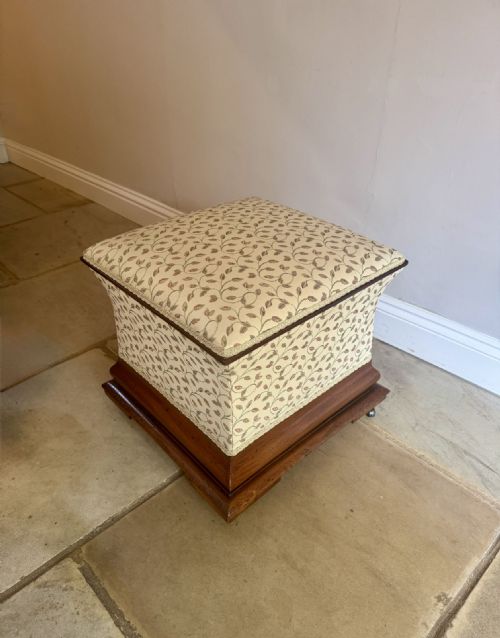
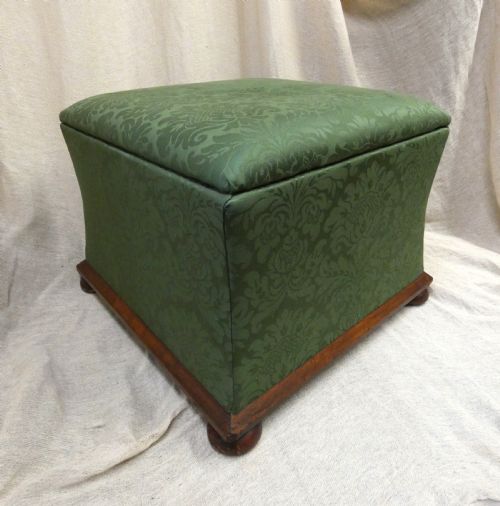
A square padded footstool is a low seating form designed primarily to support the feet or serve as a compact centre stool within a room. You will most frequently encounter Victorian and 19th-century examples alongside earlier George III and Regency pieces.
These items take various designations across listings, appearing as ottomans, dressing stools, and piano stools. The core shape remains steadfastly square, accommodating diverse textile coverings ranging from simple fabric to needlepoint and buttoned leather.
Originating across different periods from the 18th century to the early 20th century, these footstools reflect the domestic habits of their eras. Examples range from vernacular English country house styles to more formal mahogany and rosewood constructions.
How they were made
Makers constructed the frames of these footstools using solid hardwoods such as mahogany, walnut, and rosewood, alongside general timber. These wooden foundations provide structural integrity beneath the padding.
Upholstery techniques involve securing textiles like velvet, leather, and needlepoint over a padded core. Details such as buttoning and herringbone weaves show the attention given to the top surface.
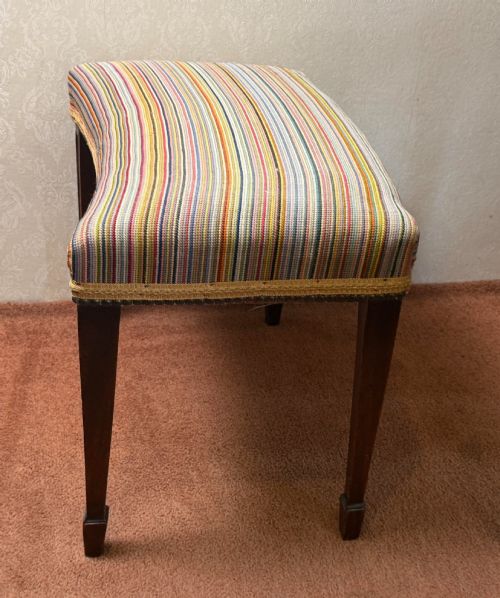
Support elements include turned and tapered legs, sometimes featuring brass accents, which anchor the upholstered upper section to the floor.
Square Padded Footstool Retail Price Guide 2026
Typical asking prices for square padded footstool among the pieces listed under this phrase on Sellingantiques today, from the lower quarter to the upper quarter. They describe what is for sale here now, not the wider market.
Some Victorian footstools hide their utilitarian roots entirely beneath dense needlepoint, pretending to be miniature gardens for your tired ankles.
What varies in quality
Quality separates stools by the choice of primary timber and the refinement of the leg turning or tapering. Dense hardwoods like mahogany and walnut signal superior craftsmanship compared to plain timber frames.
The execution of the upholstery work marks a distinct tier in execution. Traditional stuffing methods and durable exterior coverings like buttoned leather or fine needlepoint elevate an example above basic fabric finishes.
Howard & Sons
The Square Padded Footstool Glossary
- Ottoman
- A low, upholstered seat or footstool without a back or arms. It often serves as a centre piece or auxiliary seating.
- Needlepoint
- A type of canvas work embroidery used historically to cover the tops of stools and chairs. It provides a durable and decorative surface.
- Centre stool
- A large freestanding stool designed to sit in the middle of a room rather than against a wall. These often feature substantial buttoned leather upholstery.
- Tapering legs
- Furniture legs that gradually narrow toward the bottom. This feature appears frequently on 18th-century and Regency examples.
- Buttoned leather
- Upholstery secured with deep-set buttons creating a tufted diamond pattern. This technique adds both tension and visual texture to leather surfaces.
Square Padded Footstool: Frequently Asked Questions
What is a square padded footstool used for?
These pieces serve primarily as a rest for the feet or as low auxiliary seating in a living space or bedroom. Their sturdy construction allows them to function comfortably in both roles.
Larger versions often act as centre stools, holding books or trays in addition to traditional seating duties.
How do I date an antique footstool?
Dating relies heavily on observing the timber species, leg profiles, and construction methods used in the frame. Regency and 18th-century pieces often display specific leg shapes like square tapering or turned supports.
Upholstery styles and textile types also offer clues, though many pieces have been recovered over time.
Can I use an antique footstool daily?
Most wooden frames and traditional upholstery methods are built to withstand regular domestic use. Checking the stability of the joints ensures the piece handles everyday weight.
Delicate needlepoint covers may require more careful placement to preserve the vintage textiles over years of use.
What woods were used for these stools?
Cabinetmakers utilised dense hardwoods such as mahogany, walnut, and rosewood for finer pieces. Other examples rely on general timber for the underlying frame structure.
Exposed wooden elements like the legs showcase these materials beneath the padded upper sections.