
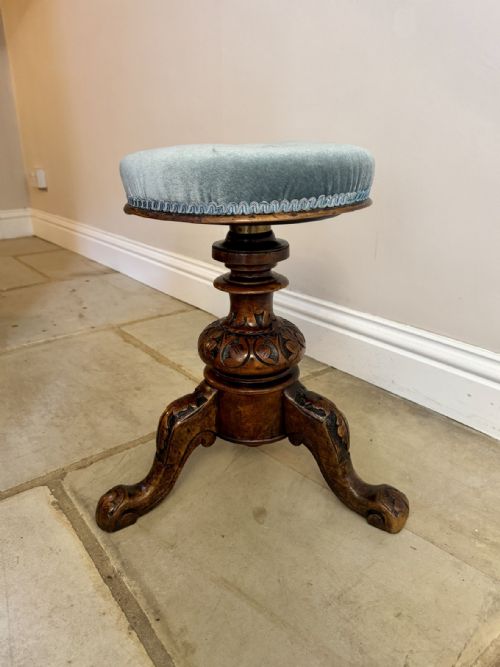


Velvet Upholstered Stool
These velvet upholstered stool pieces bring tactile depth and period comfort to an interior, bridging seating and display with quiet authority.
Velvet Upholstered Stool
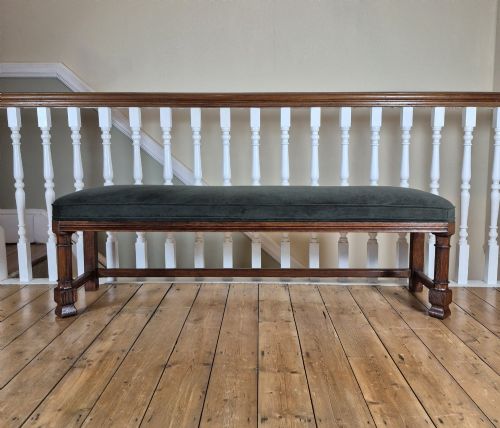
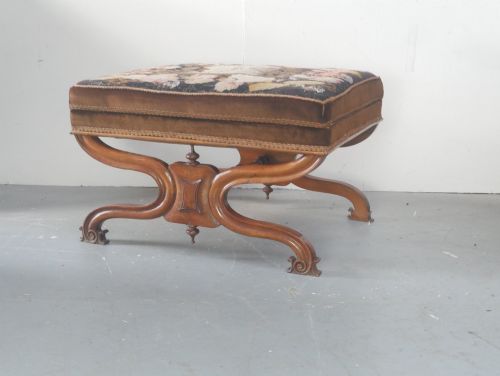
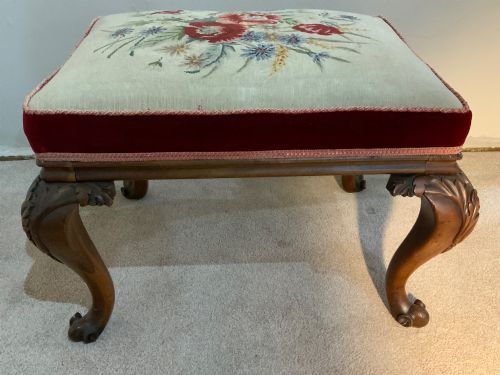
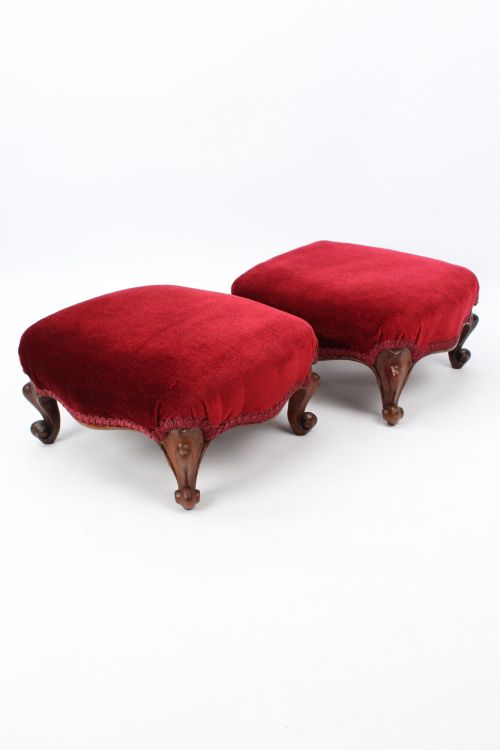
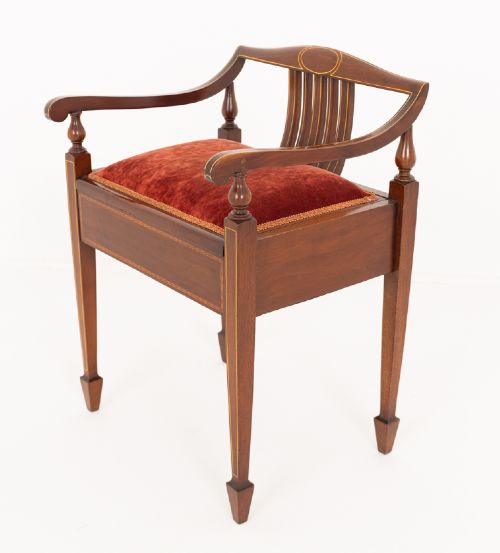
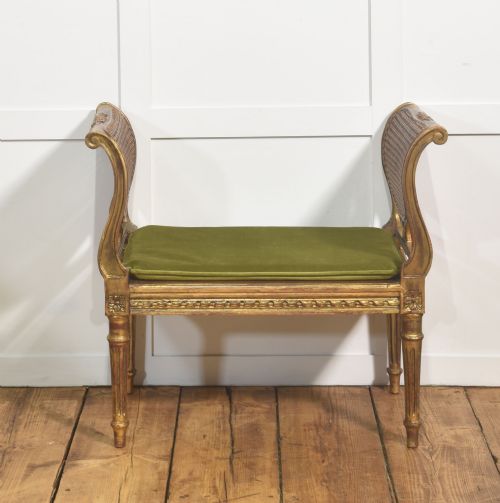
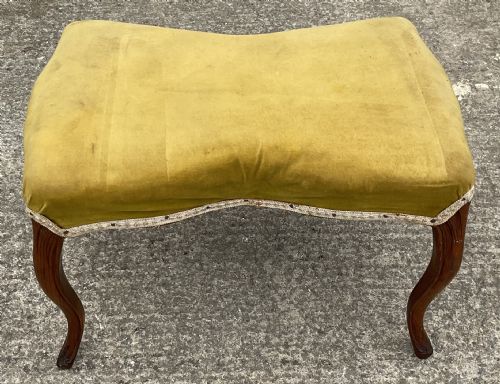
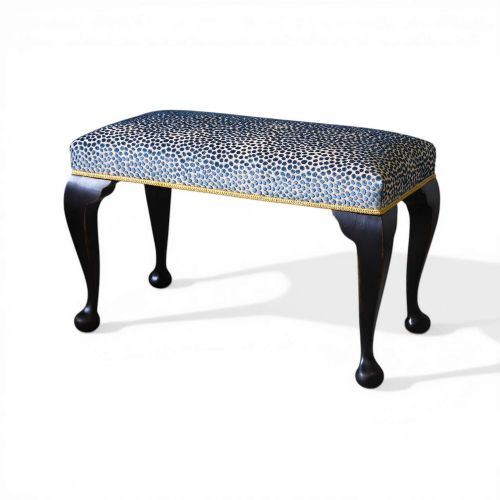
A velvet upholstered stool takes many structural forms across the nineteenth and early twentieth centuries, appearing as low footstools, piano seats, window benches, and larger centre ottomans. The Victorian era dominates the selection, bringing carved walnut frames and deep-buttoned seating designed for drawing rooms and parlours.
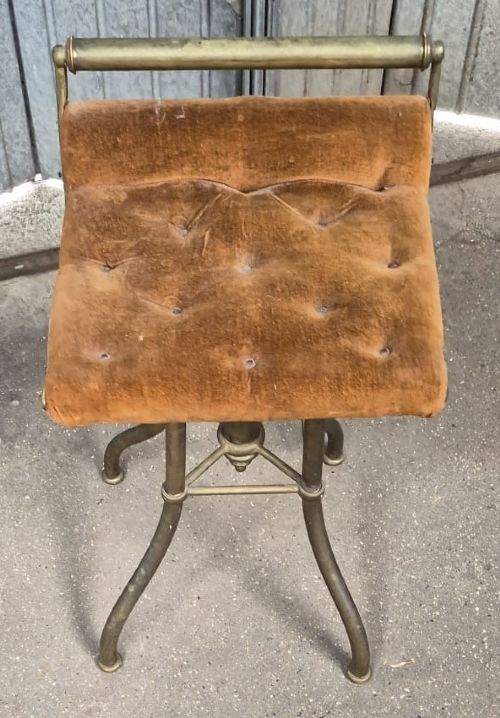
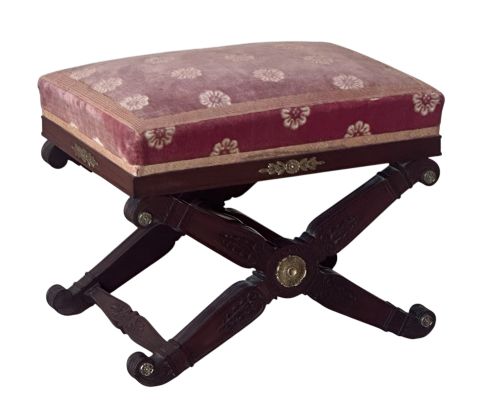
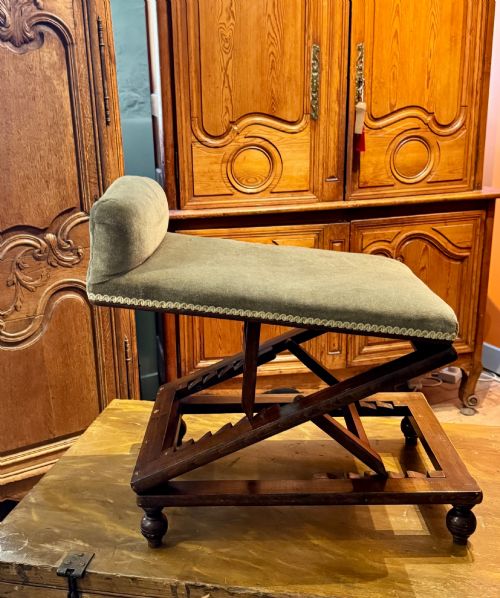
Beyond standard footstools, buyers encounter specialised pieces such as revolving music seats, gout stools, and X-frame forms drawing on French Empire and Regency vocabulary. Woods range from rich mahogany and rosewood to lighter satin-finished walnut and ebonised frames, often pairing with elaborate textiles.
Origin points span English country houses and town salons alongside continental French workshops, offering everything from simple turned legs to ornate giltwood frames. The resulting variety accommodates both intimate firesides and grander reception rooms without losing domestic utility.
Materials and Technique
Makers constructed these frames predominantly from dense hardwoods like mahogany, walnut, oak, and rosewood, ensuring structural integrity for weight-bearing seating. Giltwood and ebonised finishes provided decorative alternative surfaces, sometimes complemented by applied brass mounts or carved details.
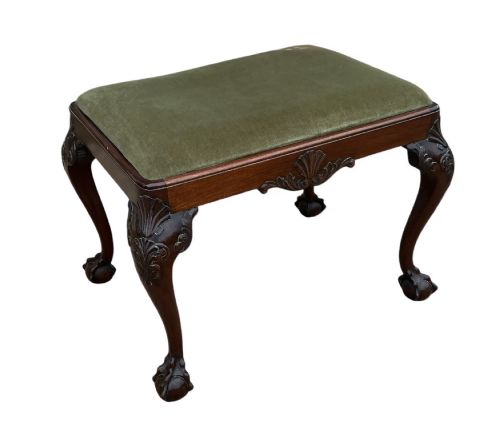
Upholstery techniques relied on traditional stuffing methods beneath textile layers, securing plush velvet, needlepoint, or patterned fabrics over supportive webbing and springs. Frames frequently featured turned, fluted, or cabriole legs, occasionally terminating in brass castors or carved lions paw feet.
Listings feature walnut, mahogany, and rosewood timber frames paired with velvet, textile, and brass elements across Victorian and Edwardian periods.
Assessing the Range
Quality rests in the sculptural confidence of the woodwork and the crispness of any carving upon the frame, distinguishing bespoke workshop production from simpler output. Well-drawn proportions and harmonious leg-to-seat ratios signal superior design intelligence in the original maker.
The integration of the upholstery with the timber frame dictates long-term visual success, where hand-stitched detailing and high-grade textile application complement the underlying architecture rather than mask weak joinery.
Hallett & Sons·James Shoolbred
The Velvet Upholstered Stool Glossary
- Centre stool
- A freestanding piece finished on all sides for placement in the middle of a room rather than against a wall.
- Gout stool
- An adjustable medical or domestic rest designed to elevate and support tired lower limbs, often associated with Victorian ingenuity.
- X-frame
- A structural design utilising intersecting diagonal stretchers or legs derived from ancient curule seating and revived during the Regency and Empire periods.
- Giltwood
- Timber treated with a thin layer of gold leaf or metallic powder over a prepared gesso ground to simulate solid gold.
Velvet Upholstered Stool: Frequently Asked Questions
Where should I place a centre stool?
These large upholstered pieces suit the middle of a generous drawing room or dressing space where they can be approached from all sides.
Ensure adequate walking clearance around the perimeter so the piece functions effectively as a focal point and an accessible seat.
How do I care for antique velvet?
Protect the textile from direct sunlight to prevent colour fading and preserve the pile's natural lustre.
Gentle brushing with the grain helps maintain the nap while avoiding moisture damage to historic fabric foundations.
Can I use a piano stool at a desk?
Many revolving or adjustable music stools offer height flexibility that suits modern working or vanity surfaces.
Check the mechanical action and minimum clearance height before pairing the seat with a fixed-height desk.
What defines a window seat?
These elongated benches feature lower profiles designed to fit neatly beneath architectural window openings without blocking natural light.
They provide convenient perches for reading while echoing the surrounding joinery and stylistic motifs of the room.