




Spring Landscape Painting
A spring landscape painting brings the fresh growth and blossom of the season directly into a room through oil and watercolour.
Spring Landscape Painting
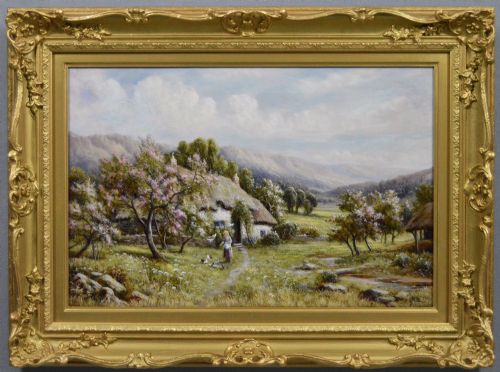
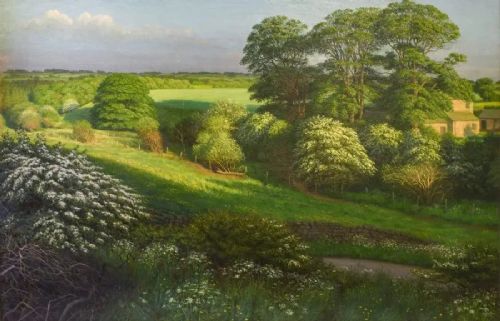
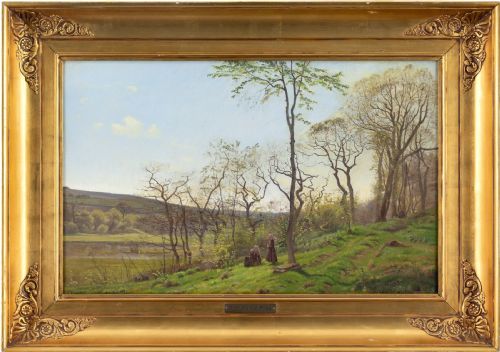
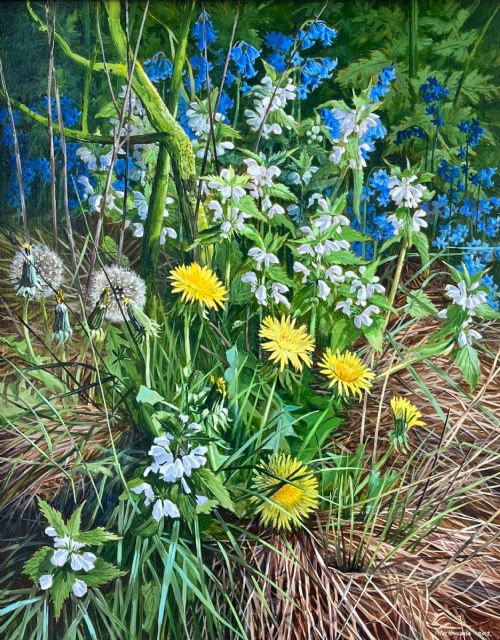
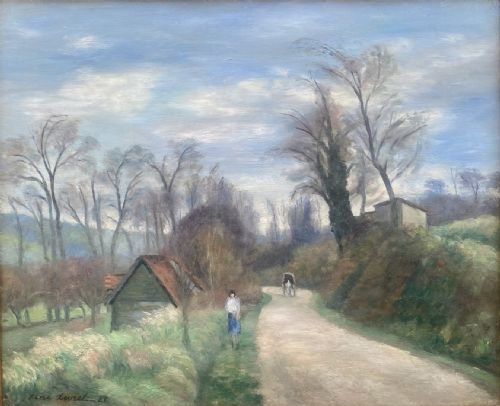
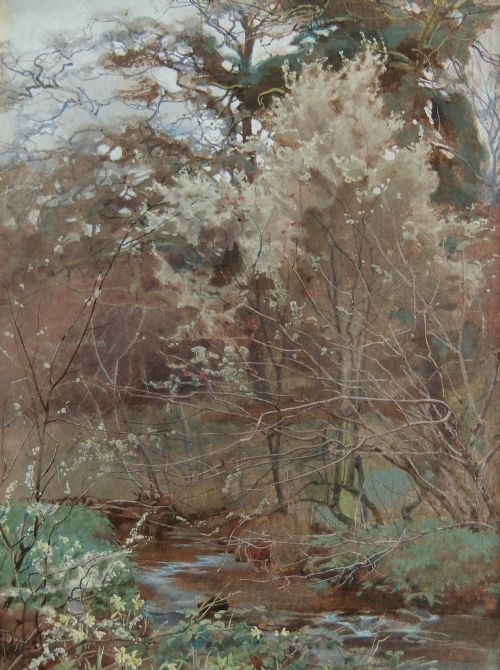
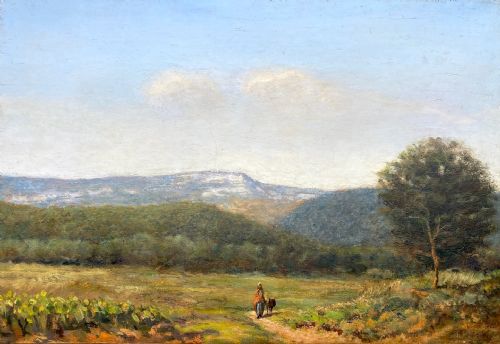
A spring landscape painting captures the reawakening of the countryside through depictions of blossoming trees, bluebells, and fresh pasture. These works range from mid-nineteenth-century village views to post-impressionist scenes of rural paths and orchards.
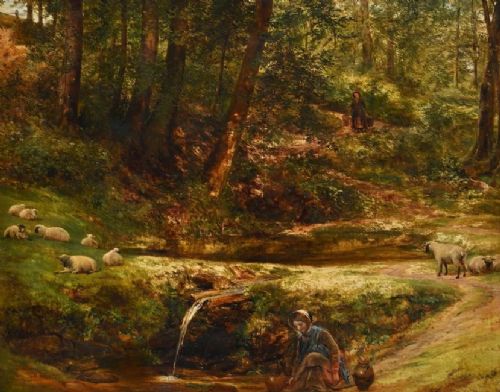
The pieces on this page span the Victorian and Edwardian eras into the twentieth century, employing traditional British and continental realist styles. Domestic settings such as Hampshire woods and London parks appear alongside French and Danish rural views.
Most examples utilise oil on canvas or delicate watercolour on paper to record the specific light and flora of the season. Buyers encounter both intimate watercolours of garden flowers and large oil canvases showing rolling hills under spring skies.
Evaluating quality
The distinction between standard works and exceptional examples lies in the artist's handling of atmospheric light and seasonal colour harmony. Masterly brushwork conveys the specific texture of budding foliage and damp earth rather than relying on formulaic greenery.
Compositional strength and the preservation of the original paint surface elevate a piece above purely decorative topographical records. Works that retain their original period framing and bear clear attribution to recorded artists command greater interest among collectors.
Listings feature works executed in oil on canvas, watercolour on paper, and oil on panel across Victorian, Edwardian, and mid-twentieth-century periods.
Robert John Hammond·Raymond Booth·Harald Foss·Richard Redgrave·Peter Newcombe·Rene Levrel·Alfred W Parsons·Beatrice Parsons·Owen Bowen·Charles Edward Wilson·Martin Lamotte·Alfred Oliver·Margaret Fisher Prout·Peter Marius Sand Holm
The Spring Landscape Painting Glossary
- Oil on canvas
- A painting medium consisting of pigment mixed with a drying oil, applied to a woven fabric support stretched across a wooden frame. This combination allows for deep colour saturation and visible impasto texture.
- Watercolour
- A paint consisting of colour pigments suspended in a water-soluble vehicle, typically applied to paper. It creates luminous washes that reflect light from the white paper beneath.
- Post-Impressionism
- An art movement developing from the late nineteenth century that rejected strict naturalism in favour of expressive forms and emphatic use of colour. Artists focused on symbolic content and personal vision over exact optical recording.
- Giltwood frame
- A wooden picture frame covered with a thin layer of gold leaf applied over a prepared gesso surface. These frames often reflect the specific decorative taste of the period in which the painting was created.
- Oil on panel
- A painting executed directly onto a prepared wooden board rather than fabric. This rigid support provides a stable base often favoured by artists working on a smaller scale.
Spring Landscape Painting: Frequently Asked Questions
How do I date a spring landscape painting?
Dating relies upon stylistic markers, costume details of figures on paths, and the framing materials characteristic of specific decades. Victorian and Edwardian works often bear signatures, exhibition labels, or inscriptions on the reverse.
Comparison with documented works by the same painter helps narrow the decade of execution. Pigment analysis and canvas stamps provide further technical evidence for the period of creation.
Where should I hang an oil painting?
These works require interior walls away from direct sunlight and steady sources of artificial heat to protect the canvas and pigments. Stable humidity prevents the wooden stretcher bars and canvas from warping over time.
Adequate wall space allows the composition and original frame to be viewed without crowding from neighbouring pieces. Proper lighting enhances the subtle colour variations in the spring foliage.
How do watercolour paintings differ from oils?
Watercolours utilise a paper support and translucent washes that create a lighter, more immediate impression of seasonal light. They are traditionally framed behind glass to protect the delicate paper surface from atmospheric dust and moisture.
Oil paintings utilise heavier canvas or panel supports and opaque paint layers that build physical texture. This allows for deeper colour saturation and greater durability against environmental changes.
What subjects appear in these landscapes?
Common motifs include blossoming orchards, bluebell woods, thatched cottages, and figures walking along country paths. Artists frequently recorded specific regional flora such as blackthorn and primroses to signal the arrival of spring.
Views extend from English coastal bays and London parks to French provincial hillsides and Danish monasteries. Each location offers a distinct interpretation of seasonal light and rural life.