




British Watercolour Artwork
British watercolour artwork brings together historic landscapes, coastal scenes and portraits rendered on paper through the nineteenth and twentieth centuries.
British Watercolour Artwork
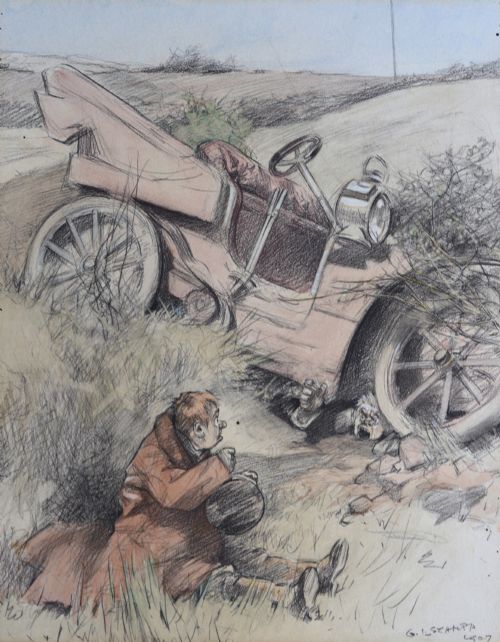
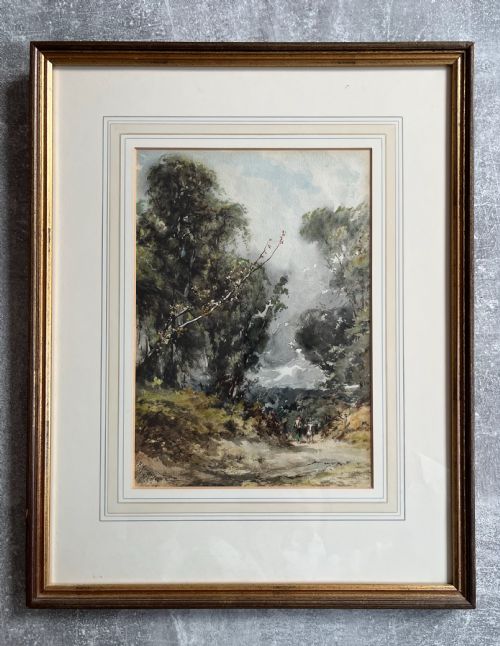
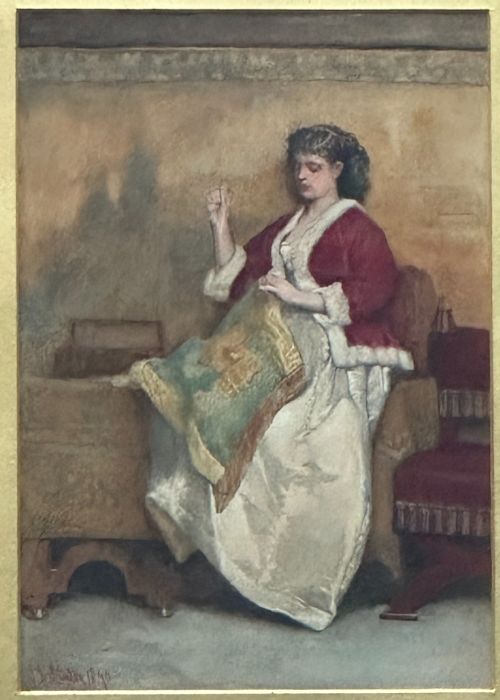
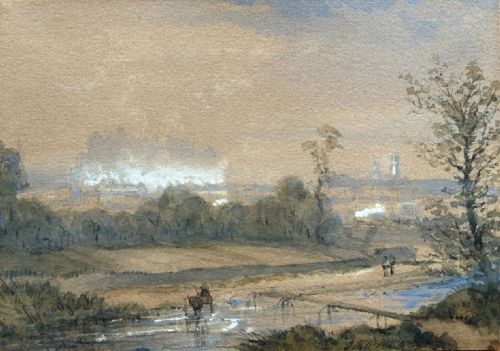
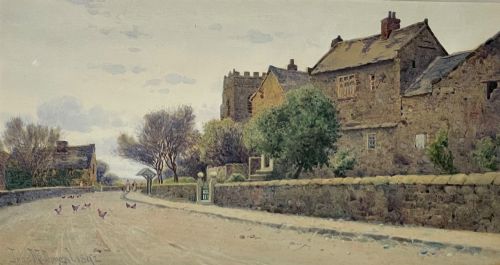
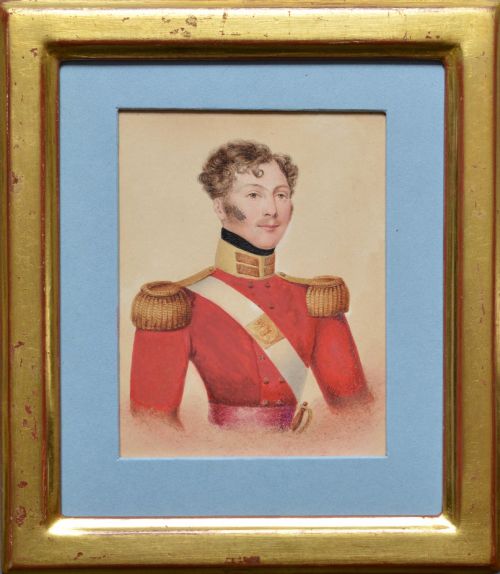
British watercolour artwork encompasses framed paintings, drawings and fine art works executed on paper surfaces by artists working within Victorian, Edwardian and mid-twentieth-century periods. These pieces frequently depict British landscapes, coastal scenes, town views and figure studies originating from named painters and regional schools.
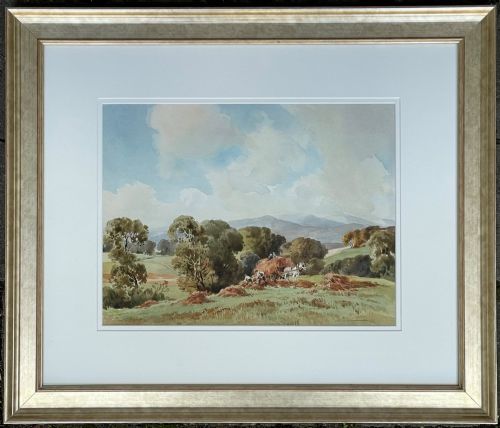
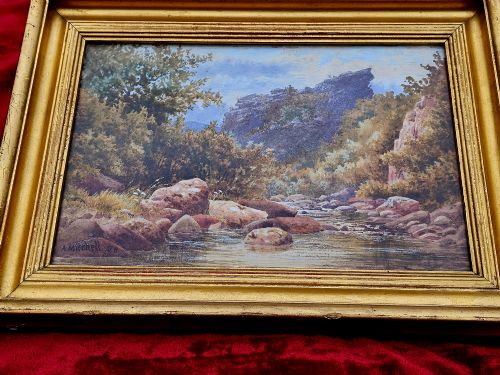
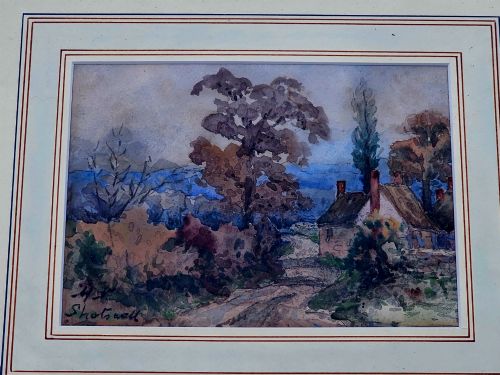
The selections available range from detailed nineteenth-century maritime and architectural compositions to early twentieth-century impressionist sketches and pastoral watercolours. Buyers encounter framed artworks that capture historic scenes ranging from Scottish highlands and Welsh rivers to bustling English harbours.
Works span from the early Victorian era through to the 1960s, reflecting shifts in British painting styles over more than a century. The primary forms include landscape paintings, townscapes, and maritime views preserved behind glass in wood and gilt wood frames.
How they were made
These works rely primarily on watercolour pigment and paint applied to paper surfaces, occasionally augmented with ink for definition and detail. Artists utilised fluid washes of colour alongside precise brushwork to capture light and atmosphere across landscapes and marine views.
Finished pieces are typically mounted behind glass and housed within wood frames, often finished in gilt wood to protect the delicate paper supports from environmental damage. The combination of water-soluble pigments and absorbent paper requires careful handling to preserve the integrity of each painting.
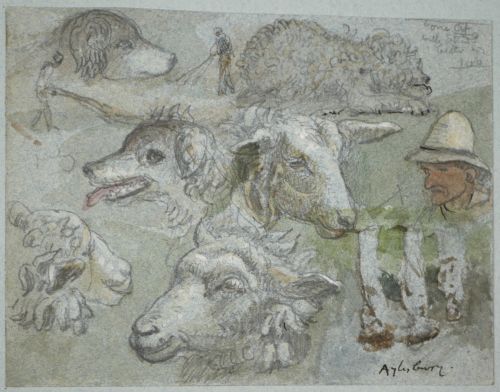
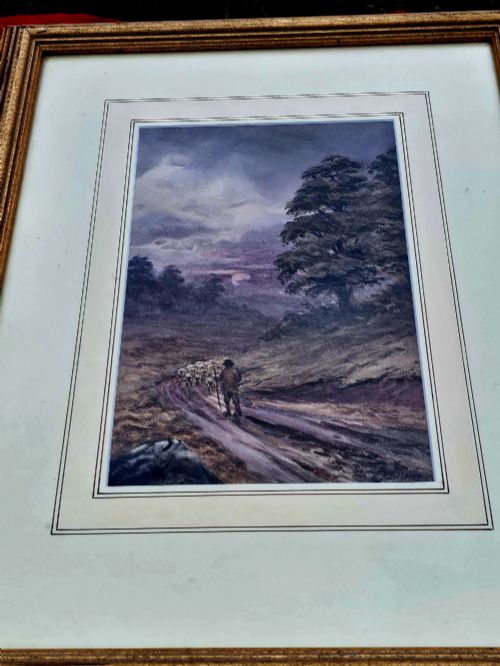
The inventory records diverse subject matter including Cumbrian lakes, Venetian canals, Welsh rivers, and scenes of sheep herding.
What varies in quality
The distinction between standard examples and exceptional pieces rests upon the surety of the brushwork, the composition's balance, and the artist's ability to capture light and atmosphere. Master watercolourists achieve remarkable depth and luminosity with thin washes of pigment, whereas lesser works appear flat or heavy-handed.
Condition and presentation also play a significant role, particularly the survival of the original paper support free from excessive fading or damp staining. Original framing materials, including period wood and gilt wood surrounds, contribute to the historical integrity of the piece.
George Lorain Stampa·George Fotherly Hargitt·James Orrock·Sir James Dromgole Linton·John R Prentice·THOMAS ELLISON·Alfred Young Nutt·Percy Lancaster·James Smetham·John McDougal·EJ Letheren·Robert Leslie Howey·James E Aitken·Charles Edward Dixon·John E Aitken·William Banks Fortescue·William Joseph Boyes·Henry Silkstone Hopwood·Muriel Metcalfe·Fred Lawson·FRANK WILLIAM SCARBROUGH·ROBERT THORNE WAITE·John Smith Atherton·HECTOR CAFFIERI·RICHARD HENRY WRIGHT
The British Watercolour Artwork Glossary
- Watercolour paint
- A medium consisting of pigment suspended in a water-soluble binder, applied to paper to create transparent washes of colour. It requires a light touch and precise control from the artist.
- Gilt wood
- Wood framing treated with a thin layer of gold leaf or metallic gilt, commonly used to frame nineteenth and early twentieth-century fine art. It provides a decorative and protective border for works on paper.
- Wash
- A thin, fluid layer of diluted watercolour pigment spread evenly across paper to create backgrounds, skies, or broad areas of tone. Skilled application prevents harsh edges and uneven pooling.
- Framed artwork
- A finished painting or drawing protected behind glass within a supportive structural surround. This presentation shields vulnerable paper surfaces from dust and atmospheric moisture.
- British School
- A term applied to works created by artists working within Britain whose specific individual identity is unrecorded or part of a broader artistic movement. It groups together stylistically similar pieces from particular eras.
British Watercolour Artwork: Frequently Asked Questions
How should I hang watercolour artwork?
Watercolour pieces on paper require protection from direct sunlight to prevent the pigments from fading over time. Position them on interior walls away from windows and direct heat sources.
Ensure the room maintains stable humidity levels to protect both the paper support and the surrounding wooden frame from warping or moisture damage.
What periods do these watercolours cover?
The available selection spans from the early nineteenth century through the Victorian and Edwardian eras, extending into the mid-twentieth century up to the 1960s.
Each period exhibits distinct stylistic qualities, moving from traditional academic landscape painting towards impressionist and regional British twentieth-century movements.
Are these watercolours painted on paper?
Yes, the primary support for these works is paper, utilising watercolour pigment, paint, and occasionally ink. The absorbent nature of paper allows for the translucent washes characteristic of the medium.
Protective glass is typically placed over the paper during framing to shield the delicate surface from dust and physical contact.
How do I identify a Victorian watercolour?
Victorian watercolours often feature detailed handling of landscapes, maritime scenes, or narrative figure studies, reflecting the period's preference for descriptive realism and historical subjects. Signatures, dates, and framing styles frequently offer clues to the exact decade of creation.
Many pieces from this era also bear inscriptions detailing specific British locations, from Welsh rivers to coastal harbours.