


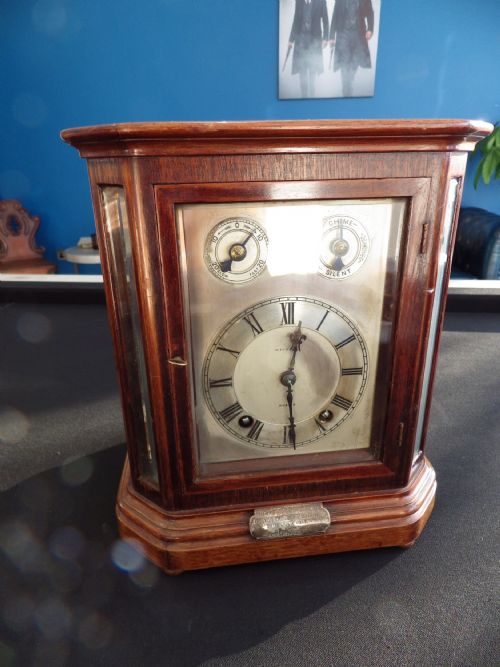

Spring Driven Mantel Clock
A spring driven mantel clock brings mechanical precision and rich timber cases into a room, offering both reliable timekeeping and period artistry.
Spring Driven Mantel Clock
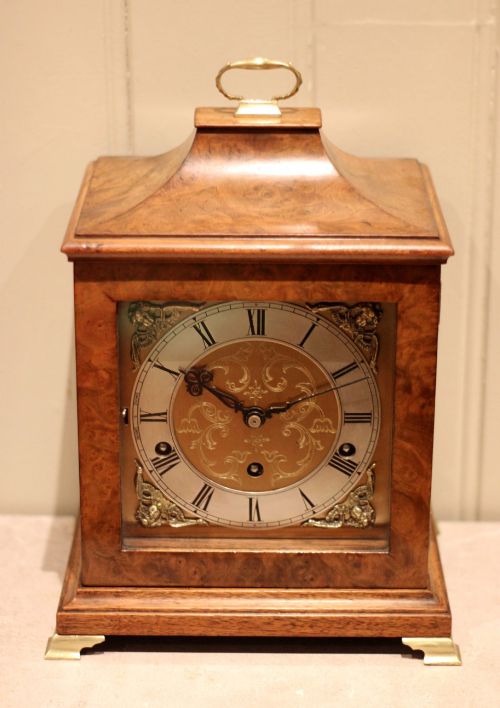
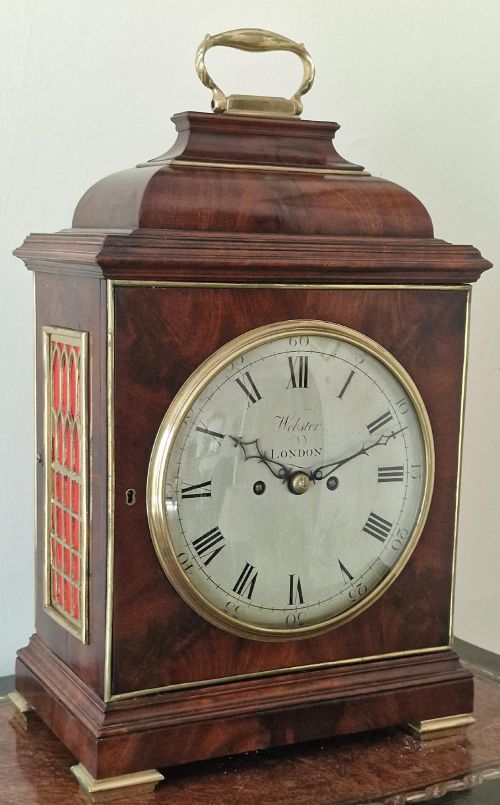
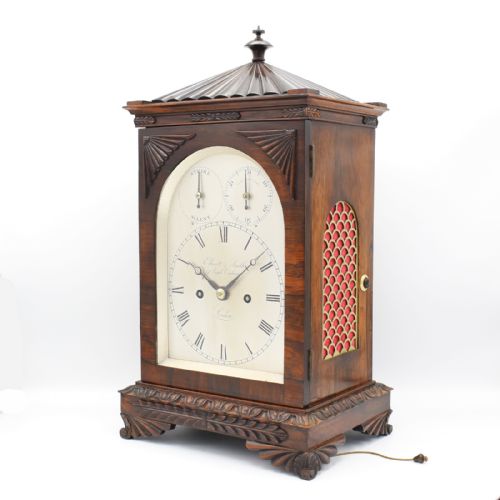
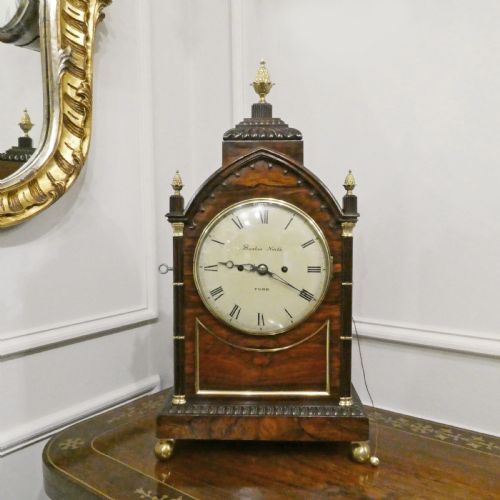
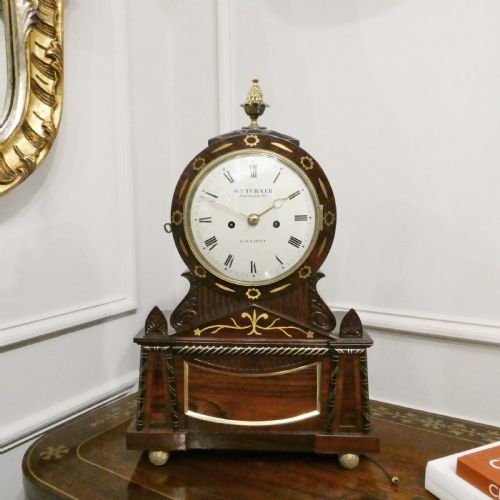
When you search for a spring driven mantel clock, you encounter timepieces that span from the seventeenth century through the Victorian era, housed primarily in table or bracket formats.
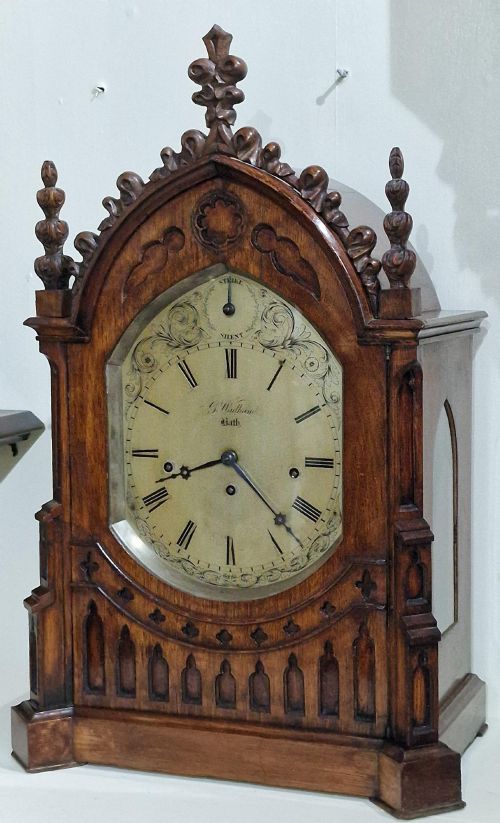
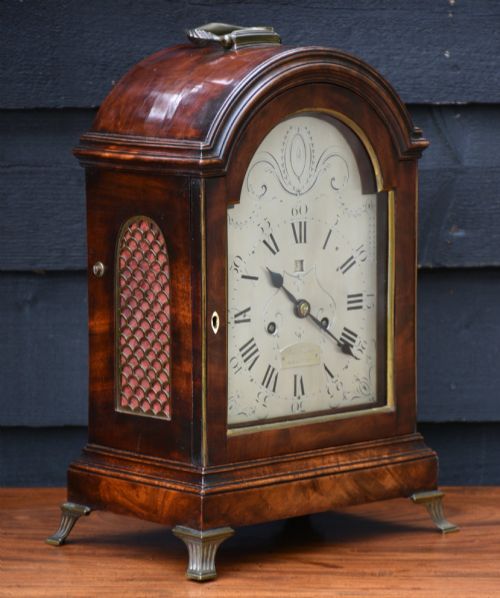
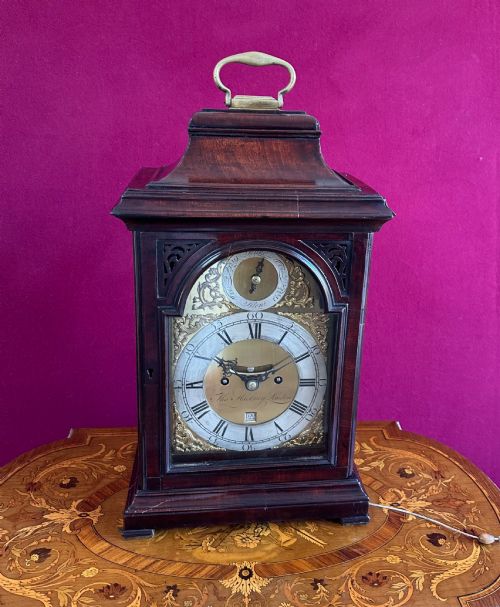
The most common examples on this page are mahogany bracket clocks from the Georgian and Victorian periods, alongside earlier ebony and rosewood designs.
These pieces originated as portable household timepieces placed on brackets, tables, or mantelpieces, reflecting the technical ambitions of British horology.
Materials and construction
Cases rely heavily on dense hardwoods such as mahogany, rosewood, and ebony, frequently polished or inlaid with brass and silver mounts.
Internal mechanisms combine brass plates and gear trains powered by steel springs, paired with enamelled or silvered metal dials.
Listings feature spring driven mantel clocks spanning the 17th, 18th, 19th, and early 20th centuries.
Judging quality in spring driven mantel clocks
Quality rests in the precision of the movement, the integrity of the timber case, and the reputation of the maker inscribed on the dial.
Early verge and fusee movements demonstrate higher mechanical complexity than later mass-produced variations, distinguishing superior examples.
Mappin & Webb·Ellicott & Smith·Barber & North·John Pepys·William Speakman·Paul Philip Barraud·Winterhalder & Hofmeier
The Spring Driven Mantel Clock Glossary
- Fusee
- A conical pulley used in spring-driven clocks to maintain even power as the mainspring unwinds.
- Verge escapement
- An early type of escapement mechanism that controls the release of power in the gear train.
- Bracket clock
- A portable clock designed to sit on a dedicated wall bracket or flat furniture surface.
- Dial
- The face of the clock where hours and minutes are displayed, often featuring engraved silvered brass.
Spring Driven Mantel Clock: Frequently Asked Questions
Where should I place my clock?
Position the clock on a stable mantelpiece, table, or wall bracket away from direct sunlight and drafts.
A level surface ensures the pendulum or balance wheel beats evenly and keeps accurate time.
How do I identify the period of a clock?
Examine the timber, case style, dial construction, and signature of the maker engraved on the movement.
Georgian and Victorian models exhibit distinct architectural revival styles and handle designs.
Do these clocks require professional servicing?
Mechanical clocks benefit from periodic cleaning and oiling by a qualified horologist to remove old, hardened lubricants.
Regular maintenance prevents wear on the brass pivots and steel teeth of the gear train.