


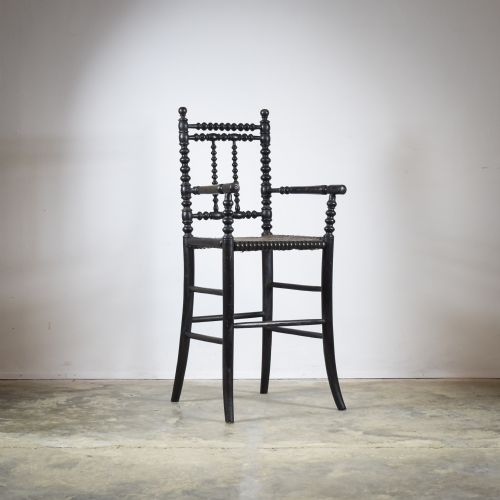
Spool Armchair
A spool armchair brings tactile, lathe-turned character to a room through distinctive bobbin mouldings.
Spool Armchair
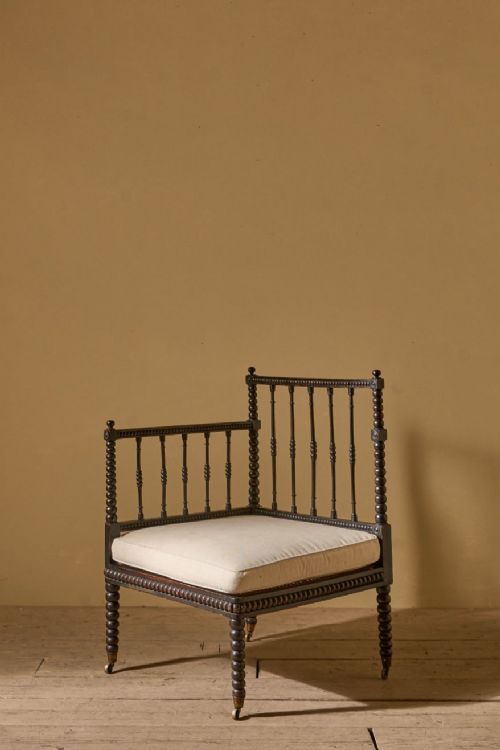
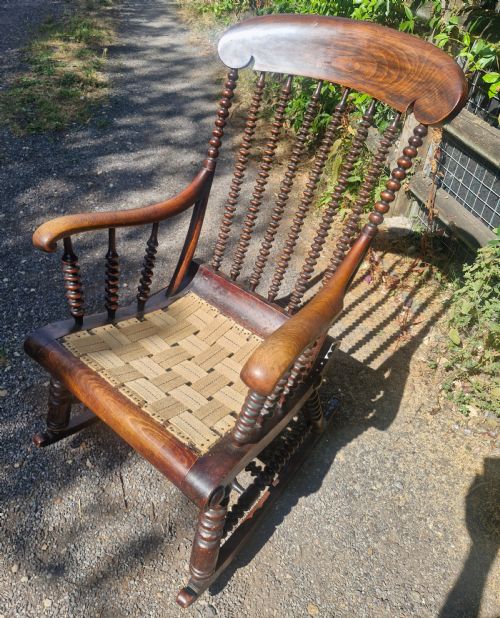
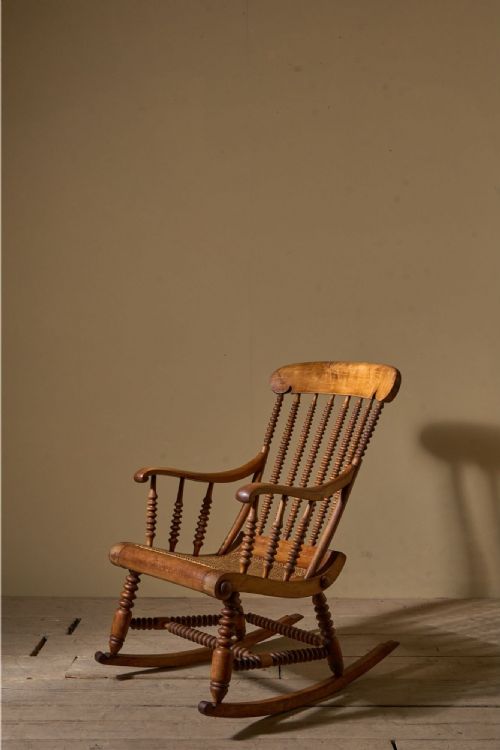
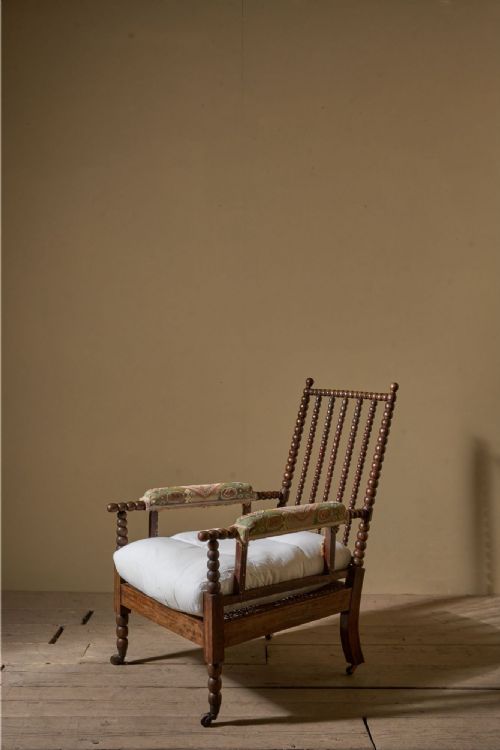
A spool armchair relies on cylindrical turned woodwork resembling a string of spools or bobbins, appearing across various 18th century, 19th century, and revival pieces. Buyers seeking a spool armchair encounter forms ranging from open armchairs and corner chairs to rocking chairs and country thrones.
The selections on this page span British, Swedish, Scottish, and Italian origins, demonstrating diverse regional interpretations of bobbin turning. Makers utilised woods such as oak, walnut, and ebonised wood, often pairing the wooden frames with fabric, velvet, cane, or textile seats.
Victorian examples dominate the selection, alongside earlier 18th century pieces and specific country vernacular items. These seating options serve practical domestic roles while introducing pronounced texture through their repetitive turned elements.
Materials and construction methods
Makers shaped the defining spool components by turning solid timber on a lathe to create uniform, rounded segments along the structural uprights and stretchers. Hardwoods like oak and walnut provided the necessary structural integrity for weight-bearing legs and arm supports.
Alternative finishes included ebonised wood and simulated rosewood to achieve darker, uniform appearances that emulated more costly materials. Frames accommodated various seating inserts, incorporating woven cane panels or upholstered pads covered in velvet, fabric, or textiles.
Factors that define quality
The precision and depth of the lathe work dictate the visual impact of the turning, where crisp, uniform spool profiles distinguish finer examples from softer, less defined cutting. The choice of primary timber influences durability and weight, with denser hardwoods offering superior structural stability over centuries of use.
Integrity of the joints and the original condition of the turned members establish the piece's preservation state. Additional refinement appears in the choice of seating material, such as finely woven cane or carefully fitted upholstery cushions that complement the turned frame.
The Spool Armchair Glossary
- Bobbin turning
- A form of woodwork created on a lathe that produces a series of rounded, spool-like shapes along a shaft. This technique defines the primary aesthetic of the entire chair frame.
- Ebonised wood
- Timber treated with a dark finish to imitate ebony. This treatment was common in Victorian furniture production to create stark contrast.
- Corner chair
- A seating form designed to fit into the corner of a room, typically featuring a curved backrest supported by multiple uprights. These often incorporate bobbin-turned legs and arm supports.
- Vernacular furniture
- Domestic pieces built by local tradespeople following regional traditions rather than high-style academic designs. Scottish and Swedish examples on this page reflect these local building methods.
- Cane seating
- Woven plant material used to form light, supportive seats or back panels. It offers flexibility and texture within a rigid wooden framework.
Spool Armchair: Frequently Asked Questions
What is a spool armchair?
A spool armchair is a wooden seat distinguished by legs, arms, or stretchers turned on a lathe to resemble a string of bobbins or spools. These chairs draw on various historical periods, notably the 19th century.
Craftsmen utilised woods like oak, walnut, and ebonised timber to build these frames, frequently pairing them with cane or upholstered cushions.
How do I date a spool armchair?
Dating relies on examining the timber species, construction joints, and stylistic context visible in the turning work. Pieces range from 18th-century oak examples to Victorian ebonised and regional country variations.
Regional styles, such as Swedish country folk art or Scottish vernacular pieces, also provide clues to the period and origin of the construction.
Where were spool armchairs made?
These chairs originated across multiple regions, reflecting distinct local interpretations of bobbin turning. The listings include English, Scottish, Swedish, and Italian examples.
Each region applied local woods and vernacular design preferences to the basic turned-spool framework.
How do I care for cane seats?
Cane seats require gentle cleaning and occasional dampening to maintain the flexibility of the plant fibres. Avoid placing them near direct heat sources that can dry out and snap the material.
Using a soft brush removes dust from the intricate weave without damaging the natural strands.