


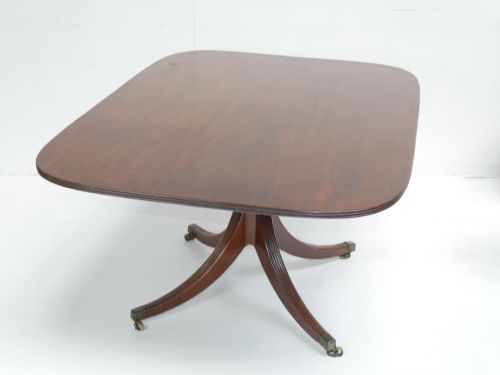


Splayed Leg Centre Table
A splayed leg centre table brings practical elegance and refined proportions to a room, standing as a versatile focal point for daily life.

Splayed Leg Centre Table
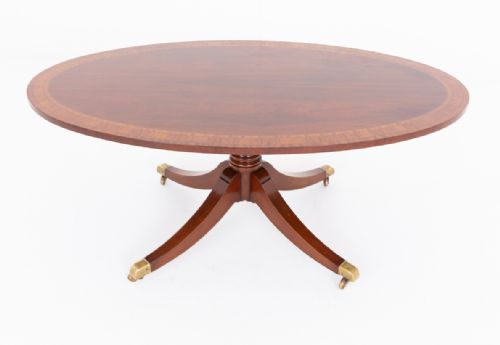
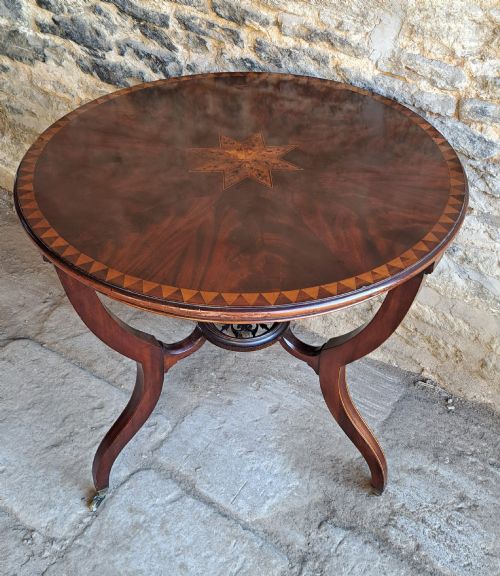
When you search for a splayed leg centre table, you are looking at freestanding pieces designed to occupy the middle of a room rather than sit against a wall. The versions you are most likely to meet on this page date from the Georgian and Regency periods through to the nineteenth century, often taking the form of breakfast tables, drum tables, or occasional tables.
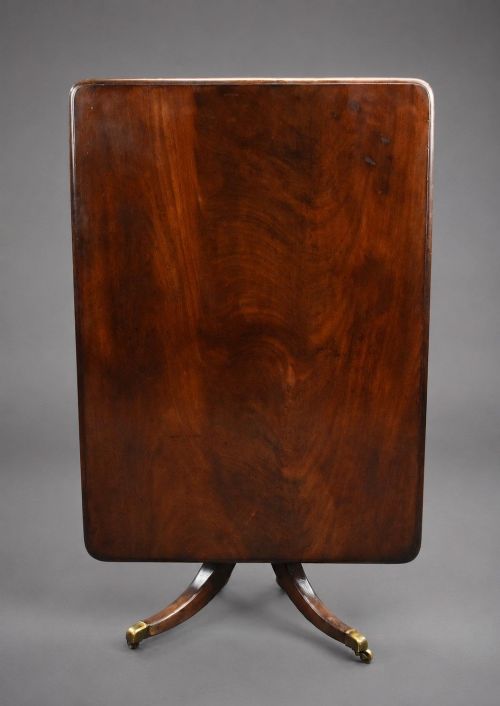
These forms include circular, oval, and rectangular surfaces supported by central pillars that branch out into distinct, angled legs. Such designs allow for generous legroom while maintaining a stable footprint on the floor.
Originating largely from British workshops alongside Scandinavian and continental makers, these pieces serve multiple functions as dining tables, coffee tables, and sofa tables. The defining characteristic remains the outward-slanting stance of the base supports.
How they were made
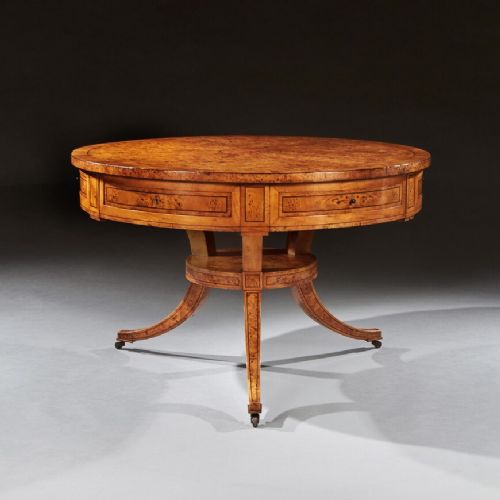
Cabinet makers utilised dense hardwoods such as mahogany and rosewood for the primary structure, often selecting flame veneers and burr maple to create richly figured tabletops. These timbers provided the necessary strength to support large surfaces while accepting a fine polished finish.
Inlay work added decorative contrast through satinwood and ebony banding, accentuating the edges and borders of the tops and pedestals. Turned columns connected the central platform to splayed leg configurations, which frequently terminated in brass castors for mobility.
Listings span multiple eras from the eighteenth century through the 1920s, showcasing Georgian, Regency, Victorian, and Biedermeier design traditions.
What varies in quality
The degree of refinement in the timber selection and veneer matching marks the difference between standard production and top tier examples. Cabinet makers who invested time in choosing figured mahogany or intricate satinwood inlay created surfaces with greater visual depth.
Structural integrity depends on the precision of the joints connecting the turned column to the splayed legs. Pieces displaying crisp carving, balanced proportions, and well-integrated brass castors represent the higher end of the range.
Gillows
The Splayed Leg Centre Table Glossary
- Splayed legs
- Support members that angle outward from a central pedestal or column to provide a stable base. This configuration creates a distinctive silhouette while keeping the floor area beneath the table clear.
- Drum table
- A circular library or centre table with a deep top containing drawers, usually resting on a central pillar and splayed legs. These pieces gained popularity during the Georgian and Regency eras.
- Tilt top
- A mechanism allowing the tabletop to pivot into a vertical position when not in use. This feature enabled tables to be stored flat against a wall to save space.
- Satinwood banding
- A decorative inlay technique using contrasting pale timber strips around the perimeter of a tabletop. It creates a defined border that highlights the primary wood species.
- Pedestal base
- A central vertical support that carries the weight of the tabletop down to the feet. In these pieces, it typically transitions into splayed legs.
Splayed Leg Centre Table: Frequently Asked Questions
How do I identify a Regency period table?
Regency pieces often feature dark hardwoods like mahogany or rosewood, frequently enhanced with brass inlay, ebony stringing, or finely turned pedestal columns.
The stance typically incorporates splayed legs resting on brass castors, reflecting the neoclassical design influences of the early nineteenth century.
Can a tilt top table be used daily?
Yes, the pivoting mechanism is designed for regular use, allowing the table to function as a standard dining or display surface when locked horizontally.
The original brass catches and wooden blocks secure the top safely in place during normal daily activities.
What woods were used for these tables?
Makers predominantly relied on mahogany, rosewood, and satinwood, often selecting figured veneers such as burr maple and flame mahogany for the tops.
Secondary timbers like oak or pine were sometimes utilised internally for drawer construction and framing beneath the surface.