
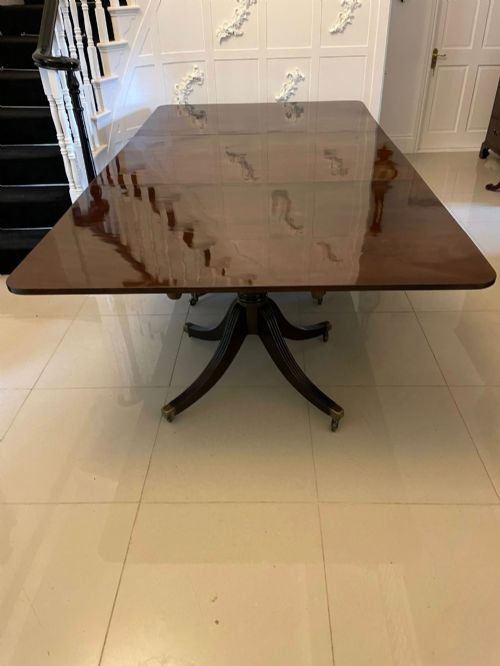
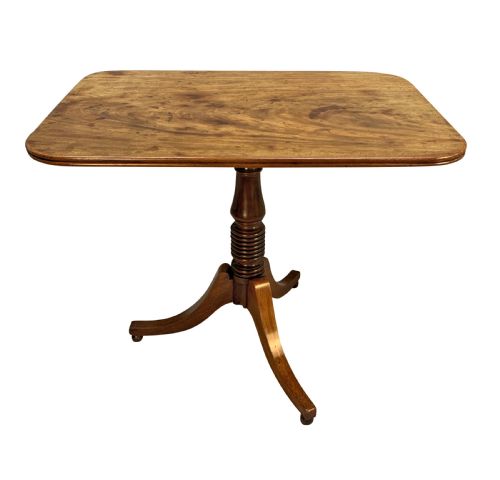
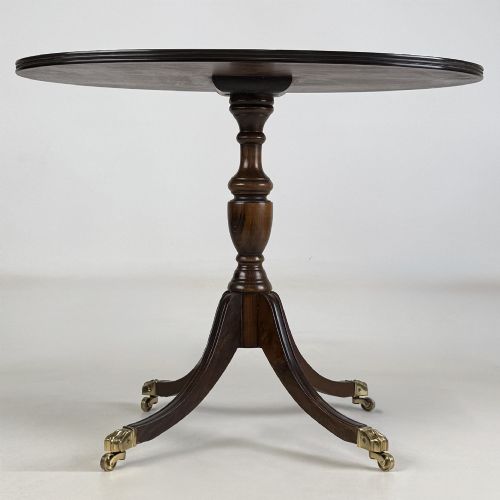
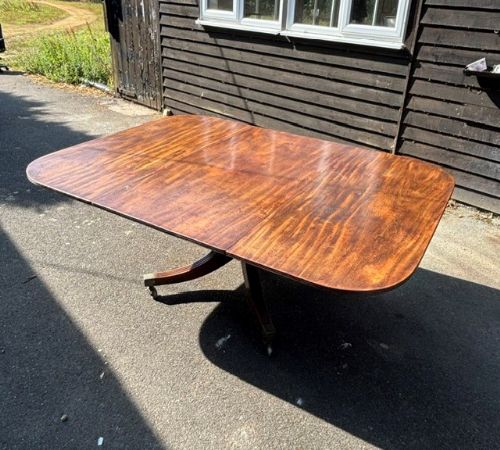
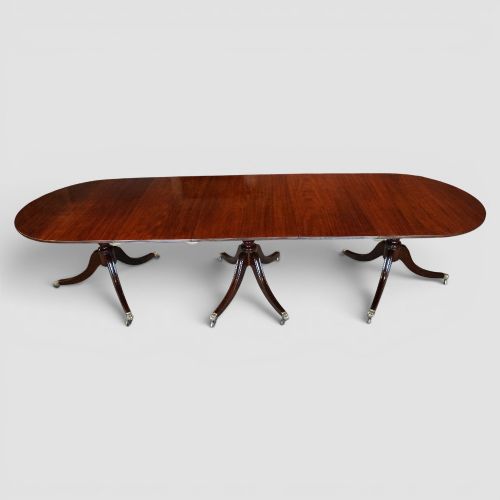
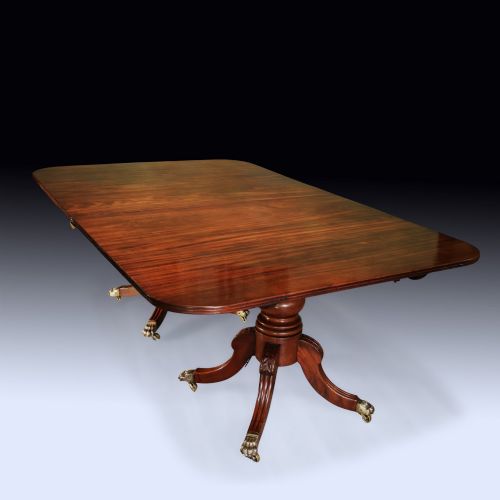
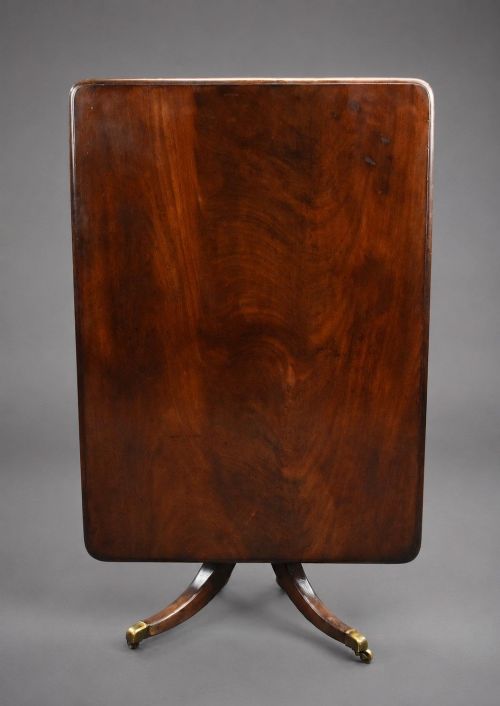
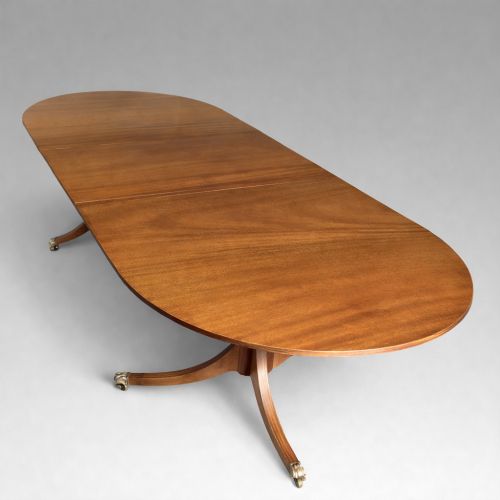
Splay Leg Pedestal Table
Splay leg pedestal table forms unite a central pillar with spreading supports, offering sturdy footing and timeless dining or occasional utility.
Splay Leg Pedestal Table
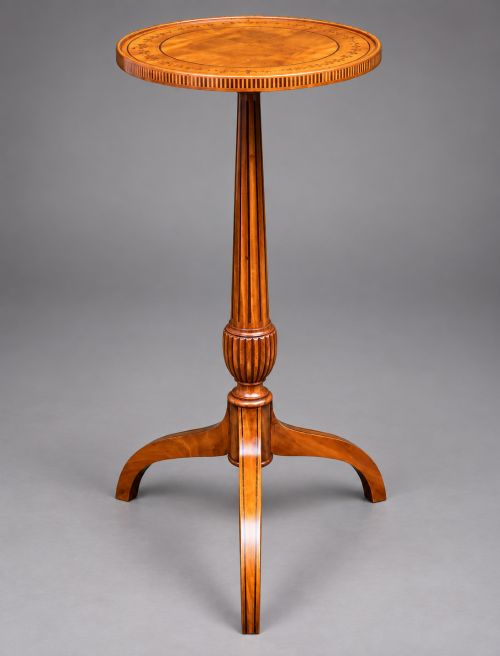
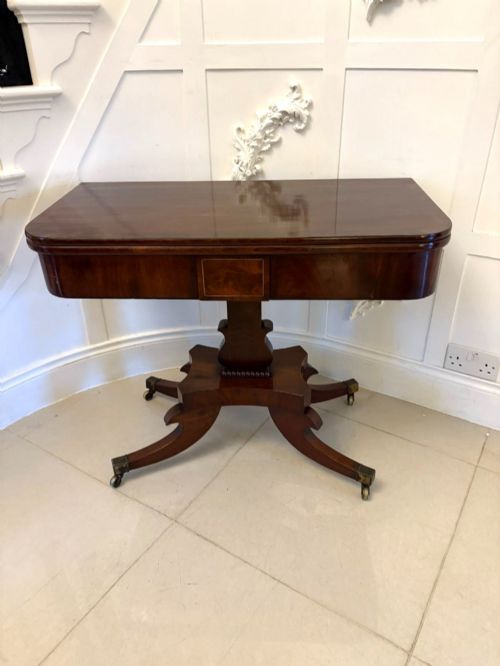
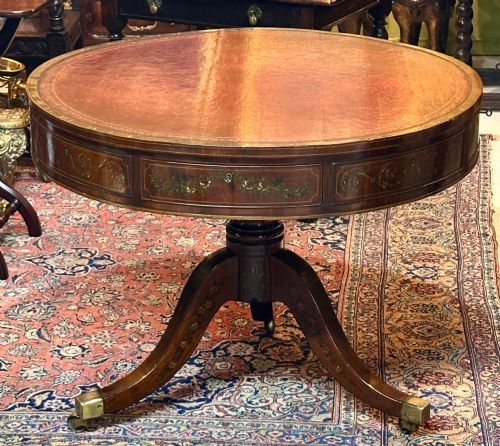
Buyers seeking a splay leg pedestal table find a variety of forms including dining tables, side tables, occasional tables, sofa tables, drum tables, coffee tables, card tables, and centre tables. These pieces span the 18th century, Georgian and Regency periods, through to the 19th and early 20th centuries.
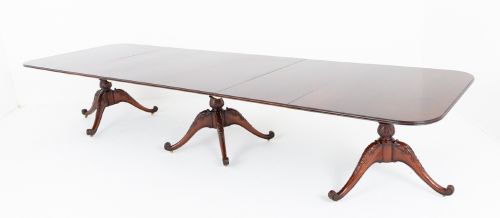
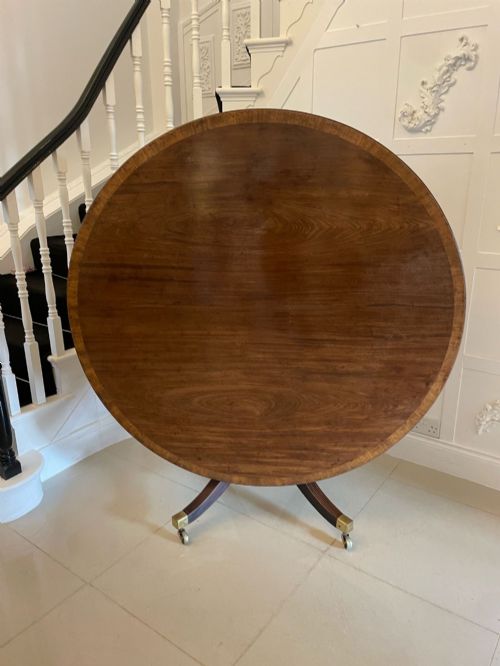
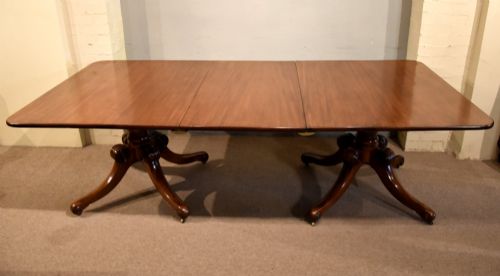
The pieces on this page originate from diverse design traditions, featuring Regency, Grand Regency, Regency Style, Regency Revival, George III, Sheraton, and Scandinavian Neo-Classical aesthetics. Dining tables and tilt-top breakfast tables frequently employ multi-pedestal configurations with supporting legs.
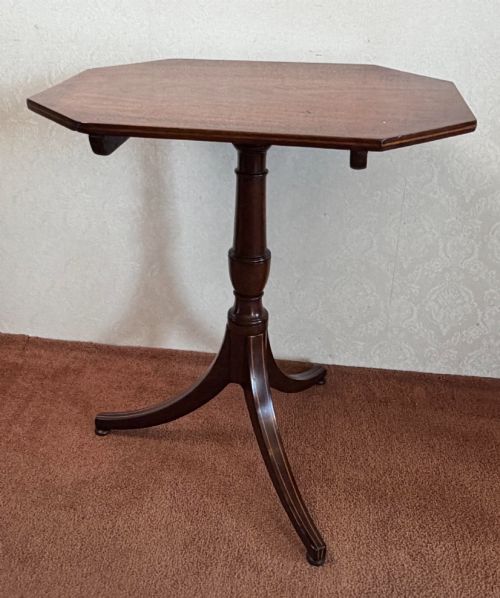
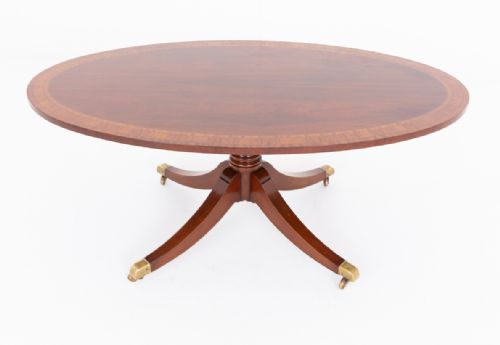
Smaller occasional, tea, and console tables frequently utilise single pillars with spreading tripod or quadruped splay legs, sometimes enhanced with brass casters or boxwood inlay. The selection encompasses compact occasional pieces alongside large extending dining tables seating up to fourteen.
How they were made
Cabinet makers utilised dense hardwoods, predominantly mahogany, Cuban mahogany, satinwood, rosewood, and oak, often selecting figured timber veneers like burr oak or burr root maple for tabletops. Inlays in contrasting timbers such as boxwood and ebony added decorative borders to tops and legs.
Structural stability relied on turned central pillars secured to robust splayed leg bases, sometimes incorporating brass hardware like casters for mobility. Tilt-top mechanisms on breakfast and side tables employed hinged blocks allowing the surface to fold flat when not in use.
Some tilt-top tables were designed to flip vertically and hide modestly in corners like oversized wooden shields.
What varies in quality
The selection of timber grain largely determines a piece's standing, with highly figured mahogany and exotic veneers representing finer workmanship than plain surfaces. Timber choice extends to the solidity of the central pillar and the precise joinery where the splay legs meet the column.
Proportion and decorative restraint separate standard examples from superior items, particularly in the carving of the legs and the subtlety of brass inlays or casters. The integrity of extending mechanisms and the smoothness of tilt actions indicate the original skill invested in the construction.
Thomas Butler of London·Whytock & Reid·James Mein
The Splay Leg Pedestal Table Glossary
- Pedestal table
- A table supported by a central pillar rather than four corner legs. This construction allows greater legroom around dining and card tables.
- Splay leg
- A support that angles outward from the central pillar toward the floor. This stance provides enhanced stability for circular and tilt-top tables.
- Tilt-top
- A tabletop hinged to tilt vertically when not in use. It enables the furniture to stand compactly against a wall.
- Pembroke table
- A small occasional table with hinged drop leaves on two opposing sides. These tables often feature pedestal or four-leg configurations.
- Caster
- A small wheel fitted to the base of a leg to ease movement. Brass versions are common on Regency pedestal designs.
Splay Leg Pedestal Table: Frequently Asked Questions
What is a splay leg pedestal table?
A splay leg pedestal table is a piece of furniture featuring a central vertical pillar supported by legs that angle outward. This design configuration balances floor stability with usable space around the perimeter.
Such tables appear across various formats, from multi-pillar dining suites to compact tripod occasional tables. The spreading base design prevents tipping while maintaining a clean silhouette.
How were pedestal tables used historically?
These tables served flexible domestic functions depending on their scale and top configuration. Smaller tilt-top and drum tables moved easily around living spaces for tea, reading, or games.
Larger multi-pillar variants accommodated formal dining and large gatherings. Drop-leaf and Pembroke formats allowed furniture to expand or contract according to the room's immediate requirements.
How do I identify a Regency pedestal table?
Regency pieces often display classical influences, dark mahogany timbers, and robust brass fittings such as paw feet or casters. The pillars frequently sit on quadruped splay leg bases.
Proportions tend to be strong and architectural, sometimes incorporating subtle stringing or inlay. These characteristics reflect the neoclassical tastes prevalent during the early nineteenth century.
How do I care for a mahogany table?
Mahogany surfaces benefit from consistent polishing with appropriate waxes to maintain the grain's depth and protect the timber. Avoiding direct sunlight and extreme humidity changes preserves the wood and prevents veneer cracking.
Careful handling of tilt mechanisms and avoiding excessive weight on drop leaves ensures the structural longevity of joints and hinges.