




Spirit Burner Tea Kettle
A spirit burner tea kettle brings self-contained warmth to the tea table, pairing a metal vessel with its own dedicated flame.
Spirit Burner Tea Kettle
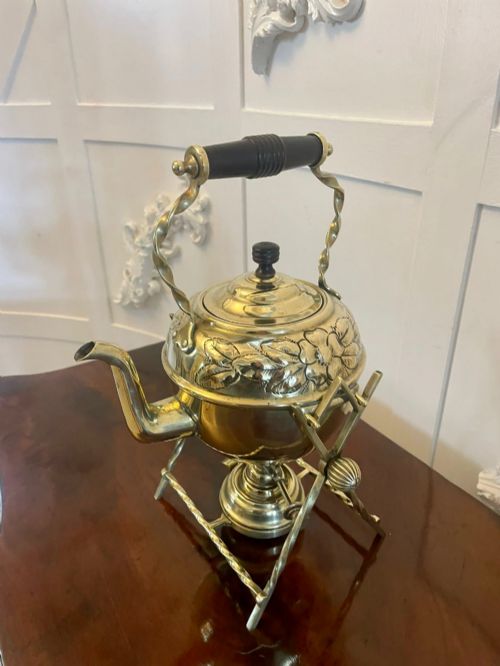
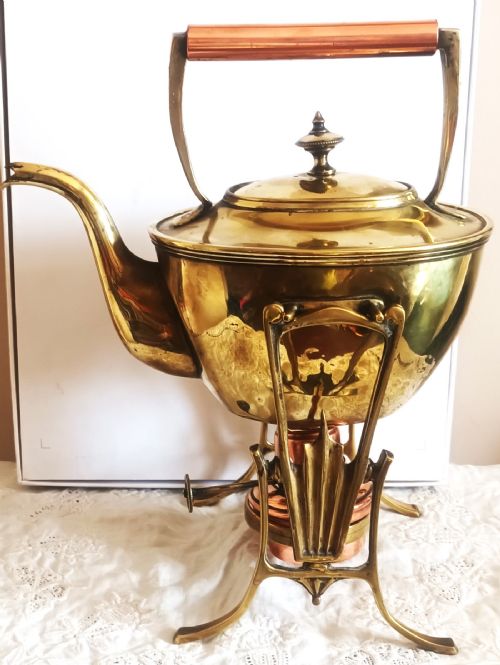
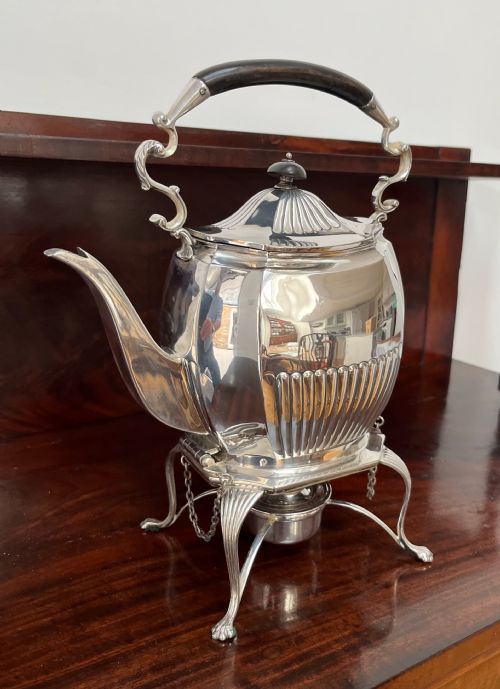
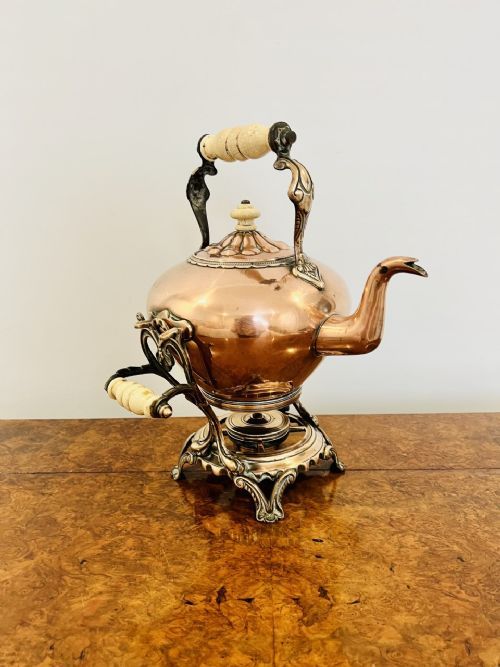
A spirit burner tea kettle combines a water vessel, a supporting frame or stand, and a small fuel burner beneath to keep water hot at the table. You will frequently encounter Edwardian and Victorian examples across this selection, often formed from gleaming silver plate, warm copper, or polished brass.
These pieces arrived in various distinct configurations, including standard desk or dresser styles, hanging copper designs, and Georgian Revival interpretations. The kettle itself typically detaches from its stand, allowing the burner to maintain the heat while tea is poured.
How they were made
Makers constructed these kettles primarily in silver plate, brass, and copper, hammering and joining sheet metals to form the bodies and stands. Handles frequently incorporate insulating elements such as wood, ebony, or bone to protect the hand from heat during use.
The accompanying stands demand careful smithing to hold the vessel securely above the tiny spirit burner. Burners themselves include small wick holders or caps to regulate the flame, completing a cohesive assembly of metalwork.
Several kettles include ingenious hanging designs or dedicated dresser stands so the tea flame could stay lively anywhere in the room.
What varies in quality
Quality rests heavily on the weight of the metal and the rigidity of the supporting stand. Finer examples display substantial gauge brass, copper, or silver plate that resists denting, alongside robust framing that keeps the kettle steady over the flame.
Attention to detail in the handles, burner fittings, and decorative mounts separates standard workshop output from exceptional pieces. Makers known for superior production invested care in insulating handles and ensuring every component of the stand matched the kettle in finish.
William Soutter & Sons·Fenton Brothers·Frederik Ellis Tim & Co
The Spirit Burner Tea Kettle Glossary
- Spirit Burner
- A small vessel holding liquid fuel and a wick that sits beneath the kettle stand to maintain water temperature. It usually includes a snuffer cap to extinguish the flame safely.
- Silver Plate
- A thin layer of silver fused to a base metal core such as copper or brass. It provided the opulent look of solid silver at a more accessible cost for Victorian and Edwardian households.
- Aesthetic Movement
- A late nineteenth century design style emphasising visual beauty over narrative meaning. Pieces from this movement often feature simplified forms and stylised decoration.
- Arts and Crafts
- A design movement valuing honest construction and visible hand craftsmanship. Copper kettles from this tradition often exhibit distinctive hammered surfaces and straightforward structural lines.
- Stand
- The metal frame that suspends or supports the kettle above the burner. Stands range from simple arched wirework to elaborate cast brass or silver-plated structures.
Spirit Burner Tea Kettle: Frequently Asked Questions
How do you use a spirit burner tea kettle?
Fill the kettle with hot water from the main source and place it securely into the matching stand. Light the fuel in the spirit burner underneath to maintain the serving temperature throughout tea service.
Extinguish the flame using the snuffer cap once tea is poured and the water is no longer needed. Allow the burner to cool entirely before handling or refilling the fuel reservoir.
What materials were commonly used for these kettles?
Makers relied heavily on silver plate, solid brass, and copper for the primary bodies and stands. These metals offered durability and held heat effectively while presenting a polished appearance on the dining table.
Handles frequently incorporate natural insulating materials like wood, ebony, or bone to prevent heat transfer during pouring.
How do I distinguish Victorian from Edwardian examples?
Victorian pieces often display heavier cast brass, rich copper tones, and more ornate Aesthetic Movement or revival ornamentation. They tend to feel substantial and utilitarian in their construction.
Edwardian items frequently lean towards brighter silver plate finishes and lighter architectural forms. They reflect the changing social rituals of the early twentieth century with refined elegance.