




Spiral Twist Leg Table
A spiral twist leg table brings tactile rhythm into a room, turning practical timber supports into sweeping sculptural statements.
Spiral Twist Leg Table
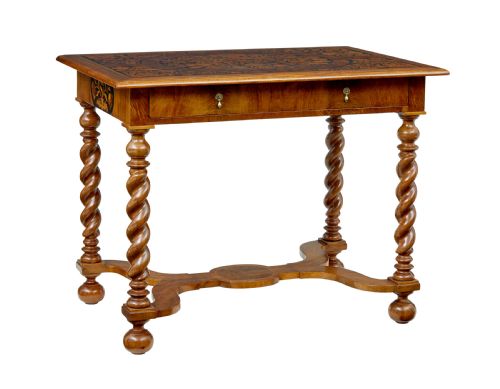
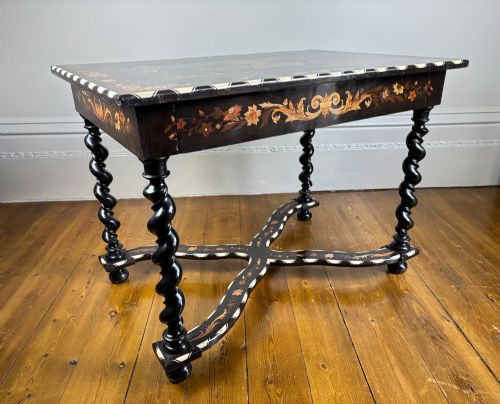
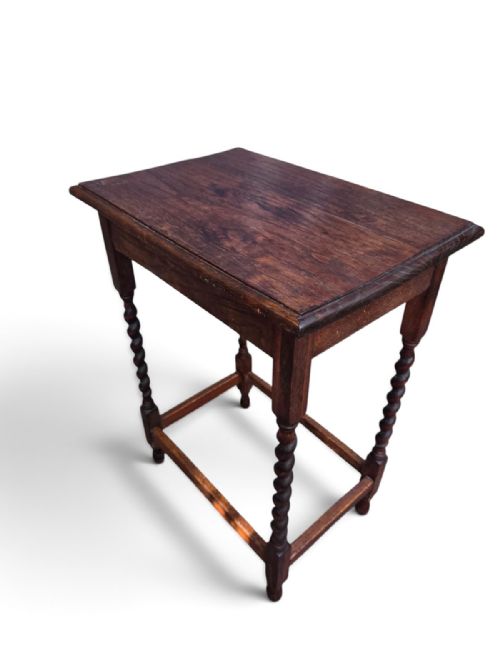
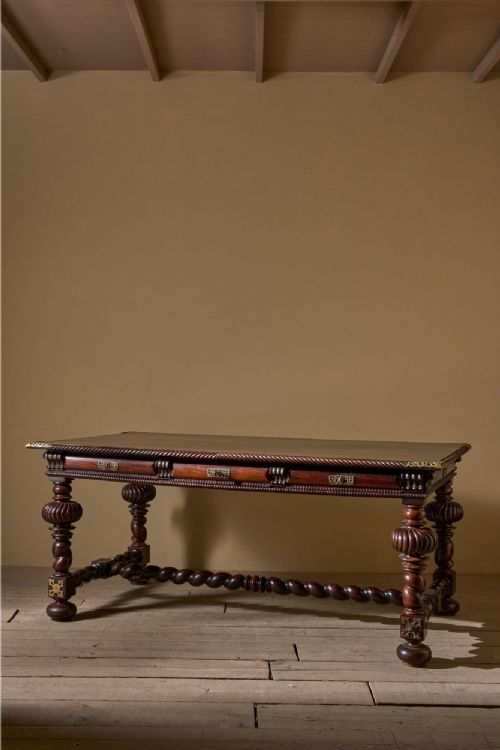
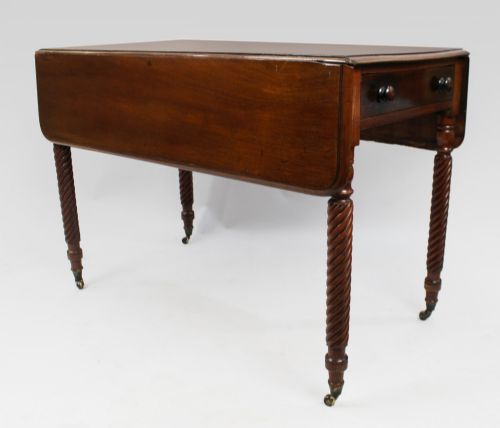
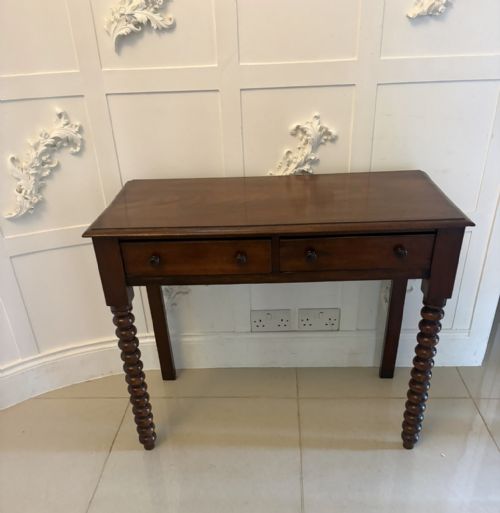
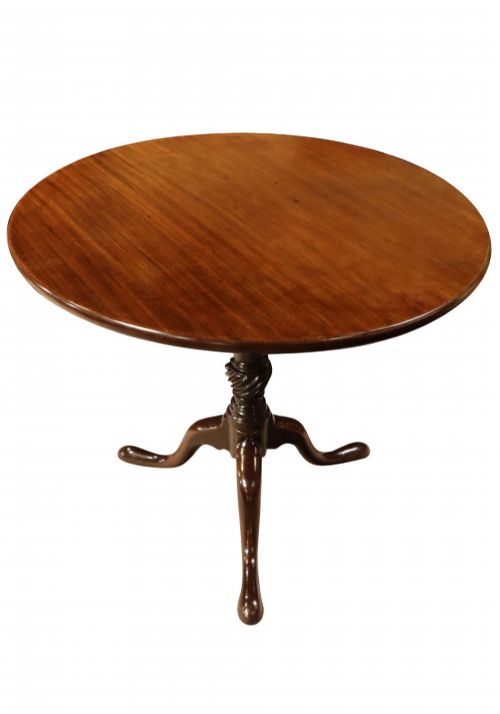
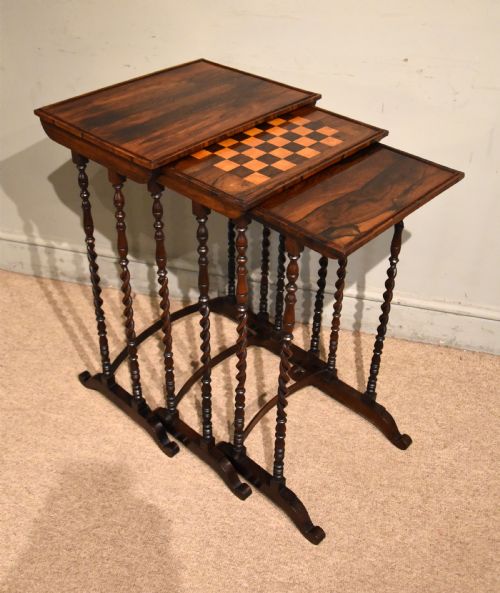
A spiral twist leg table centres on turned supports that trace a helical path toward the floor, appearing in forms from compact side tables to expansive dining pieces. When exploring a spiral twist leg table on this page, the visitor encounters formats ranging from occasional and side tables to desks, writing tables, and nests of tables.
The material palette spans centuries and timbers, featuring solid oak examples from the seventeenth and early twentieth centuries alongside walnut, mahogany, and rosewood iterations. Makers across periods from the seventeenth century through the Victorian era and into the early twentieth century applied these turned legs to both British and continental European designs, including Portuguese colonial and Dutch baroque revival pieces.
Materials and construction methods
Cabinetmakers constructed these tables using dense timbers such as oak, mahogany, walnut, and rosewood, often enhanced with marquetry, parquetry, bone inlay, and ebonised wood details. The signature twist was hand-carved or lathe-turned to achieve the continuous helical form.
Joinery techniques varied by period, from seventeenth-century gateleg and drop-leaf configurations to nineteenth-century Pembroke, writing, and occasional tables with drawers.
A good barley twist makes you want to run your hand down the leg just to check if it's carved or spun.
Assessing craftsmanship and execution
Quality rests in the crispness of the turning on the legs and the selection of timber veneers, where figured mahogany, burr walnut, or detailed marquetry elevate the piece. The integration of structural joints, original hardware, and secondary woods dictates how well a table has endured decades of use.
The Spiral Twist Leg Table Glossary
- Barley twist
- A turned wooden leg resembling the shape of a twisted barley sugar stick. This form gained prominence in seventeenth-century furniture and returned during later revival periods.
- Marquetry
- The art of applying decorative veneer pieces to a structure to form intricate pictorial or geometric patterns. It frequently appears on seventeenth-century and nineteenth-century continental tables.
- Gateleg table
- A drop-leaf table with hinged legs that swing outward to support the extended leaves. This design maximises surface area when needed while remaining compact when folded.
- Pembroke table
- A small occasional table featuring two hinged flaps on opposite sides. It typically includes one or more drawers and rests on slender legs.
- Parquetry
- Geometric mosaic woodwork used for surface decoration on tabletops. It differs from marquetry by relying on repeating angles and straight lines.
Spiral Twist Leg Table: Frequently Asked Questions
What periods do these tables come from?
The selection includes pieces originating from the late seventeenth century, the Georgian and Regency eras, the Victorian period, and early twentieth-century revival dates. Each era brings distinct timber choices and construction characteristics to the turned supports.
Earlier examples often utilise oak with gateleg or side table formats, while later nineteenth-century pieces embrace mahogany, walnut, and rosewood within writing and occasional table designs.
How do I distinguish oak from mahogany examples?
Oak typically displays an open grain with visible medullary rays and a lighter natural hue unless darkened by age or polish. It dominates seventeenth-century and early twentieth-century vernacular pieces.
Mahogany and rosewood offer tighter, darker grain patterns with reddish or deep brown tones, commonly associated with eighteenth, nineteenth, and Regency formal furniture.
Were these tables used primarily for dining?
While larger oak gateleg variants served dining purposes, the majority of forms on this page function as side tables, occasional tables, writing desks, and lamp tables. Their versatile sizing made them suitable for parlours, libraries, and studies.
Drop-leaf and Pembroke variations allowed households to adapt surface space depending on daily requirements, moving easily between rooms.
What is the difference between a twist and a bobbin turn?
A spiral twist follows a continuous helical path around the vertical axis of the leg, creating a dynamic diagonal rhythm. A bobbin turning consists of stacked spherical or spool-like shapes.
Both techniques appeared across seventeenth-century and nineteenth-century revival furniture, adding texture to structural supports.