
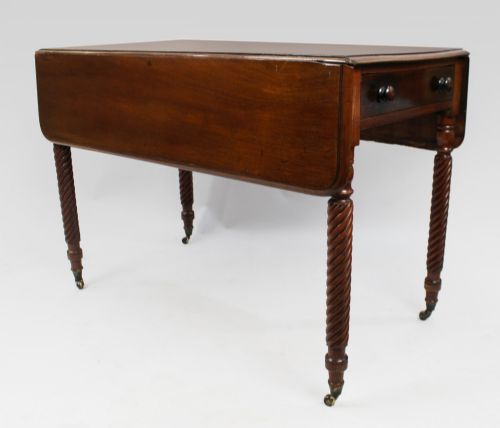
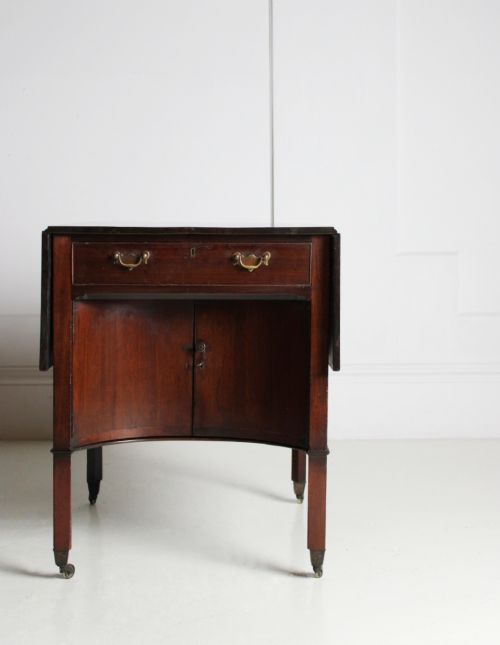
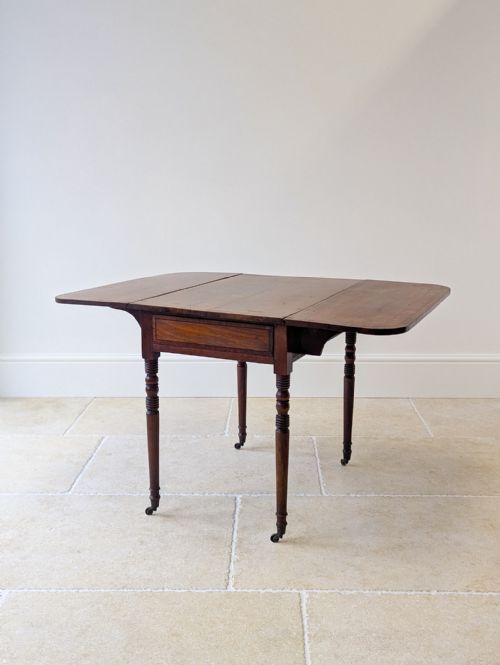
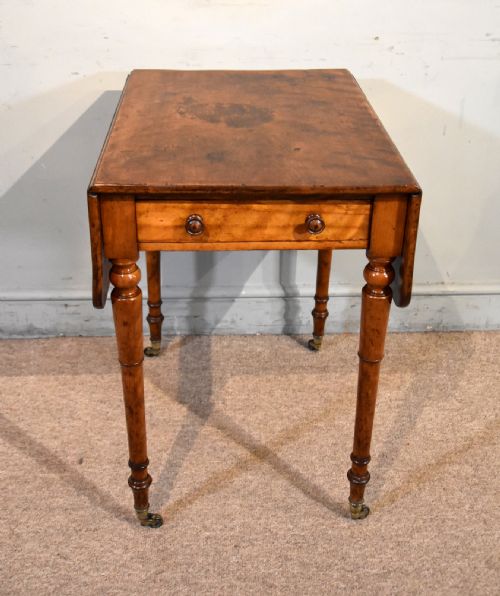
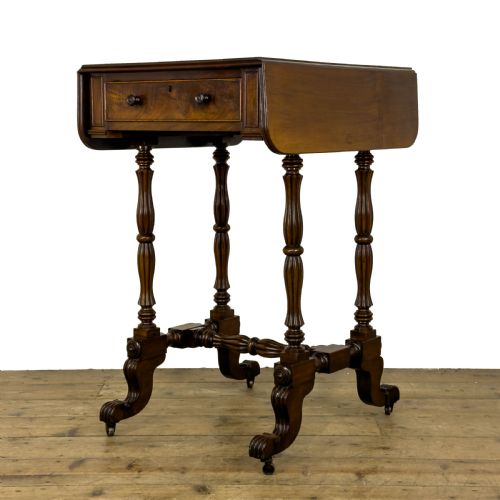


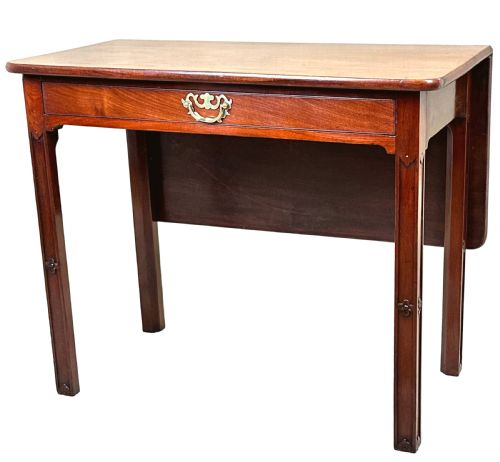


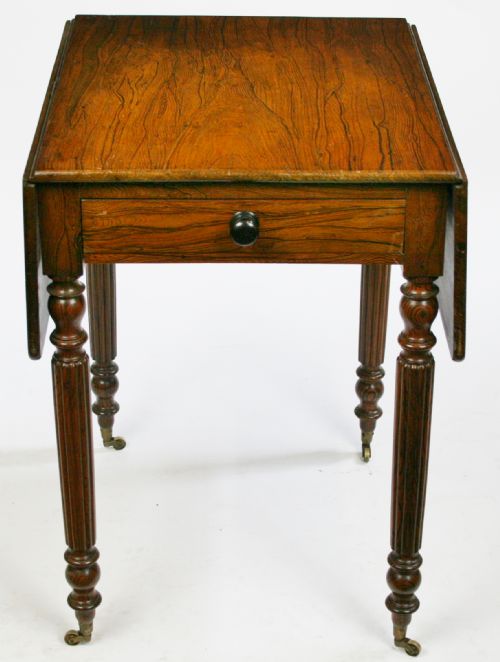
Carved Leg Pembroke Table
A carved leg pembroke table offers the grace of drop leaves and sturdy turned supports, bringing compact versatility to any room.
Carved Leg Pembroke Table
A carved leg pembroke table is a drop leaf table designed with hinged flaps on either side to expand the surface area when needed. These pieces serve as side tables, occasional tables, or compact dining tables depending on their scale and period.
The versions met most frequently on this page span the Georgian, Regency, and Victorian eras, alongside later interpretations like Queen Anne Revival and pieces from 1920. Materials range from traditional mahogany and satinwood to burr walnut and simulated rosewood.
Makers such as Johnstone and Jeanes appear in the records, demonstrating the calibre of craftsmanship found within these examples. Buyers encounter formats incorporating brass fittings and rich timber grains across the 18th century, 19th century, and 1800 markers.
Materials and construction
Makers relied heavily on solid and figured mahogany, complemented by decorative timbers like satin birch, satinwood, and burr walnut for surface impact. These woods were chosen for their grain patterns and stability when fashioned into drop flap mechanisms.
Brass fittings, including castors and hinges, provide functional durability and tonal contrast against the dark and warm timber tones. Simulated rosewood and varied wood treatments further expanded the decorative repertoire available to cabinetmakers.
Judging the standard
Quality rests primarily in the selection of figured timber veneers and the crispness of the carved legs. Superior examples display thoughtful grain matching across the drop leaves and the main top.
The integrity of the drop flap mechanism and the precision of the joinery distinguish finer workshop output from standard production. Cabinetmakers who invested time in robust framing and refined turning elevated the status of these tables.
Johnstone and Jeanes
The Carved Leg Pembroke Table Glossary
- Pembroke table
- A small table with hinged drop leaves on two opposite sides, supported by folding brackets or rule joints. This design allows the surface to expand for dining or writing and fold down to save space.
- Drop flap
- A hinged leaf attached to the main top of a table that drops down when not in supported use. It provides flexibility in room layout and surface area.
- Rule joint
- A moulding profile used on drop leaf tables where the leaf meets the fixed top. It conceals the gap and hinge mechanism during movement.
- Figured mahogany
- Timber exhibiting distinctive natural grain patterns such as flame, curl, or fiddleback. Cabinetmakers selected these sections for prominent display surfaces.
- Simulated rosewood
- A painted or stained wood finish designed to imitate the rich dark grain and contrasting tones of genuine rosewood. This technique was popular during the Regency and William IV periods.
Carved Leg Pembroke Table: Frequently Asked Questions
What is a pembroke table used for?
These tables served primarily as versatile surface furniture in principal rooms, functioning as writing desks, occasional tables, or small dining tables. The folding leaves allowed occupants to adjust the table size to the immediate task.
In period interiors, they stood easily beside seating or against walls until required for use. Their mobility made them adaptable assets throughout the Georgian and Victorian home.
How do I identify a Regency table?
Regency pieces often feature classical motifs, robust mahogany or exotic timber veneers, and distinctive brass details such as paw feet or castors. The lines lean towards architectural clarity influenced by ancient Greek and Roman design.
Makers working in this era utilised rich grain patterns and simulated finishes to create striking visual contrast. Comparing the leg turnings and timber choices against standard Georgian templates helps confirm the period.
Are drop leaf and pembroke tables different?
While all pembroke tables are a form of drop leaf table, not all drop leaf tables are pembrokes. Pembroke tables specifically feature two folding side flaps rather than one large folding surface spanning the entire width.
They also traditionally incorporate small drawers or dummy drawer fronts, distinguishing them from standard dining drop leaf formats. This specific proportion suits smaller spaces and occasional use.
How do I care for antique timber?
Maintain antique timber tables by keeping them away from direct heat sources and strong sunlight, which can dry out and fade the wood. Regular dusting with a soft, dry cloth preserves the polished surface.
Avoid silicone-based sprays and excessive moisture, opting instead for traditional beeswax when the finish requires nourishment. Gentle handling of the drop leaf hinges prevents strain on the original joints.