




Wooden Extendable Side Table
These wooden extendable side table examples offer adaptable surfaces in mahogany, walnut, and oak, formed through drop-leaf and gateleg designs.
Wooden Extendable Side Table
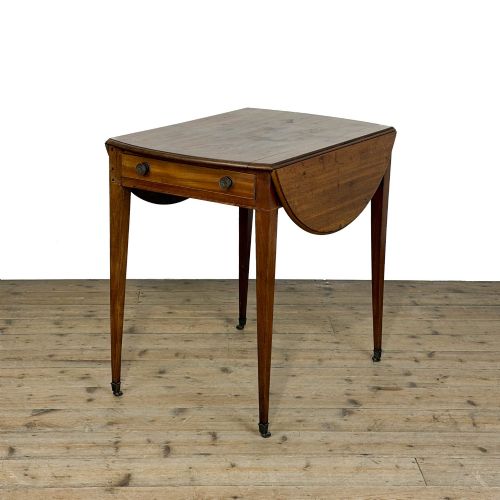
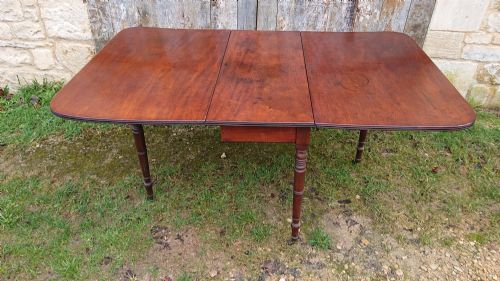
A wooden extendable side table typically takes the form of a Pembroke table, drop-leaf table, or gateleg table designed to expand when extra surface area is required. These pieces appear across Georgian, Regency, and Victorian periods, offering versatile domestic furniture that adjusts to the room.
The versions most commonly met on this page are mahogany drop-leaf and Pembroke tables originating from the Georgian and 19th-century periods. These items combine folding flaps with static central sections, occasionally supported by brass castors for mobility.
Earlier examples stretch back into the 18th century, including walnut drop-flap dining tables and oak gateleg tables with original patination. Such variations demonstrate how domestic utility evolved from sturdy oak construction towards finer mahogany and walnut veneers.
How they were made
Construction relies heavily on solid mahogany and walnut, frequently complemented by fine veneers applied to tabletops and drawer fronts. Cabinetmakers utilised timber grain orientation to decorative effect, ensuring structural stability across folding leaves and drop flaps.
Hardware such as original brass castors and hinges forms an integral part of the manufacturing process, allowing drop-leaf actions to function smoothly. Frame joints rely on traditional carpentry methods suitable for load-bearing dining and side surfaces.
Tables frequently arrive with small brass castors that squeak cheerfully across historic floorboards.
What varies in quality
Quality differences emerge in the choice of timber and the crispness of the cabinetwork, distinguishing standard utility pieces from finer parlour furniture. Superior examples display carefully selected mahogany or walnut figures and retained original brass hardware.
The integrity of the drop-leaf action and the preservation of surface patination dictate the standing of individual tables. Tables that retain their original castors and undisturbed timber finishes represent the higher end of surviving examples.
The Wooden Extendable Side Table Glossary
- Drop-leaf table
- A table with a fixed centre section and hinged leaves that fold down when not in use. It provides flexible surface area for dining or side placement.
- Gateleg table
- A table featuring hinged legs that swing outward like gates to support folding leaves. This design provides sturdy structural support for larger drop-leaf surfaces.
- Castor
- A small wheel attached to the bottom of furniture legs to facilitate movement. Original brass variants indicate period authenticity.
Wooden Extendable Side Table: Frequently Asked Questions
What is a wooden extendable side table used for?
These tables function primarily as adaptable furniture pieces that remain compact against a wall until additional surface area is needed. Raising the hinged leaves transforms a narrow side table into a dining or serving surface.
Historically, they served flexible domestic roles in parlours and dining rooms where space economy mattered. Today, they continue to provide practical utility alongside period character.
How do I distinguish a Georgian table from a Victorian one?
Georgian and Regency pieces tend to showcase lighter proportions, refined mahogany timber selection, and restrained decorative elements. Victorian examples often present heavier construction and larger overall dimensions.
Examining the secondary timbers, construction joints, and hardware style helps clarify the manufacturing period. Cabinetmaking techniques shifted noticeably between the 18th and late 19th centuries.
How do drop-leaf mechanisms work?
Drop-leaf mechanisms rely on hinged wooden flaps supported by pivoting wooden brackets, swing-out legs, or gatelegs. Lifting the leaf engages the support structure underneath to hold the expanded surface level.
When lowered, the flaps hang vertically against the sides of the central table frame. This allows the furniture to occupy minimal floor space when fully closed.
How should I care for antique wooden tables?
Maintain antique wooden tables by keeping them away from direct heat sources and strong sunlight, which can dry out timber and damage polish. Regular dusting with a soft, dry cloth preserves the finish.
Applying occasional appropriate wax feeds the wood without building up heavy residues. Avoid placing damp items directly onto antique surfaces to protect the historical patination.