


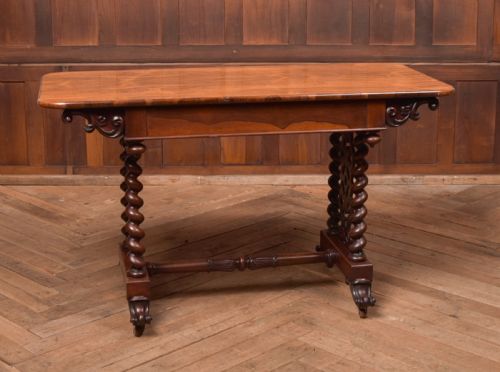
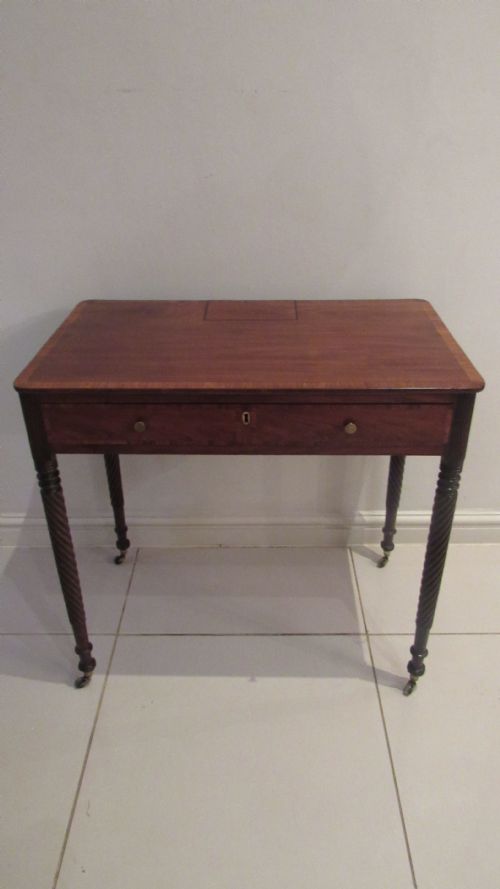
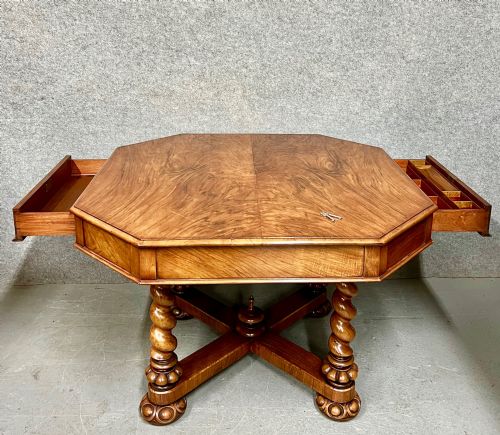
Spiral Leg Writing Table
A spiral leg writing table brings tactile warmth and period character to a study.
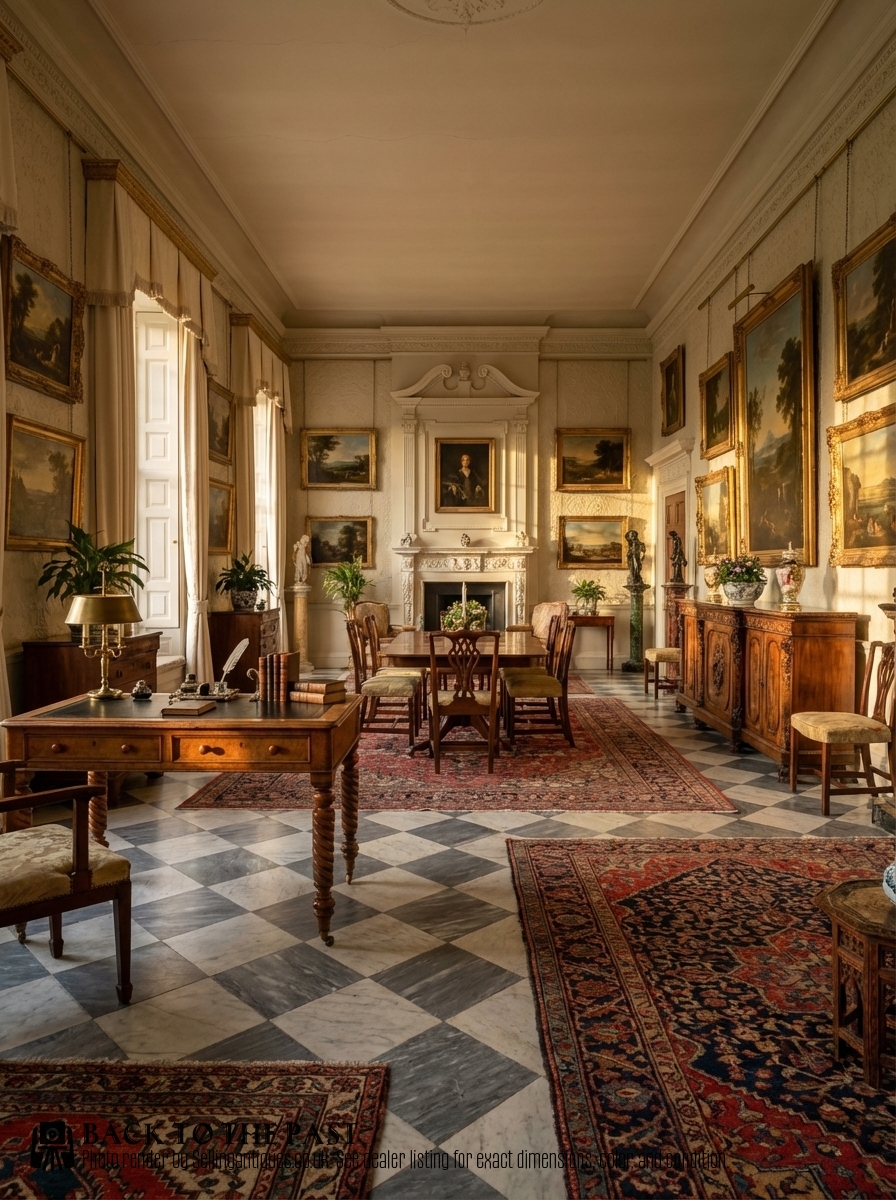
Spiral Leg Writing Table
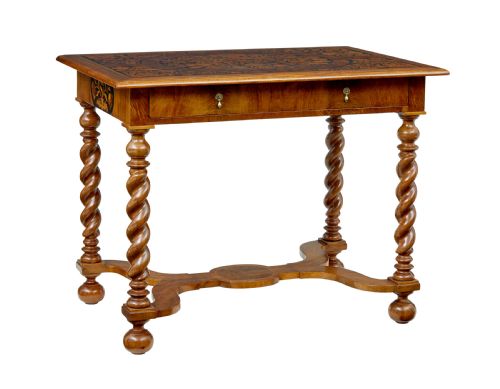
A spiral leg writing table combines a sturdy working surface with distinctive turned supports that catch the light. These pieces serve as functional desks or side tables, appearing across the Georgian, Victorian, Regency and seventeenth-century periods.
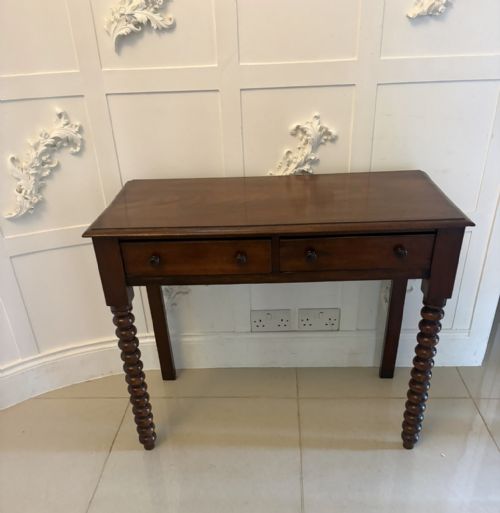
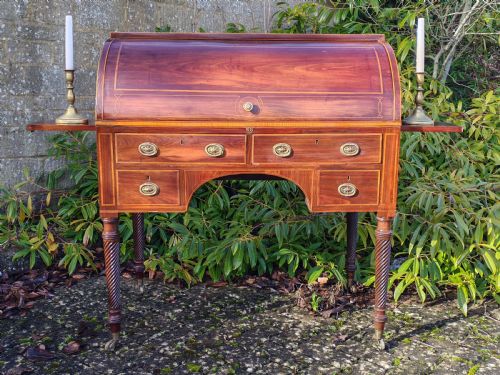
The version most commonly met on this page is the Victorian or Georgian mahogany or oak writing table featuring barley twist or spiral legs. Makers constructed these items for everyday correspondence and study, often incorporating drawers or leather-lined surfaces.
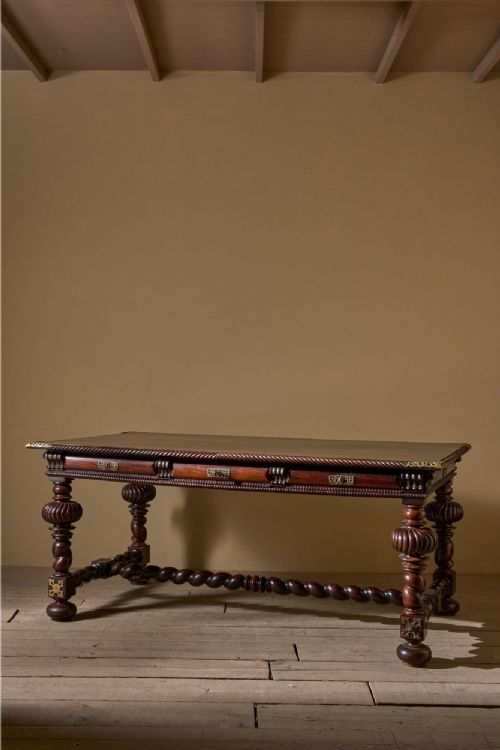
Originating in domestic and library settings, these tables range from Portuguese colonial rosewood examples to English mahogany designs. Each piece reflects the functional requirements of its era, whether intended as a chamber table, library drum table or compact hall table.
How they were made
Cabinetmakers shaped dense timbers such as mahogany, oak, rosewood and goncalo alves into structural frames and turned supports. Lathe work created the characteristic spiral or barley twist legs, while brass hardware and leather inserts completed the functional surface.
Joinery methods varied according to period, utilising marquetry and satinwood inlay on seventeenth-century William and Mary examples alongside the heavier framing of Victorian and Regency pieces. Carpenters turned solid wood for the legs to ensure stability under daily use.
Some tables hid correspondence inside drop leaves or cylinder tops, keeping secrets safe from prying eyes.
What varies in quality
The distinction between standard examples and finer pieces lies in the crispness of the timber turning and the selection of figured wood. High-grade items display precise spiral carving on the legs and balanced proportions across the writing surface and underframe.
Material choice shifts the character of the table, with dense rosewood, goncalo alves and marquetry inlay marking more ambitious workshop output. The integration of original brass fittings and leather writing panels further separates accomplished cabinetwork from plain utility furniture.
Gillows
The Spiral Leg Writing Table Glossary
- Spiral leg
- A turned furniture support shaped in a continuous twisting helix, also known as a barley twist. This decorative form appears frequently on seventeenth-century and nineteenth-century tables.
- Writing table
- A freestanding desk designed primarily for correspondence and reading rather than heavy ledger work. These pieces often feature one or more drawers beneath the top.
- Mahogany
- A durable tropical hardwood prized for its rich reddish-brown colour and fine grain. Cabinetmakers utilised Cuban and other varieties extensively across Georgian and Victorian furniture.
- Marquetry
- The art of applying decorative veneer pieces to a structure to form intricate patterns. This technique appears on high-status seventeenth-century tables.
- Satinwood inlay
- Contrasting light-coloured wood inserted into recesses within a darker primary timber to create geometric or floral borders. It provides delicate visual detail on period furniture.
Spiral Leg Writing Table: Frequently Asked Questions
How do I date a spiral leg table?
Dating relies on examining the timber species, construction joints and overall stylistic proportions. Earlier seventeenth-century examples often feature marquetry and specific walnut or oak framing, whereas Victorian versions display heavier mass and different secondary woods.
Makers' stamps, where present, offer direct evidence of workshop origin and production date.
Where should I place a writing table?
These tables suit studies, living rooms or hallways as functional work spaces or display surfaces. Because many feature finished backs, they can stand away from a wall in the centre of a room.
Ensure the height matches your seating and keep them away from direct heat sources to protect the polished timber.
How do I care for antique timber?
Maintain the surface by dusting regularly with a soft, dry cloth and avoiding silicone-based polishes. Applying occasional quality wax preserves the moisture and natural lustre of woods like mahogany and rosewood.
Keep the room at a stable humidity to prevent the timber from splitting or warping over time.