



Spiral Carved Columns
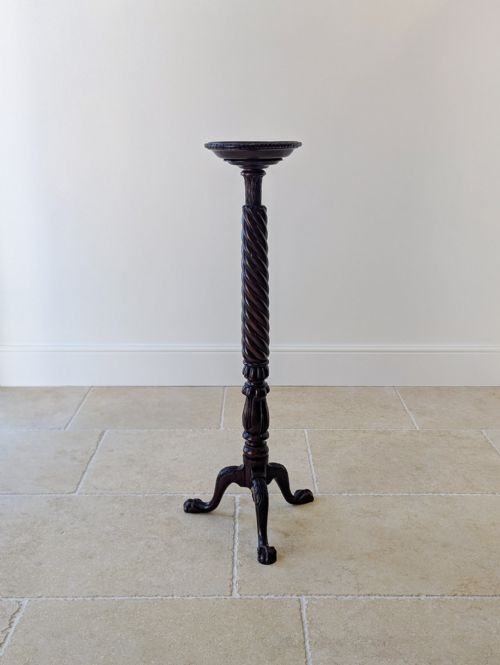
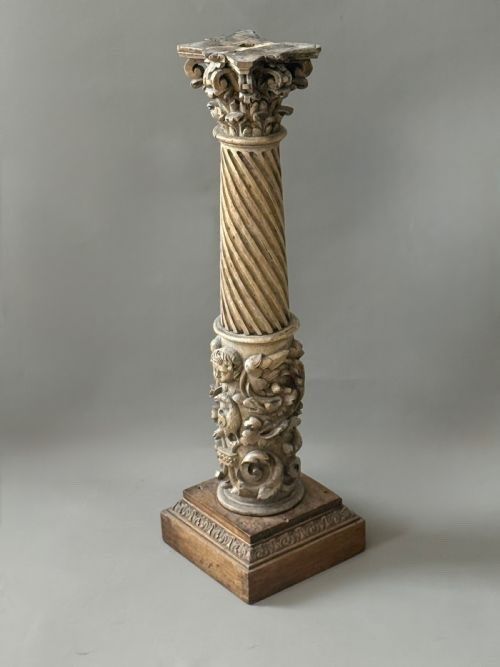
Spiral carved columns bring architectural movement to furniture, appearing on pedestals, lamp tables, and torchères.
Spiral Carved Columns
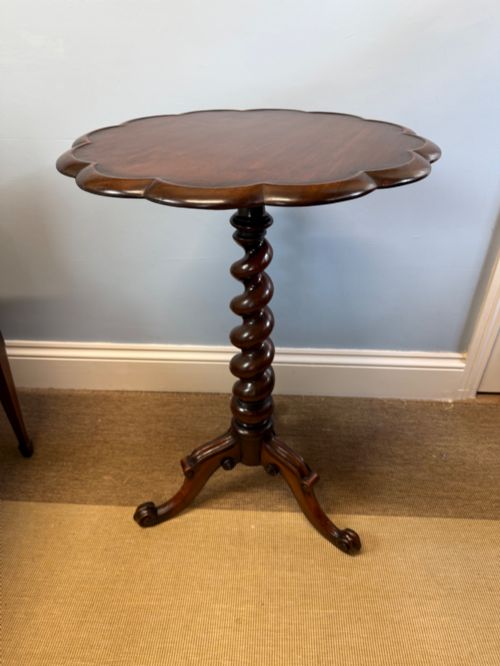
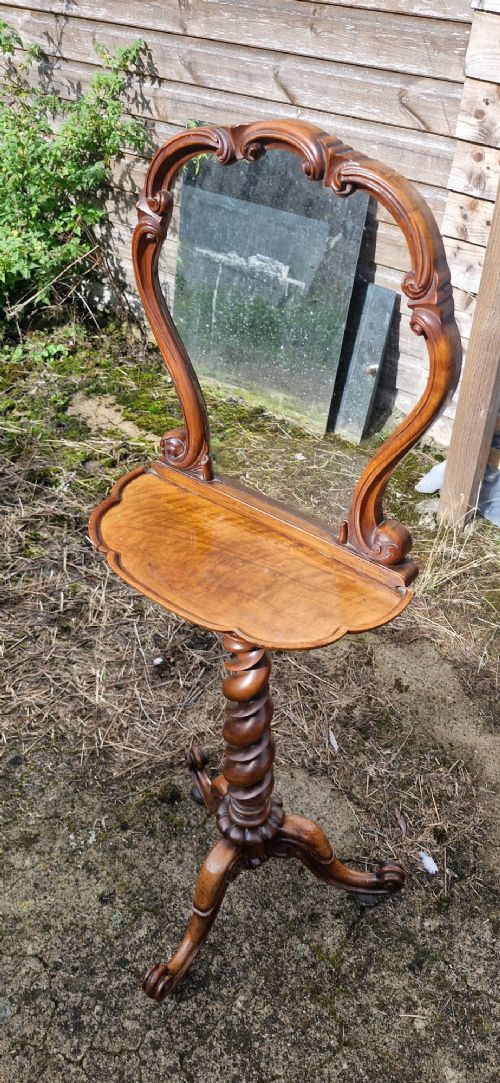
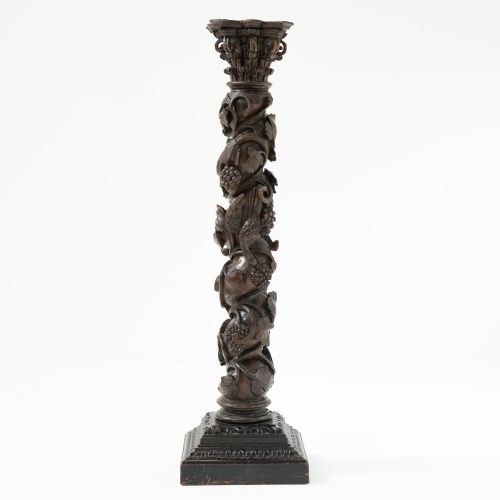
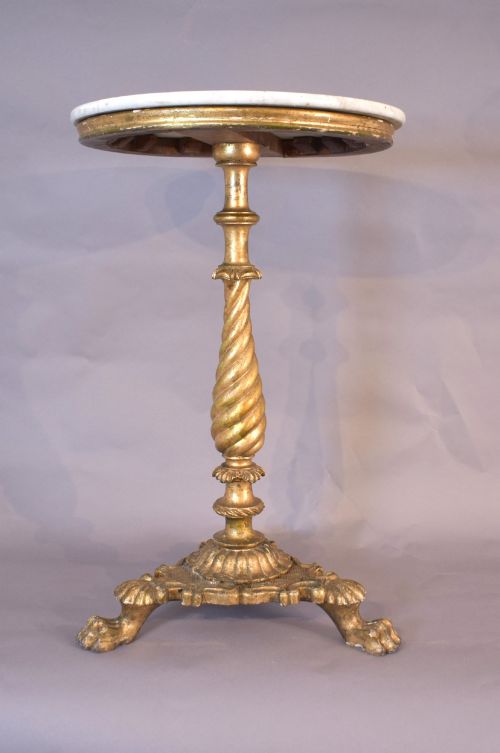
When you search for spiral carved columns, you encounter architectural supports and turned furniture legs that introduce dynamic motion into traditional interiors. These twisted forms appear frequently on occasional tables, torchères, and freestanding pedestals.
The versions you meet most often on this page date from the nineteenth century, including Victorian and Regency examples. They manifest in forms such as plant stands, lamp tables, and architectural pillars.
Beyond standalone columns, the twist manifests structurally on the stems of tripod tables, bed posts, and side tables. Walnut, mahogany, and oak provide the primary timber foundations for these twisted profiles.
How they were made
Cabinet makers utilised dense hardwoods like mahogany, walnut, and oak to achieve crisp edges along the helical twist. Turning timber on a lathe established the core cylinder before hand chisels refined the sweeping flutes.
Listings feature woods such as mahogany, walnut, oak, and padouk, alongside marble columns in green serpentine and verde antico.
What varies in quality
The crispness of the hand carving dictates the visual success of the twist, separating mechanical uniformity from fluid, hand-chiseled depth. Grain selection in timbers like walnut and mahogany also alters the visual weight of the column.
Proportion and structural integrity define the higher tiers of these pieces, particularly in tall torchères and pedestals where balance is essential. Weight distribution in marble pillars and wooden tripod bases ensures stable display surfaces.
The Spiral Carved Columns Glossary
- Torchère
- A tall, slender stand designed to hold a lamp or candle. These pieces frequently incorporate twisted wooden columns.
- Solomonic
- A helical column shape characterised by a twisted rope-like shaft. This form gained prominence in Baroque architecture and later revival furniture.
- Teapoy
- A small box or table for holding tea, often supported on a central carved pedestal. They emerge frequently in nineteenth-century walnut and mahogany.
- Verde Antico
- A dark green serpentine breccia marble utilised for decorative classical columns. It provides a dense, polished surface contrasting with timber supports.
Spiral Carved Columns: Frequently Asked Questions
Where do I place a column?
Freestanding columns suit corners or empty wall spaces where they can support lamps, urns, or decorative objects without obstruction.
Smaller examples function effectively as plant stands or bedside surfaces within traditional room schemes.
How do I identify the wood?
Mahogany displays a rich reddish-brown tone with a straight grain, while walnut exhibits darker, swirling grain patterns. Oak presents a heavier, more visible grain structure with characteristic medullary rays.
Closer inspection under good light reveals whether the surface relies on natural timber grain or applied paint and gesso finishes.
Are these columns solid stone?
The marble columns recorded in the evidence utilise solid stone or substantial marble sections designed for architectural display.
Weight and veining variations confirm the natural geological origin of the stone components.
What periods are represented?
The listings span from the eighteenth century through the Victorian era, Regency period, and into early twentieth-century revivals.
Design motifs often echo earlier William and Mary or Baroque styles while bearing nineteenth-century manufacturing techniques.