


Georgian Carved Column Pedestals
Georgian carved column pedestals bring classical architecture indoors, serving as sculptural stands for urns, lamps and plants.
Georgian Carved Column Pedestals
When you search for georgian carved column pedestals, you enter a field dominated by tall, slender stands designed to elevate decorative objects within a room. The examples found here span the eighteenth century through to later revival periods, displaying the architectural proportions characteristic of the era.
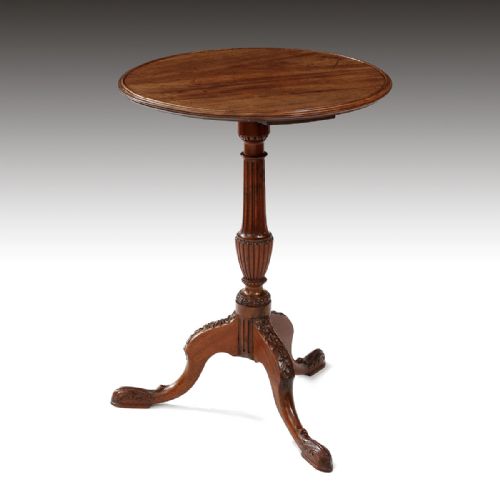
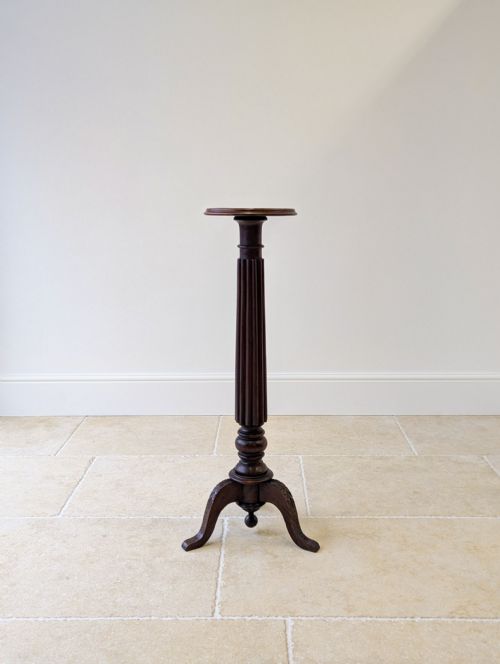
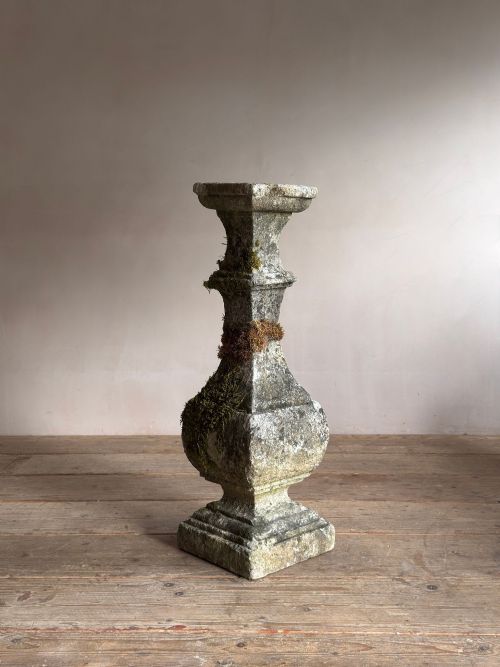
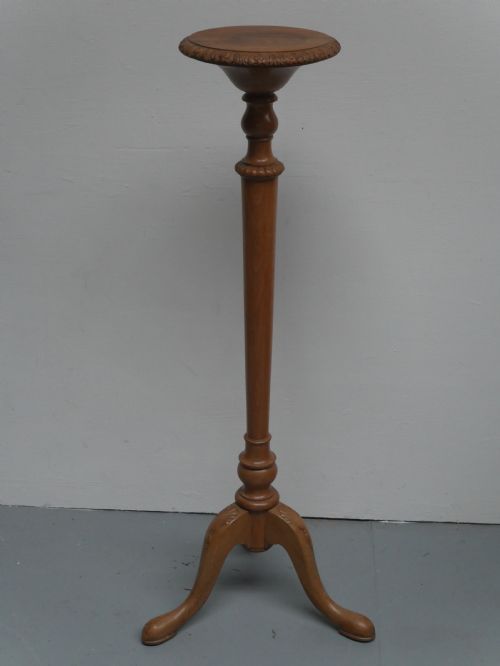
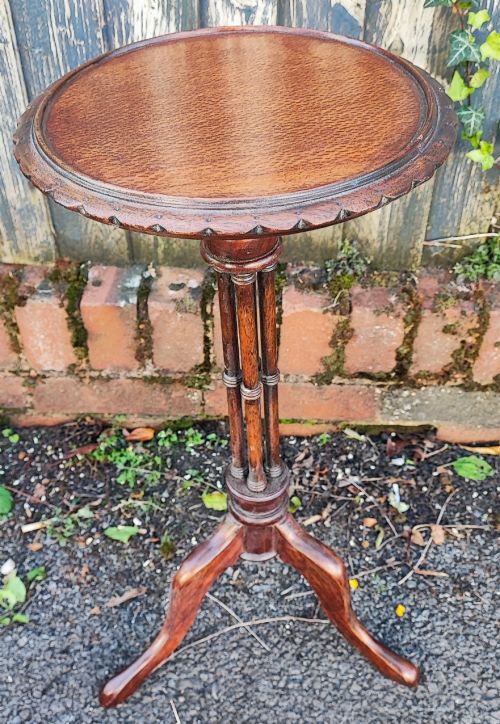
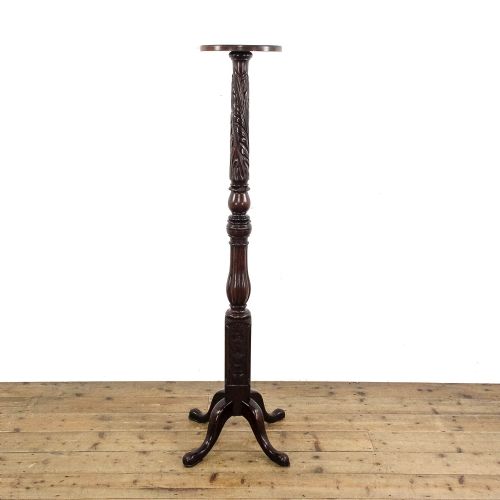
Most pieces take the form of torcheres, candlestands or plant stands, often featuring a circular top supported by a central column. These structures derive their visual appeal from classical columns, translating stone orders into finely turned and carved wood.
While genuine eighteenth-century pieces appear, the selection also includes nineteenth-century interpretations and later revival pieces from the twentieth century. These later works maintain the vocabulary of the Georgian period, employing similar forms and decorative motifs.
Materials and Construction
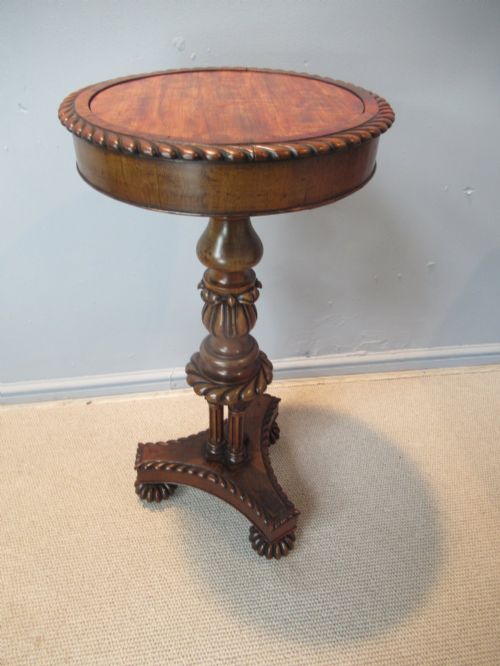
Makers relied primarily on mahogany, alongside walnut, oak and exotic woods such as Gonçalo-alvez, often enhancing the timber with boxwood stringing or parquetry. These dense hardwoods allowed craftsmen to execute crisp, deep carvings on columns, capitals and tripod bases without risking structural failure under weight.
Surface treatment played an essential role in the final appearance, utilising gold leaf, gesso and paint on specific decorative stands alongside traditional polish. Structural stability was achieved through sturdy tripod bases or solid plinths, ensuring the tall columns remained upright when supporting heavy items.
The documented pieces span from the mid-eighteenth century through the Victorian era and into early twentieth-century revival styles.
Assessing Craftsmanship and Detail
The distinction between ordinary stands and superior examples rests upon the crispness and depth of the carving on the column and feet. Finer pieces display hand-carved acanthus leaves, fluting or spiral twists executed with precision, whereas lesser items rely on simpler, shallower incisions.
Proportion and material selection further separate the ranges, with top-tier examples utilising dense, richly figured timbers and balanced architectural scaling. The integration of secondary woods and the stability of the central joint reveal the level of care invested by the original maker.
Gillow
The Georgian Carved Column Pedestals Glossary
- Torchere
- A tall, slender stand designed specifically to support a light source, plant or decorative object. Originating in the seventeenth century, these stands eventually evolved into the pedestal forms seen in later drawing rooms.
- Triform
- A base or platform supported by three feet or legs, commonly seen on tripod tables and pedestals. This configuration provides stability on uneven floors.
- Gesso
- A plaster-like mixture applied to wood surfaces as a base for gilding or painting. It allowed craftsmen to create sharp, low-relief ornamentation before applying gold leaf.
- Parquetry
- Geometric patterns formed by fitting small pieces of wood together on a surface, often utilised on tabletop panels. This technique showcases the maker's precision in timber selection.
- Capital
- The uppermost member of a column, situated directly above the shaft. In pedestal design, this architectural element supports the display surface.
Georgian Carved Column Pedestals: Frequently Asked Questions
What were georgian carved column pedestals used for?
These tall stands originally served to elevate candelabras, lighting dark corners of formal rooms before the widespread adoption of electricity. Over time, their function expanded to display decorative urns, sculptures and prized houseplants.
Today, they fulfill a similar decorative role in domestic interiors, drawing the eye upward and adding vertical interest to empty wall spaces.
How do I date a pedestal?
Dating relies on examining the timber species, construction methods and the specific style of carving on the column and base. Eighteenth-century pieces often feature solid mahogany with hand-turned shafts and heavy timber shrinkage.
Revival pieces from the nineteenth and twentieth centuries frequently incorporate machine-assisted turning or differing secondary woods beneath the surface polish.
Are these pedestals stable enough for plants?
Most column pedestals feature sturdy tripod bases or weighted plinths designed to prevent tipping during everyday use. However, the stability depends on the width of the base relative to the height of the shaft.
When placing heavy ceramic planters, verify that the weight centres directly over the column rather than resting near the outer edge.
What is the difference between a torchere and a pedestal?
A torchere traditionally refers to a lightweight stand built specifically to carry a light or small decorative ornament. Pedestals often imply a heavier, more substantial form intended to support sculptural busts or architectural urns.
In practice, antique terminology frequently overlaps, with both terms applied to tall display stands featuring columns.