


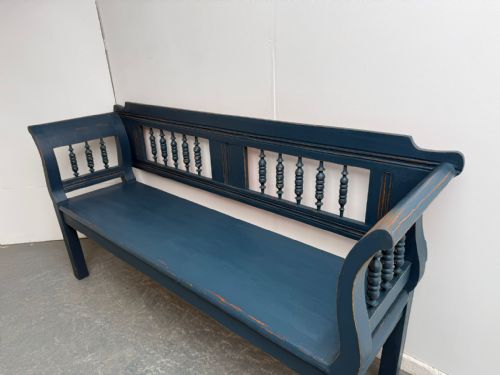
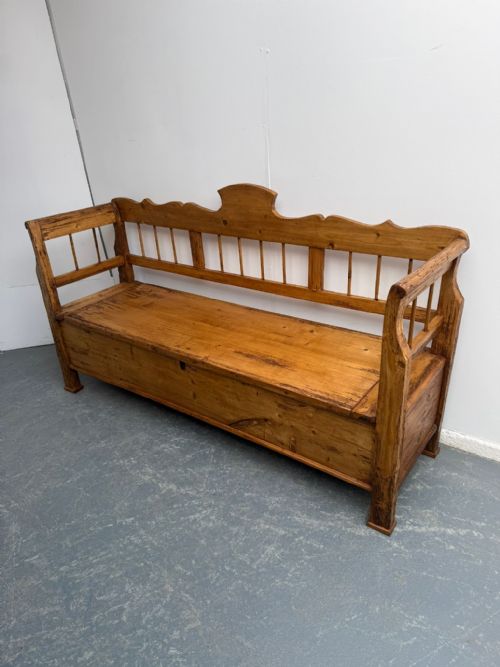
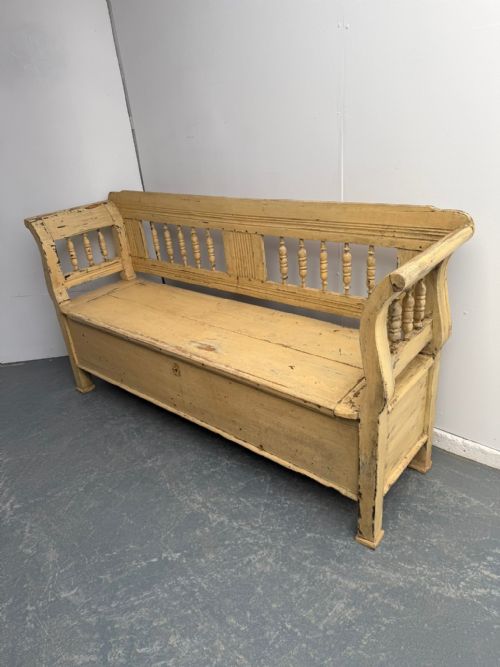
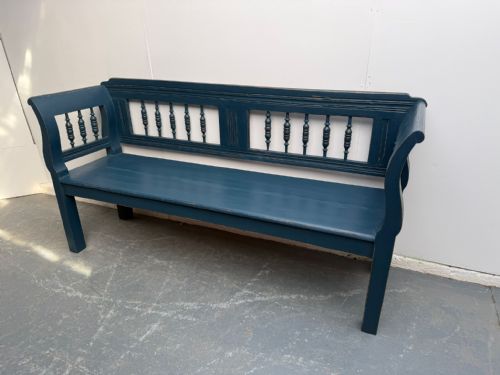


Spindle Back Bench
A spindle back bench brings robust country character to a hallway or kitchen, offering honest seating built with slender turned supports.
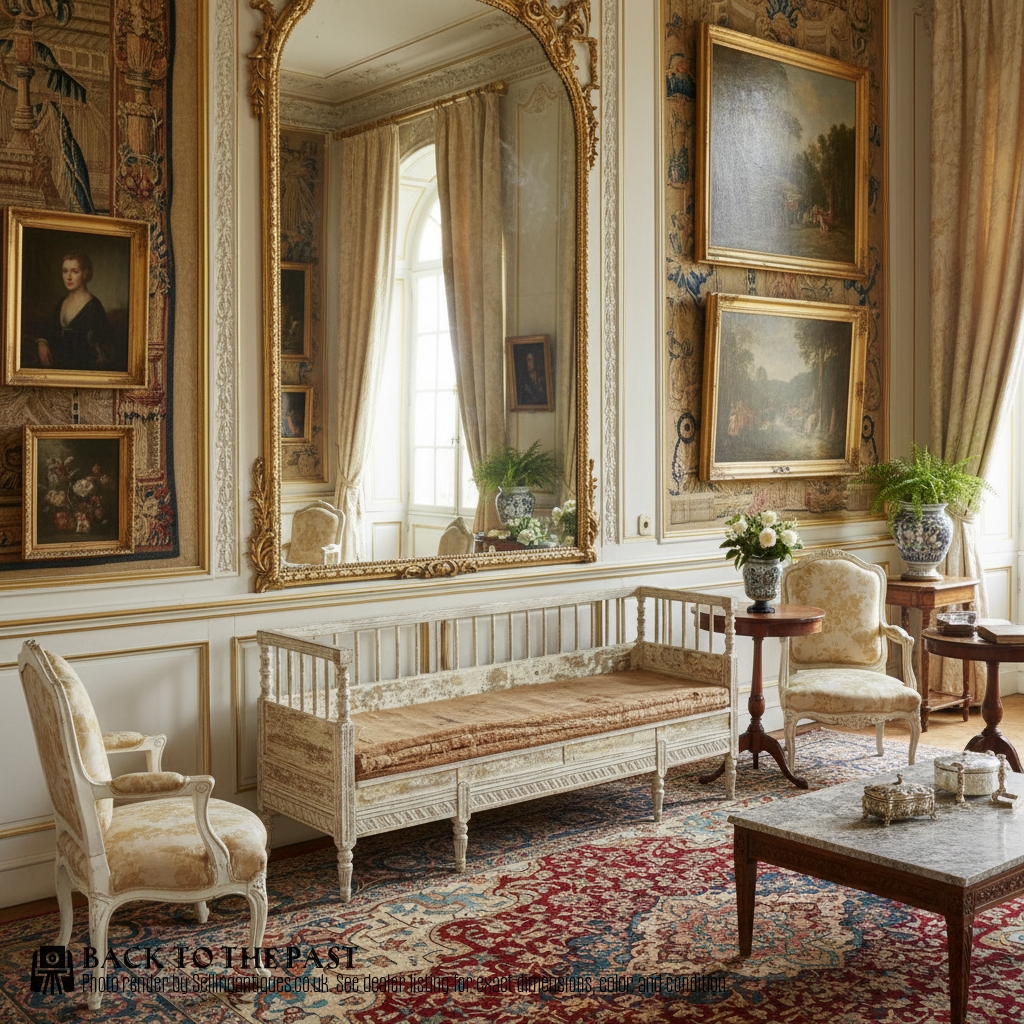
What these pieces are
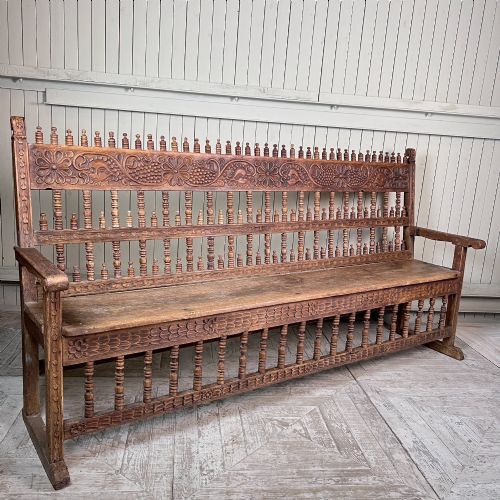
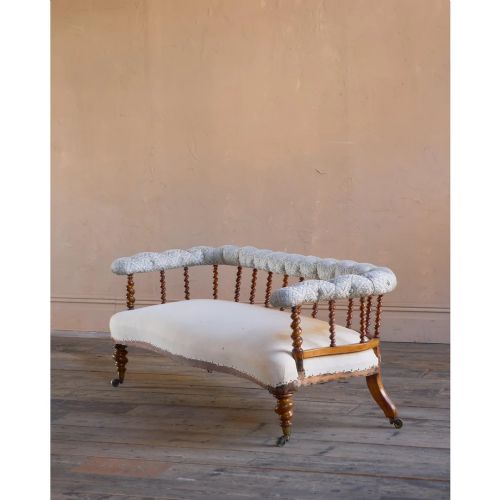
When you search for a spindle back bench, you are looking at practical seating that bridges utility and regional folk design. The examples appearing on this page span the eighteenth, nineteenth, and Victorian periods, originating from English, French, Hungarian, Swedish, and Austrian traditions.
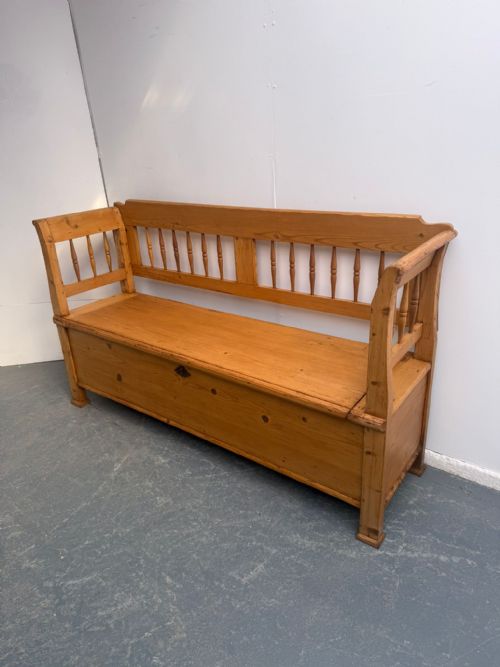
You will most frequently meet nineteenth-century Hungarian pine benches seating two or three people, often retaining painted finishes or waxed surfaces. Alongside these, eighteenth-century Swedish painted settle benches and nineteenth-century Austrian settles expand the selection into enclosed seating forms.
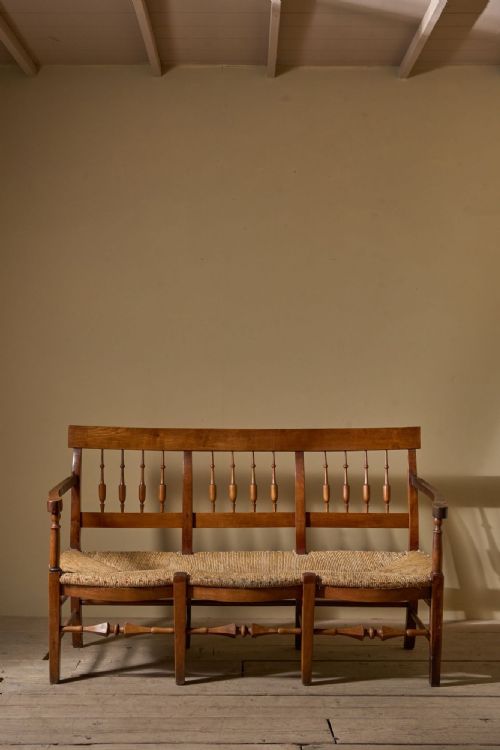
The category also encompasses French rush-seated hall benches and rustic farmhouse interpretations. These variations share a lineage of vernacular woodworking designed for daily domestic service.

How they were made
Makers constructed these pieces predominantly from solid pine and fruitwood, relying on regional timbers readily available to local carpenters. Iron components occasionally appear for structural reinforcement or hinges on box settle variants.
Turned wooden spindles form the characteristic backrests, inserted into bored rails to provide light yet supportive structures. Surfaces were frequently left with a waxed finish or coated in layered paint, including cream and blue tones that aged through natural wear.
Retail Price Guide 2026
Typical UK retail prices for spindle back bench, calculated from the Sellingantiques database of over a million retail prices indexed since 2003. This retail price guide relies exclusively on Sellingantiques data; no external sources or auction records are used, so the figures do not describe the wider market.
Listings feature eighteenth and nineteenth-century periods, utilising pine, fruitwood, iron, and rush materials across several European country styles.
What varies in quality
The distinction between ordinary utility items and superior examples lies in the integrity of the original surface and the crispness of the turned spindles. Benches retaining their early or original paint schemes command greater interest than those stripped down or heavily refinished.
Proportion and structural balance also separate exceptional pieces from simpler regional work. Well-proportioned seating with tight joints and intact rush or timber seats demonstrates superior craftsmanship from historical workshops.
The Spindle Back Bench Glossary
- Settle bench
- A wooden bench featuring a high back and solid arms, often designed with a box compartment beneath the seat. This form offered protection from drafts in older homes.
- Rush seat
- A seating surface woven from dried marsh grasses or rushes. It provides a resilient, traditional texture found on provincial hall benches.
- Turned spindle
- A slender wooden rod shaped on a lathe to form decorative vertical supports in a backrest. These components lighten the visual weight of heavy timber furniture.
- Box settle
- A specialised bench incorporating a lidded storage box under the seat. This dual-purpose furniture kept household items tidy in farmhouse settings.
- Vernacular furniture
- Everyday objects made by local artisans for practical use rather than high-style court commissions. These pieces reflect regional materials and traditional building methods.
Frequently Asked Questions
Where should I put a spindle back bench?
These benches suit narrow hallways, large country kitchens, or dining areas where sturdy seating is required. Their linear backrests keep spaces feeling open.
Ensure there is enough floor clearance for the depth of the seat and any box settle storage lids if your chosen piece has them.
How do I clean a painted pine bench?
Dust the surface regularly with a soft, dry cloth to prevent grit buildup on the old paint or wax. Avoid harsh chemical cleaners that can strip historic finishes.
If the wood appears dry, applying a light coat of natural beeswax helps protect the timber without altering its patina.
Are these benches comfortable to sit on?
Most historic country benches feature upright wooden or rush seats designed for functional posture rather than deep lounging. Adding a simple linen or fabric cushion provides extra comfort for prolonged sitting.
The height of the backrest and arm placements vary depending on whether the piece originates from a Hungarian workshop or a Swedish farmhouse.
How can I tell an eighteenth-century bench from a Victorian one?
Eighteenth-century pieces, such as Swedish settle benches, often display heavier construction and specific regional paint traditions from that era. Victorian examples frequently show lighter turned spindles and may incorporate box storage or waxed pine finishes.
Examining the tool marks, joinery methods, and wear patterns helps clarify the approximate period of manufacture.