





Specimen Wood Table
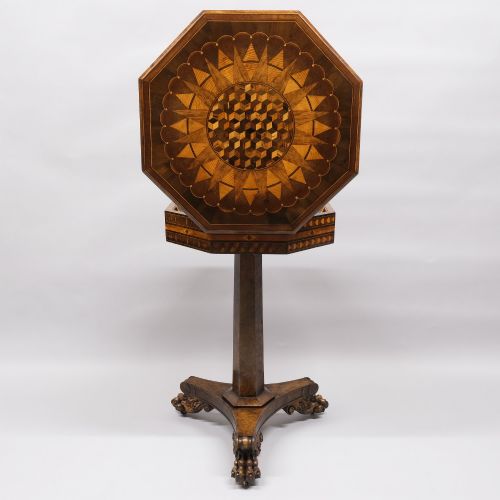
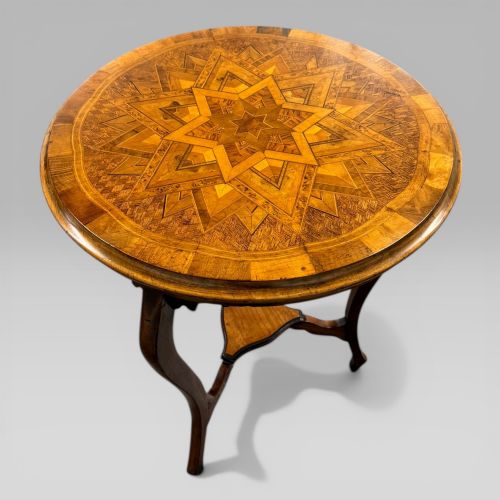
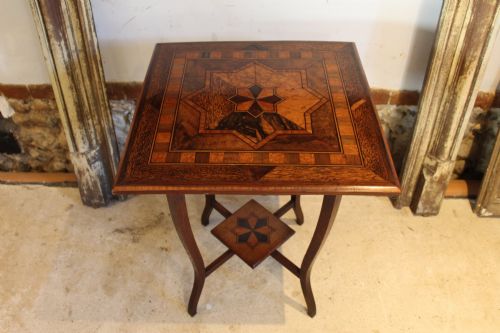
A specimen wood table brings together diverse timbers, from native New Zealand woods to Ceylonese ebonies, arranged into intricate geometric surfaces.
Specimen Wood Table
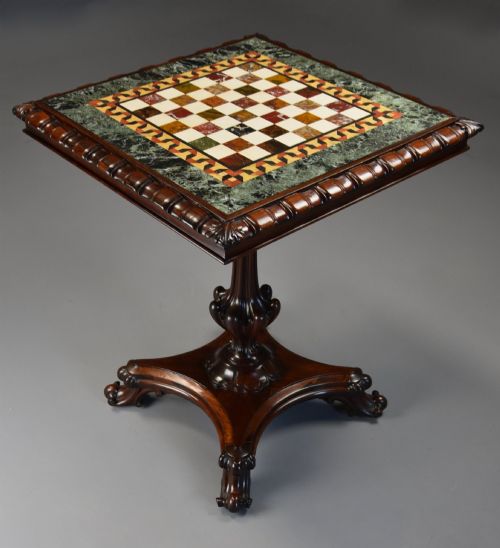
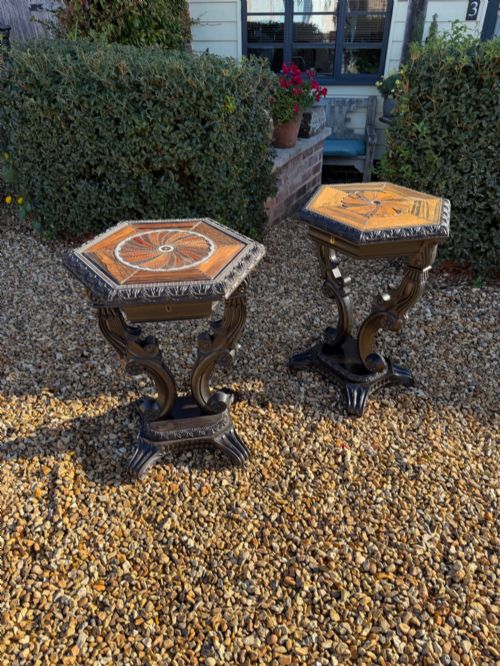
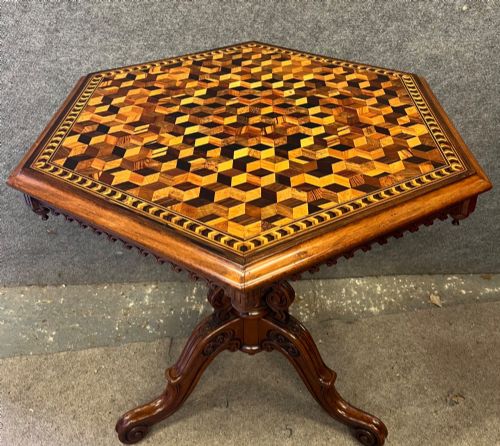
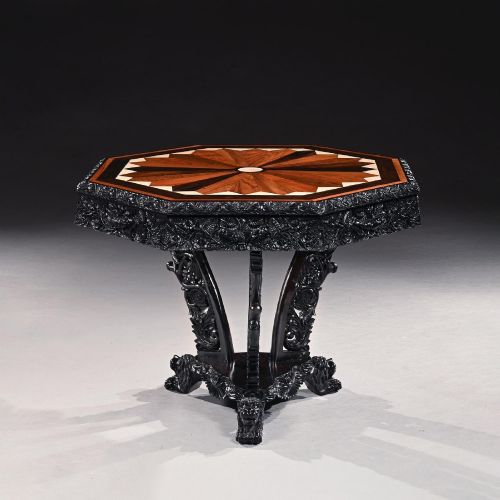
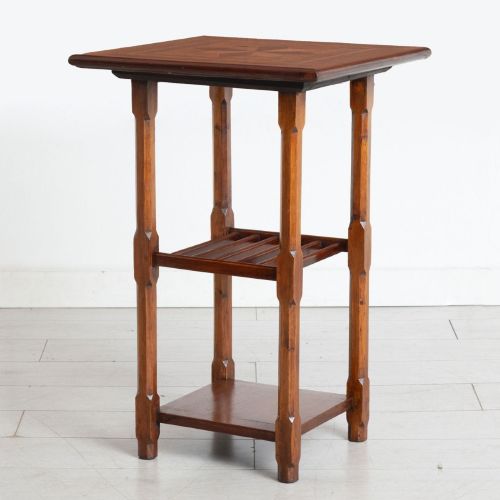
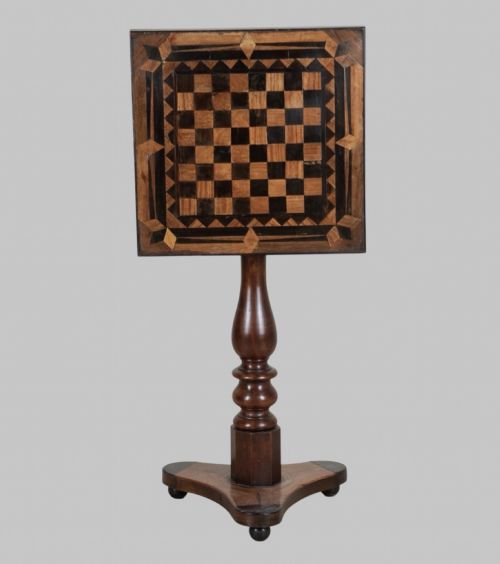
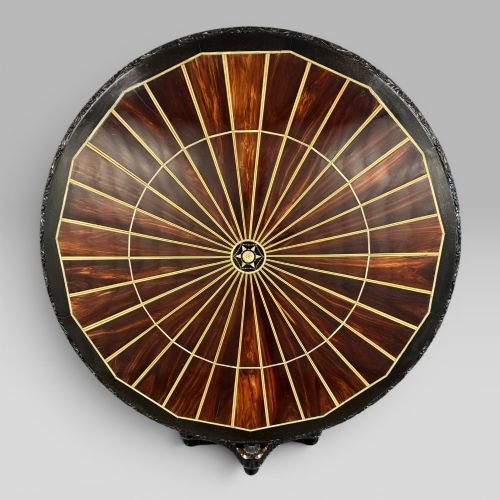
A specimen wood table displays a top composed of many different varieties of timber, often arranged in geometric patterns, parquetry, or marquetry. These pieces date primarily from the nineteenth century, spanning the Georgian, Regency, William IV, and Victorian periods.
The form most frequently encountered is the occasional table or side table, often supported by a central pedestal with tripod or quadrapartite legs. Centre tables and games tables also appear regularly across the records.
Origins vary widely, encompassing English workshops as well as colonial centres such as New Zealand, Ceylon, and India. Makers utilised both local indigenous timbers and exotic imported woods to construct these varied surfaces.
How they were made
Cabinet makers constructed the foundational structure using solid timbers such as mahogany, rosewood, walnut, or oak. Bases often incorporated turned pedestals, carved legs, or tripod supports.
The distinctive tops relied on precise veneer work, fitting together small pieces of contrasting woods like ebony, satinbirch, burr-elm, and palmwood. Some examples integrated stone elements such as specimen marble or Pietra Dura inlay.
Specimen Wood Table Retail Price Guide 2026
Typical asking prices for specimen wood table among the pieces listed under this phrase on Sellingantiques today, from the lower quarter to the upper quarter. They describe what is for sale here now, not the wider market.
New Zealand tables frequently showcase indigenous woods such as satinbirch and varied native conifers arranged in twelve-sided formats.
What varies in quality
Quality depends upon the diversity and rarity of the timber species utilised within the tabletop. Surfaces featuring a vast array of distinct exotic woods command greater attention than those with repetitive or limited palettes.
The precision of the joinery and inlay work dictates the overall standard of the piece. Superior examples exhibit tight, seamless geometric arrangements and sophisticated marquetry without visible gaps or misalignment.
The distinction of the base construction also separates tiers. Tables pairing intricate parquetry tops with well-carved or documented regional supports demonstrate superior craftsmanship.
Ralph Turnbull·Anton Seuffert·William Norrie
The Specimen Wood Table Glossary
- Parquetry
- Geometric mosaic woodwork used for floors and tabletops. This technique forms repetitive patterns using contrasting timber veneers.
- Marquetry
- Decorative veneer applied to a wooden structure to form pictures or ornamental designs. It uses varied wood cuts and natural grain shifts to create imagery.
- Pietra Dura
- Inlay technique using cut and fitted polished coloured stones to create designs. It appears on select table tops alongside timber marquetry.
- Tilt-top
- A tabletop hinged to tilt vertically when not in use. This mechanism allows the table to stand flat against a wall.
- Quadrapartite
- Having four parts. It often describes the four-way splayed leg arrangement found on pedestal tables.
Specimen Wood Table: Frequently Asked Questions
What is a specimen wood table?
A specimen wood table is a piece of furniture featuring a top constructed from numerous different types of timber, usually arranged in decorative patterns. These tables showcase the varied colours, grains, and textures of native and exotic woods.
Originating largely in the nineteenth century, they served as decorative display pieces in drawing rooms and parlours. The variety of timbers often reflected global trade or specific regional flora from places like New Zealand and Ceylon.
How do I date a specimen table?
Dating relies on examining the structural form, leg style, and secondary woods used in the base. Georgian and Regency examples often feature tripod bases, while Victorian versions frequently employ central pedestals with platform or carved feet.
Stylistic cues such as Gothic Revival elements or William IV turning help narrow the decade of manufacture. Comparing the timber choices to known colonial or domestic production periods also clarifies the age.
Where were these tables made?
Production occurred across Britain and its wider empire during the nineteenth century. Workshops in England produced many examples using imported exotic woods alongside domestic timbers.
Colonial regions such as New Zealand, India, and Ceylon developed distinct local industries. Makers in these areas utilised indigenous timbers to create regional interpretations of the form.
How should I care for one?
Care requires keeping the table away from direct sunlight and extreme humidity fluctuations to protect the delicate veneer. Natural beeswax applied sparingly helps maintain the finish of the multi-wood surface.
Avoiding placement near heat sources prevents the small inlaid wood pieces from shrinking and separating. Gentle dusting with a dry cloth preserves the intricate parquetry without harming the grain.