
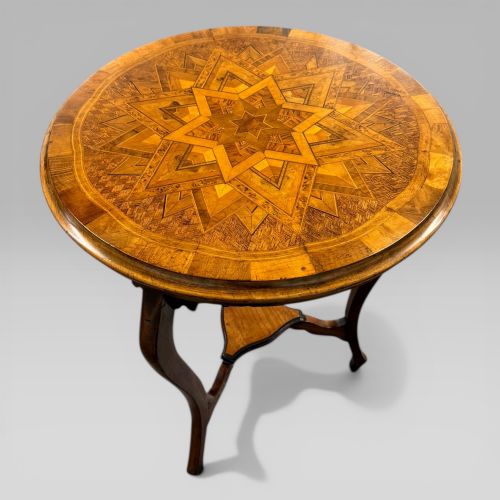


Specimen Wood Side Table
A specimen wood side table brings together a rich mosaic of native and exotic timbers to anchor a room with pattern and history.
What specimen wood side tables are
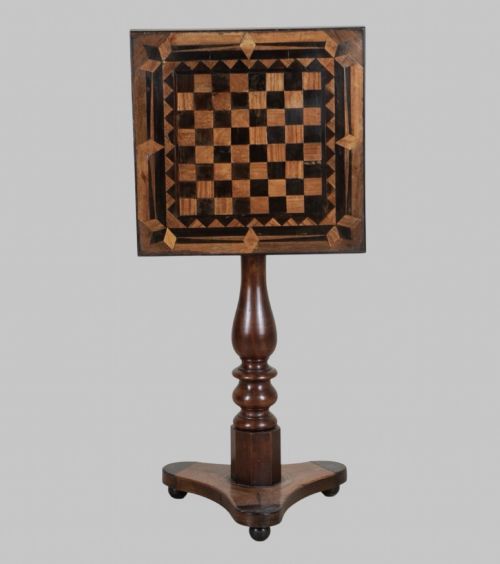
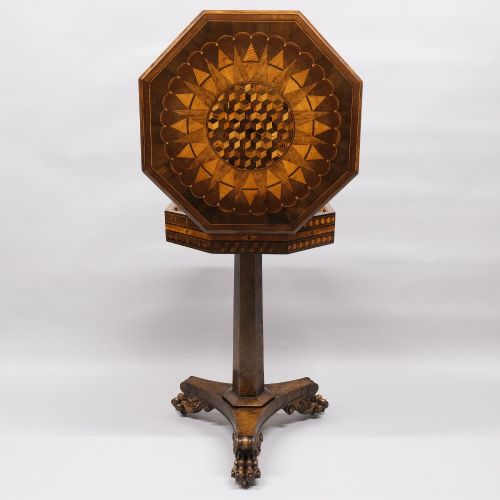
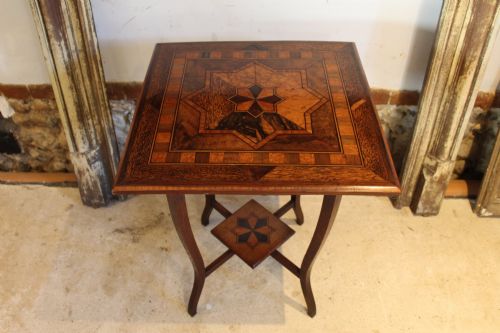
A specimen wood side table displays a mosaic top constructed from numerous distinct timbers, gathered for their contrasting colours and grain patterns. Buyers searching for a specimen wood side table encounter forms ranging from circular occasional tables to twelve-sided pedestal pieces.
The pieces appearing in this selection span the Georgian, Regency, and Victorian eras, extending into the early twentieth century. Makers worked in various regional idioms, including Victorian Colonial, Arts and Crafts, and Anglo-Indian styles.
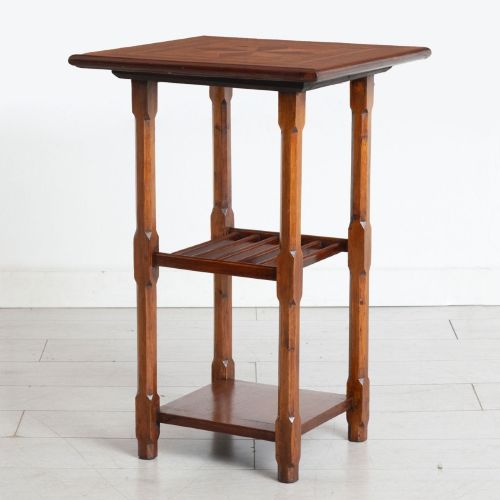
The primary forms include compact lamp tables, occasional tables, and small elephant tables supported by turned bases or carved legs. Each example relies on the juxtaposition of contrasting timbers to create geometric or sunburst patterns across the surface.
How they were made
Cabinetmakers constructed these tables using a solid secondary timber frame, such as mahogany, walnut, oak, or satinbirch, to support the complex marquetry top. The surface compositions incorporate inlaid timbers, native timbers, and imported exotic woods arranged with precision.
Individual slips of timber were cut, fitted, and glued to form elaborate geometric arrangements, sunburst motifs, or multi-sided tabletops. Turning lathes shaped the central pedestals and legs, while hand carving defined details such as quadrapartite bases.
Retail Price Guide 2026
Typical UK retail prices for specimen wood side table, calculated from the Sellingantiques database of over a million retail prices indexed since 2003. This retail price guide relies exclusively on Sellingantiques data; no external sources or auction records are used, so the figures do not describe the wider market.
Materials recorded in these listings include mahogany, walnut, oak, kauri wood, and various native and exotic specimen timbers.
What varies in quality
Quality rests in the variety and selection of the timbers utilised within the marquetry top, alongside the precision of the geometric fit. Tables featuring a broader range of distinct exotic and native woods demonstrate greater ambition in the workshop.
The architectural integrity of the base, whether a turned satinbirch column or carved quadrapartite legs, balances the visual weight of the patterned top. Superior examples maintain stability and crispness in the joinery across differing grain directions.
The Specimen Wood Side Table Glossary
- Marquetry
- The art of applying small pieces of veneer to a structural panel to form decorative patterns or pictures. This technique defines the patterned tabletops characteristic of these pieces.
- Quadrapartite
- Divided into four parts, typically describing the base or foot arrangement of a pedestal table. Such bases provide stability for multi-sided or heavy tops.
- Native Timbers
- Woods indigenous to the region where the piece was manufactured, such as kauri wood in New Zealand examples. Makers contrasted these with imported exotic varieties.
- Occasional Table
- A small, light table designed to be moved about a room as needed. These functional pieces served for lamps, reading materials, or display.
Frequently Asked Questions
How do I date a specimen table?
Dating relies on structural characteristics, base styles, and secondary woods, ranging from Georgian and Regency forms to Victorian and Arts and Crafts examples.
Turned pillars, leg profiles, and the specific mix of timbers often point towards particular periods of manufacture and regional workshops.
Where were these tables made?
These tables were produced across Britain and its colonies, including New Zealand and Ceylon, utilising local timbers alongside imported varieties.
Colonial workshops often incorporated indigenous woods like kauri to create distinctive regional interpretations of the British side table form.
How do I care for a specimen wood top?
Care involves maintaining stable indoor humidity and avoiding direct sunlight to protect the various glues and timbers from drying out and separating.
Gentle dusting with a dry cloth preserves the finish without introducing moisture that could harm the intricate marquetry joints.