
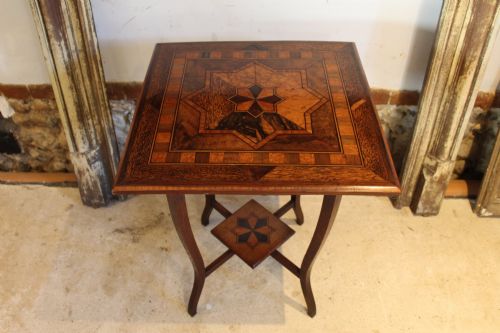
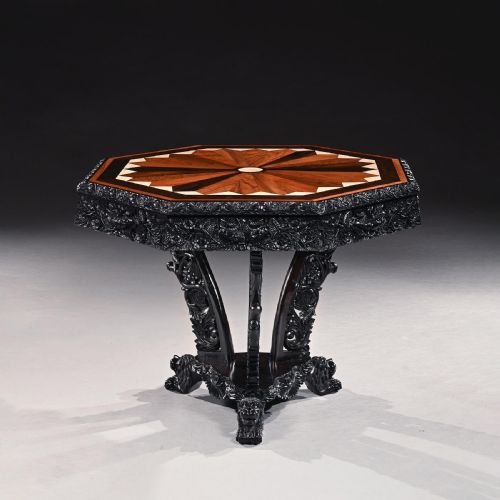


Specimen Wood Furniture
Specimen wood furniture brings together diverse timbers to create patterned surfaces, decorative tables, and cabinets prized for their botanical variety.
Specimen Wood Furniture
The versions most commonly met on this page date from the nineteenth century, encompassing Victorian, Regency, and Georgian periods alongside Anglo-Indian colonial and later productions. Makers utilised contrasting natural grain tones rather than applied surface colour to create visual depth and decorative impact.
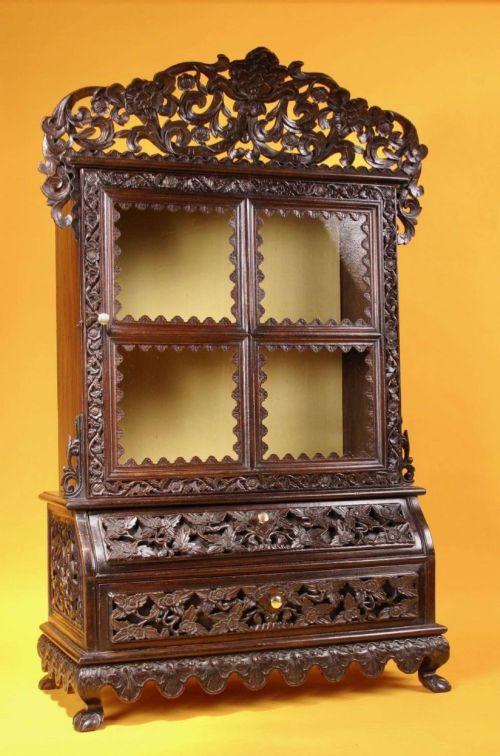
Forms include centre tables, work tables, and specialised storage pieces such as document cabinets and multi-drawer collectors chests. Many examples originate from workshops in Britain, Ceylon, India, and the West Indies, reflecting global exchange during the periods of production.
How they were made
Constructed using solid timbers and secondary bases of mahogany, cedar, or walnut, these pieces rely on precise carpentry to support complex surface decoration. Individual wood blocks, veneers, and inlays are meticulously fitted together to form stable panels without warping.
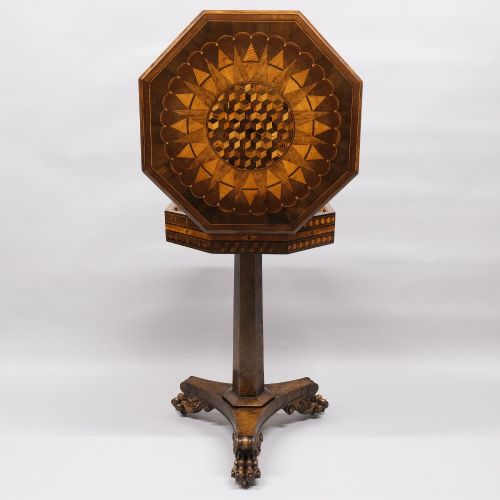
Craftsmen selected indigenous and exotic woods such as ebony, calamander, satinwood, rosewood, amboyna, and yew to provide a broad spectrum of natural colours and grain patterns. Parquetry and marquetry techniques require exact geometric cutting and alignment across tabletops, drawer fronts, and cabinet doors.
A nineteenth-century cabinet maker utilised twenty separate drawers in a single Wellington chest to categorize an entire universe of tiny curiosities.
What varies in quality
Construction details such as the interior framing of multi-drawer collectors cabinets, the stability of pedestal bases on centre tables, and the crispness of carved elements on colonial tables separate standard workshop production from exceptional cabinet work.
Ralph Turnbull·Emile Galle
The Specimen Wood Furniture Glossary
- Parquetry
- A geometric mosaic of wood pieces used for decorative floors and furniture surfaces. It relies on precise angular fitting.
- Marquetry
- The art of applying pieces of veneer to a structure to form decorative patterns or pictures. Craftsmen cut multiple layers simultaneously to achieve exact joins.
- Calamander
- A heavy, durable timber from Sri Lanka featuring dark brown and light brown stripes. It appears frequently in nineteenth-century colonial furniture.
- Wellington chest
- A tall, slender chest of drawers featuring a hinged locking stile on one side that secures all drawers simultaneously. These pieces often serve to hold documents or small collections.
- Torchere
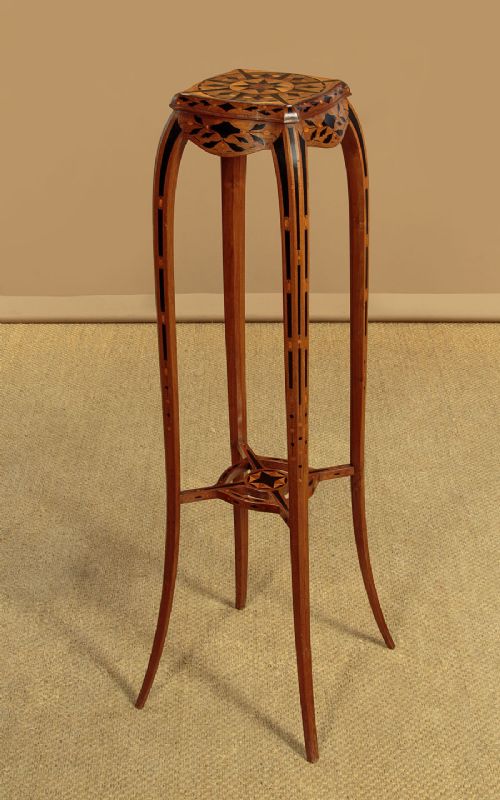
- A tall stand designed to support a candle or lamp. In specimen wood forms, the top surface and shaft highlight contrasting grain arrangements.
Specimen Wood Furniture: Frequently Asked Questions
What is specimen wood furniture?
Specimen wood furniture refers to items decorated with a multitude of different timber species, selected for their contrasting colours and natural grain patterns. These pieces include tables, cabinets, and stands where the surface acts as a display of botanical diversity.
Craftsmen arranged these timbers in geometric parquetry, intricate marquetry, or solid mosaic tops. The approach highlights the natural hues of ebony, satinwood, rosewood, and exotic regional woods without relying on artificial stains.
How do I care for specimen wood?
Caring for these pieces requires stable environmental conditions, keeping them away from direct heat sources and strong sunlight that can dry out old timbers and veneers. Regular dusting with a soft, dry cloth maintains the surface without the need for heavy chemical polishes.
Because multiple wood species expand and contract at different rates, maintaining consistent indoor humidity prevents the shrinkage that can stress delicate parquetry and inlay work.
Where was this furniture made?
Production spans British workshops as well as colonial centres in India, Ceylon, and the West Indies during the eighteenth and nineteenth centuries. Regional workshops utilised local exotic hardwoods alongside traditional European cabinet-making forms.
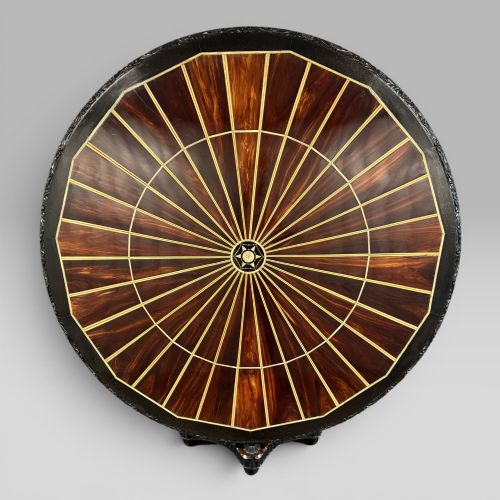
Items originating from the Galle district in Ceylon or the West Indies often incorporate native timbers such as calamander and ebony, combining local carving traditions with European furniture designs.
How do I identify a collectors cabinet?
Collectors cabinets feature numerous shallow internal drawers designed for storing natural history specimens, coins, medals, or documents. These pieces often include locking doors or secure stiles to protect the contents.
Victorian and Georgian examples typically present panelled doors opening to reveal uniform rows of small drawers, sometimes constructed from scented woods like cedar to protect delicate contents.