
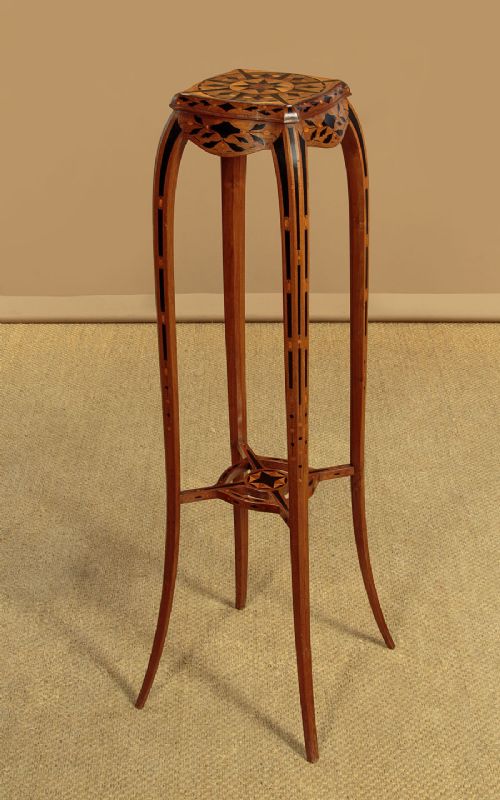
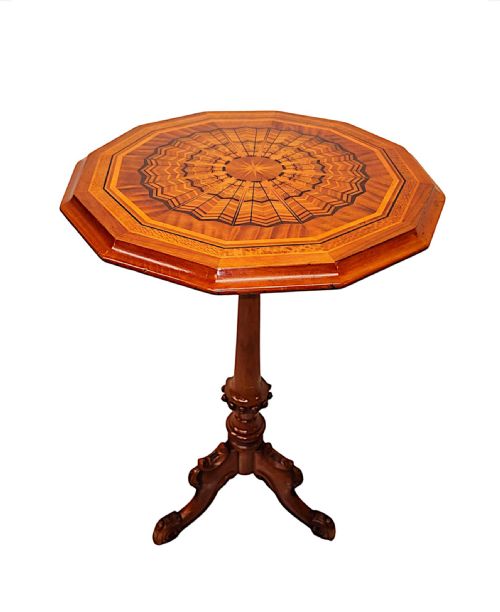
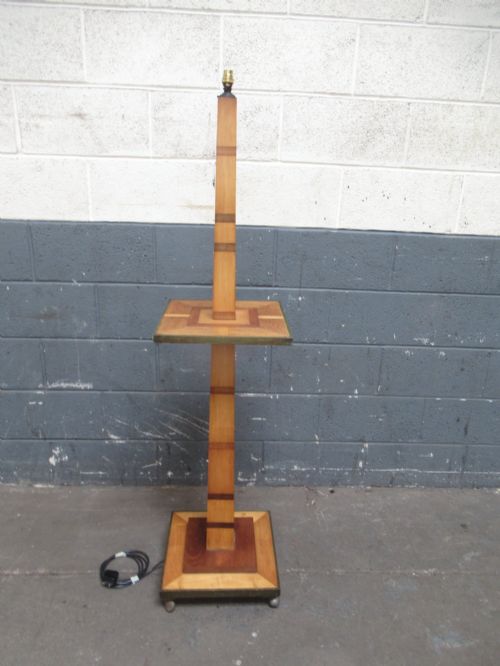

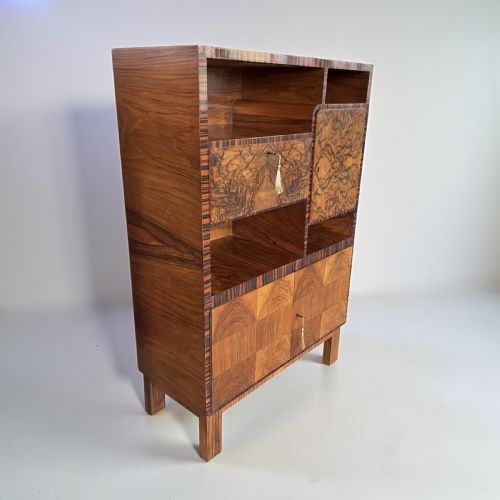
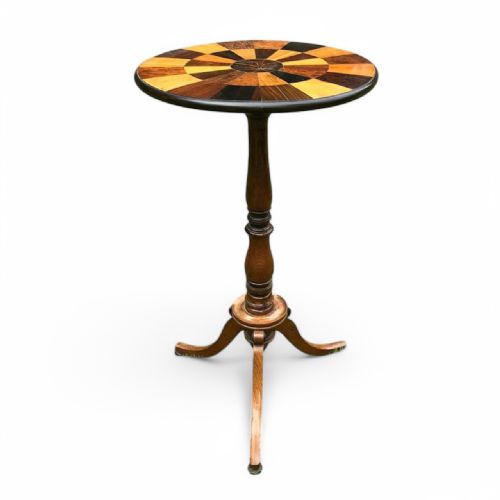


Geometric Marquetry Stand
A geometric marquetry stand brings precision pattern to a room through contrasting timbers laid into intricate table and stand tops.
Geometric Marquetry Stand
A geometric marquetry stand brings together patterned wood tops and supporting bases designed for display and utility in various domestic settings.
These pieces appear most often as occasional tables, lamp tables, side tables, and plant stands or torcheres spanning the nineteenth century through the art deco period.
Makers utilised contrasting timbers such as walnut, oak, ebony, satinwood, rosewood, and specimen woods to create sharp lines and repeating motifs across the surface.
Materials and construction methods
Cabinetmakers cut thin veneers of varied timbers by hand and laid them into precisely channelled bases to form complex geometric patterns.
Structural integrity relied on solid framing timbers such as oak and walnut, which provided stable foundations for the decorative veneered tops.
Listings feature pieces spanning the nineteenth century, eighteen seventy, nineteen hundred, and nineteen thirty.
Judging the quality
Quality rests upon the tightness of the joints between individual veneer pieces and the harmonious selection of contrasting natural wood grains.
The sophistication of the overall design, from the intricacy of the geometric layout to the proportion of the supporting base, elevates the piece.
The Geometric Marquetry Stand Glossary
- Marquetry
- The art of forming geometric patterns or pictures by inserting veneers into a solid background. This technique defines the patterned surfaces seen on these stands.
- Torchere
- A tall stand designed to hold a light or a display plant. These vertical pieces elevate objects above floor level to draw the eye.
- Specimen wood
- Timbers gathered for their distinct natural colours and grain variations, often exotic. Makers use them to build contrasting palettes within a single inlaid top.
Geometric Marquetry Stand: Frequently Asked Questions
What is a geometric marquetry stand?
A geometric marquetry stand is a small table or pedestal featuring a patterned top made from fitted wood veneers. These pieces combine decorative tops with functional bases designed for display.
They appear in styles ranging from nineteenth century work to art deco designs, utilising contrasting timbers to create visual depth.
How do I date these stands?
Dating relies on examining the construction methods, framing materials, and overarching stylistic traits of the piece. Nineteenth century examples often feature heavier timbers and classical proportions, while art deco pieces favour streamlined geometry.
Changes in wood choice and joinery help place an object within periods like the Victorian era or the nineteen thirties.
Where should I place a stand?
These pieces suit corners or beside seating where their detailed tops remain visible. They function effectively as lamp tables or plant stands.
Keeping them away from direct sunlight protects the delicate wood veneers and maintains the contrast of the marquetry.
How do I care for the wood?
Maintaining the surface involves gentle dusting with a dry cloth and avoiding harsh chemical polishes. Natural wax helps preserve the finish of vintage timber.
Stable room humidity prevents the wood veneers from drying out or lifting over time.