
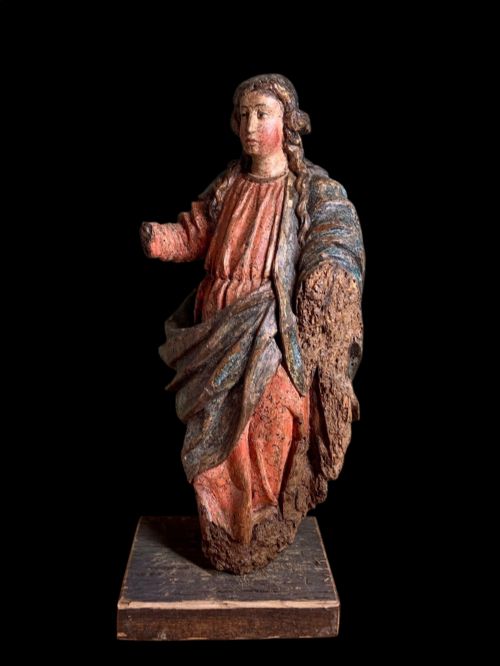


Spanish Carved Wood Statue
A spanish carved wood statue brings centuries of devotion, dramatic posture and rich polychrome surfaces straight into a modern room.
Spanish Carved Wood Statue
A spanish carved wood statue represents centuries of religious devotion, ranging from intimate home altars to life size church figures. When looking for a spanish carved wood statue, collectors encounter devotional sculptures, corpus christi figures, acolyte candlestick figures and depictions of saints and the Christ child.
The pieces on this page span the sixteenth, seventeenth and eighteenth centuries, stretching through the nineteenth century and Victorian era up to around nineteen hundred. Alongside grand Spanish Baroque work, the selection includes Spanish folk art and Continental baroque expressions.
Most examples depict holy figures rendered in carved wood, often enhanced with gesso, polychrome paint and gold leaf. Some pieces take the form of specialised capipote figures or sculptural home altars designed for private prayer.
Materials and construction
Surfaces were frequently brought to life using polychrome paint, capturing flesh tones, hair and garments with striking realism. Artisans then added gold leaf highlights to vestments and halos, sealing the rich pigments with protective varnishes.
Several figures come equipped with stationary wooden gazes that somehow manage to track you across the entire room.
Distinctions in quality
Quality rests in the anatomical confidence of the carving, particularly in the rendering of hands, facial expressions and tumbling drapery. A superior piece shows a sculptor who understood underlying bone and muscle beneath heavy wooden robes.
The survival and application of the original polychrome and gold leaf dictate visual impact. Depth of pigment, subtle flesh shading and the harmonious ageing of gesso separate master carvers from provincial workshops.
The Spanish Carved Wood Statue Glossary
- Polychrome
- Decorated in multiple colours. This term describes wooden sculptures painted to mimic life-like flesh and richly coloured garments.
- Gesso
- A plaster mixture applied to wood. It acts as a smooth base for paint and gold leaf application.
- Capipote
- A devotional figure with a wooden head and hands attached to a framework. These statues were often dressed in real textiles.
- Corpus Christi
- A representation of the body of Christ on the cross. These wooden carvings focus intensely on the anatomical suffering and drapery.
- Acolyte
- An assistant in religious services. Figures taking this form often served as candlesticks or attendants in devotional settings.
Spanish Carved Wood Statue: Frequently Asked Questions
What is a capipote figure?
A capipote is a specific type of devotional statue constructed with carved wooden heads and hands attached to a supporting armature. These figures were traditionally designed to wear actual fabric vestments during religious processions and private devotions.
Over time, the textile elements often degraded, leaving the carved wooden components to be collected independently as sculptural art.
How do I date a wooden statue?
Dating relies on examining the tool marks left by the carver, the composition of the underlying gesso, and the ageing patterns of the wood and paint. Stylistic cues such as the dramatic folds of Spanish Baroque drapery also point toward specific centuries.
Earlier pieces often display adze or chisel marks on the reverse, while later nineteenth-century examples show more standardised mechanical preparation.
Where were these statues displayed?
Original locations ranged from grand cathedrals and monastic churches to modest home altars in private Spanish dwellings. Larger life-size figures commanded attention in ecclesiastical settings, whereas intimate home altars served personal daily prayer.
Today, collectors place them in studies, living rooms and hallways where their sculptural presence and aged surfaces stand out against neutral walls.
Why are some figures painted and others gilded?
Paint was utilised to render realistic flesh tones, hair colour and patterned garments for narrative religious storytelling. Gold leaf was applied to signify heavenly radiance, divine status and rich ecclesiastical vestments.
Many high-status sculptures combined both techniques, using gold leaf backgrounds to accentuate the polychrome painted figure positioned before it.
How should I care for antique wood?
Antique carved wood requires stable indoor humidity and protection from direct sunlight to prevent the underlying gesso and paint from cracking or flaking. Avoid using liquid polishes or modern cleaning agents on historic polychrome surfaces.
Gentle dusting with a dry, soft brush is generally sufficient to maintain the stability of the wood and paint layers over time.