



Spanish Baroque Portrait
A spanish baroque portrait brings the rich, dramatic light and deep piety of the Golden Age straight into a room.
Spanish Baroque Portrait
A spanish baroque portrait presents solemn saints, scholars, and religious figures set against dark backgrounds with theatrical lighting. These works capture the austere devotion and intense emotion characteristic of the seventeenth and eighteenth centuries.
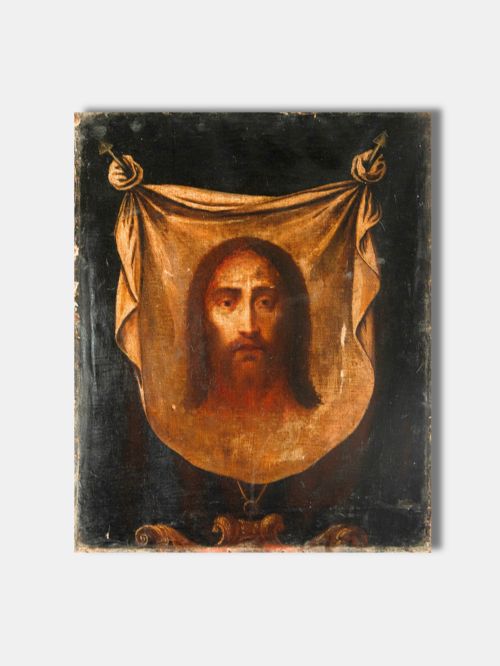
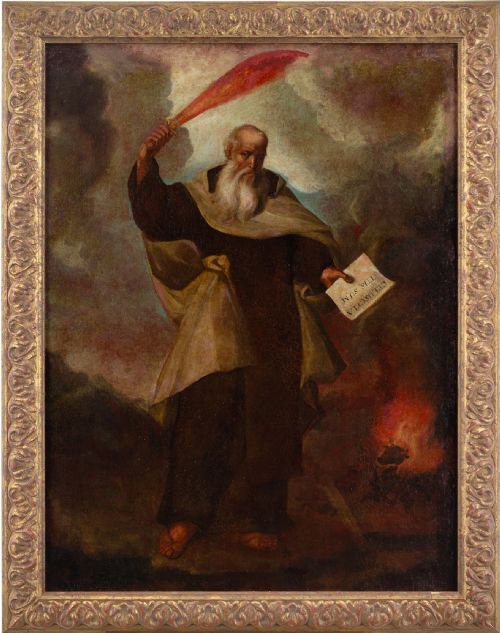
The buyer most frequently meets seventeenth-century oil paintings originating from regional schools or created in the style of Spanish colonial baroque. Subjects range from the Holy Face of Jesus and the Virgin Mary to theologians and biblical prophets.
Works on this page also include eighteenth-century compositions and later interpretations after masters like Bartolomé Murillo. Each canvas reflects the enduring influence of the Spanish Golden Age upon religious portraiture.
Materials and methods
These pieces are painted with oil paint applied to canvas or linen supports. The pigments build up deep shadows and luminous highlights typical of the period's tenebrist approach.
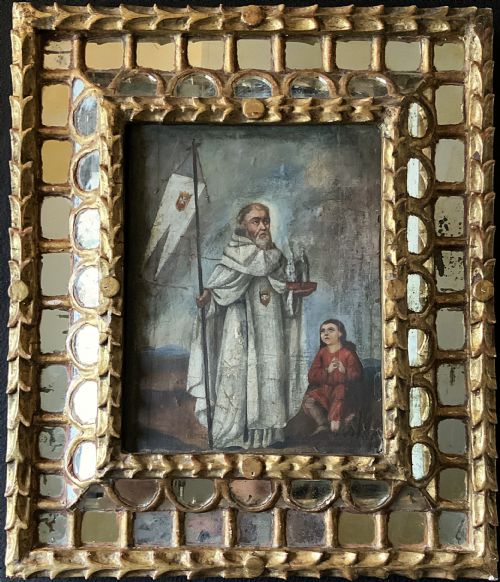
Many works retain their original or period-appropriate gilded wood and giltwood frames. These carved wooden surrounds enhance the dramatic presence of the oil painting within.
Listings feature oil paintings on canvas and linen, accompanied by period gilded wood and giltwood frames from the seventeenth and eighteenth centuries.
Assessing quality in the works
Quality rests in the handling of facial expression and the skilful rendering of drapery and light. Stronger works demonstrate a confident brushwork that brings devotional subjects to life with striking immediacy.
The preservation of the original canvas and the integrity of the period giltwood frame contribute significantly to the standing of a piece. Finer examples maintain their original tonal depth without heavy intervention.
Juan Ruiz Soriano·Gaspar de Figueroa·Bartolomé Murillo
The Spanish Baroque Portrait Glossary
- Baroque
- A European style of art from the seventeenth and early eighteenth centuries characterised by drama, tension, and grand scale. It prioritises emotional intensity over classical harmony.
- Giltwood
- Wood that has been coated with gold leaf or a gold-coloured substance. It frequently forms the ornate frames associated with fine portraits of this era.
- Oil on Canvas
- A painting medium where pigments are suspended in drying oils and applied to a stretched woven fabric. This combination allows for rich blending and deep glazes.
- Spanish Colonial
- Art produced in the overseas territories of the Spanish Empire that blends European baroque conventions with local indigenous traditions. It often depicts regional saints and religious narratives.
Spanish Baroque Portrait: Frequently Asked Questions
What subjects appear in these portraits?
The subjects are predominantly religious figures, including the Virgin Mary, saints, theologians, and biblical scenes. Many draw inspiration from master painters such as Murillo.
These sacred portraits were created to inspire personal devotion and contemplation in private chapels or homes during the seventeenth and eighteenth centuries.
How do I identify a seventeenth-century piece?
Seventeenth-century works typically display the dark, dramatic palette and intense chiaroscuro of the Spanish school. Canvas preparation, pigment analysis, and stylistic conventions help confirm the period.
Examining the construction of the wooden stretcher and the wear on the giltwood frame also offers clues regarding the age of the object.
Are these works painted on canvas?
The vast majority of these artworks are executed in oil paint upon a canvas or linen support. This combination was the standard medium for professional painters of the period.
The textile support allows for the characteristic dark grounds and luminous highlights found in baroque religious art.
How should I display a giltwood frame?
Giltwood frames require stable indoor conditions away from direct sunlight and sudden humidity changes. These precautions protect the delicate gold leaf and the underlying gesso from cracking.
Allowing sufficient wall space for the heavy, ornate frame lets the theatrical lighting of the portrait work effectively in a modern interior.