



Spanish School Artwork
Spanish school artwork comprises historic paintings and drawings capturing centuries of religious devotion, portraiture, and still life.
Spanish School Artwork
When buyers search for spanish school artwork, they encounter centuries of fine art spanning from the sixteenth century through to the twentieth century. These pieces predominantly take the form of oil paintings on canvas, framed in period materials such as giltwood, alongside occasional drawings on paper.
The origins of these pieces trace through various epochs, with notable representation from the Spanish Renaissance, Spanish Baroque, and Madrid School traditions, as well as later realist and twentieth-century interpretations. Each piece reflects the distinct aesthetic priorities of its period, whether the dramatic tenebrism of the seventeenth century or the lighter studies of the nineteen-thirties.
Evaluating Quality
Quality in these paintings rests upon the handling of light, shadow, and anatomical precision, where master practitioners achieve striking psychological depth in portraits and palpable texture in still-life subjects. The sophistication of the brushwork and the preservation of the original paint layer determine how successfully a piece communicates its narrative intent.
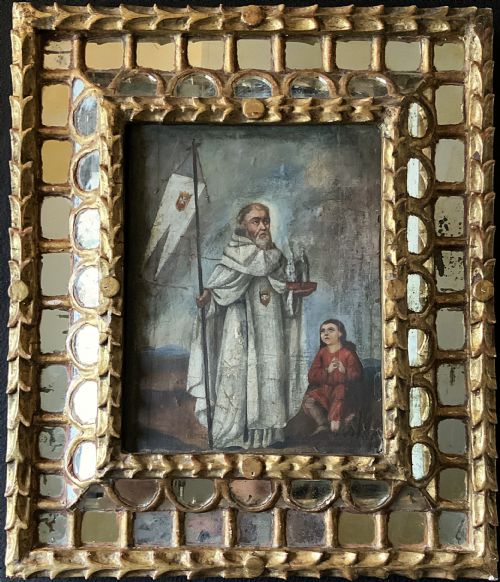
The integration between the artwork and its period housing, such as original giltwood framing, contributes to the overall integrity of the piece. Works that retain their untouched surface character demonstrate greater artistic and historical cohesion.
A seventeenth-century larder still life records an eclectic grocery list of eggs, walnuts, lamb, apples, playing cards, dice, lemon, snails, onion, and bread.
Miguel Barroso·Henri Cadiou
The Spanish School Artwork Glossary
- Spanish Baroque
- A stylistic period spanning the seventeenth century characterised by dramatic contrast between light and dark, known as tenebrism, and intense emotional expression. This approach defined much of the religious and portrait painting of the era.
- Giltwood
- Wood carved and coated with gold leaf or a gold-coloured metallic finish, frequently utilised for framing historic paintings. These frames enhance the visual weight and period authenticity of the artwork.
- Madrid School
- A specific regional grouping of artists working in the Spanish capital during the seventeenth century, sharing particular techniques in portraiture and religious composition. Works from this circle exhibit refined draughtsmanship and solemn dignity.
- Still Life
- A painting or drawing focusing on inanimate subject matter, such as food items, larder elements, or playing cards. These compositions allowed artists to demonstrate supreme technical skill in rendering textures and reflections.
Spanish School Artwork: Frequently Asked Questions
What subjects do these paintings cover?
The selections encompass a diverse range of subjects, divided primarily between sacred religious iconography and secular observations. Buyers encounter devotional depictions of saints and biblical narratives alongside realistic portraits, marine landscapes, and detailed larder still lifes.
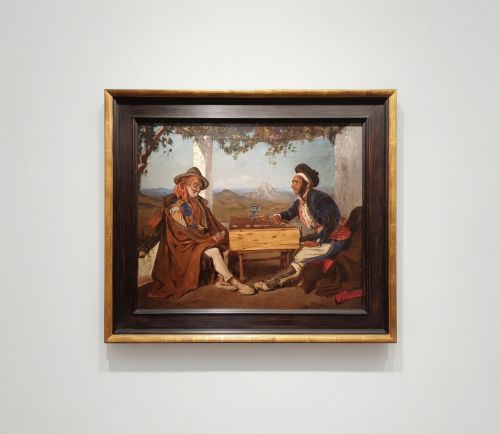
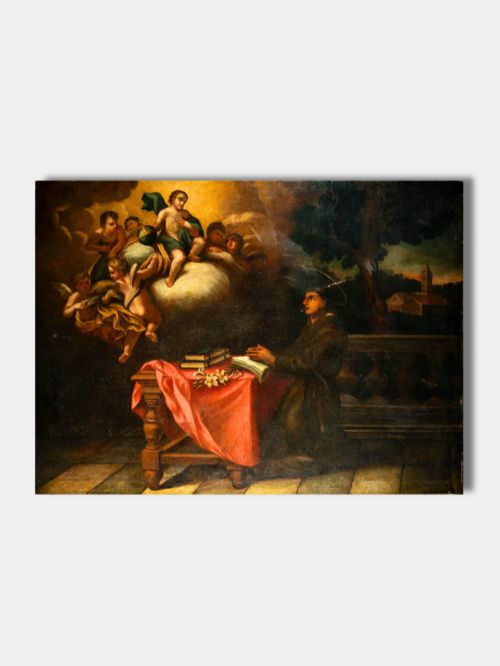
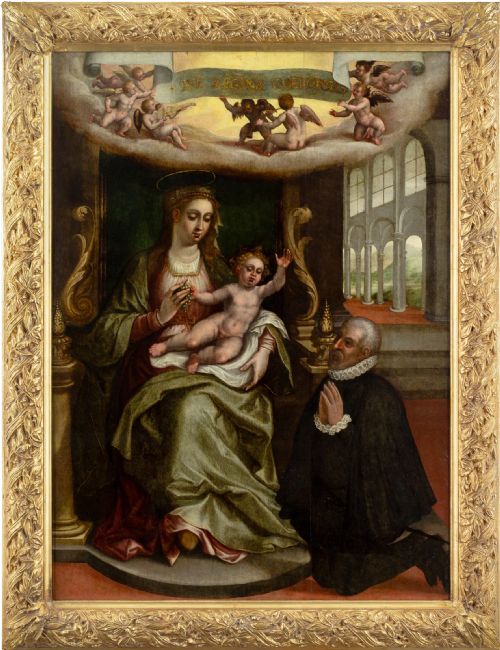
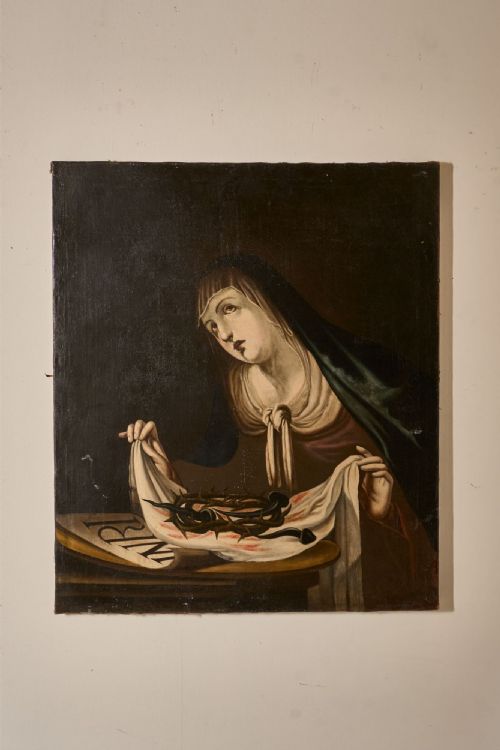
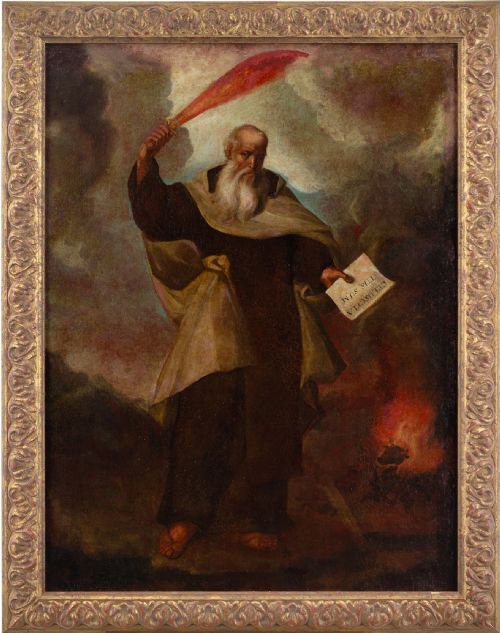
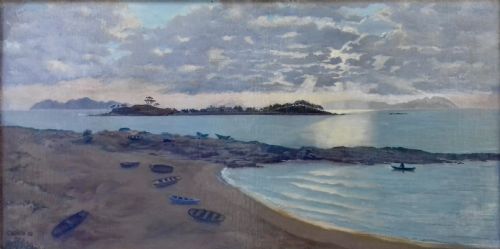
Religious works frequently highlight figures like the Virgin Mary or Saint Anthony, while secular pieces capture everyday elements such as card players and coastal evening views.
Which periods are represented?
The inventory spans multiple centuries, with notable concentrations in the sixteenth, seventeenth, and eighteenth centuries. These older pieces reflect Renaissance and Baroque traditions originating from Spanish workshops.
Later examples extend into the twentieth century, including realist studies and works from the nineteen-thirties and nineteen-fifties that show the evolution of European artistic practice.
What materials were used by the artists?
The primary medium across the collection is oil paint applied to canvas supports, complemented by occasional drawings on paper. These materials were chosen for their durability and capacity to hold rich pigmentation.
Many of the canvases are housed in their original or period-appropriate wood and gilt frames, which provide structural support and complement the aesthetic of the paintings.
How do I care for historic oil paintings?
Historic canvases require stable environmental conditions with minimal fluctuation in humidity and temperature to prevent the canvas and paint layers from cracking. Keeping paintings away from direct sunlight preserves the integrity of the oil pigments and prevents fading.
Dusting should be undertaken gently with a soft, dry brush, avoiding any liquid cleaning agents or abrasive materials that might damage the historic surface.