




Solid Silver Tea Tongs
Solid silver tea tongs are essential tableware for sugar service, ranging from early cast forms to cased sets.
Solid Silver Tea Tongs
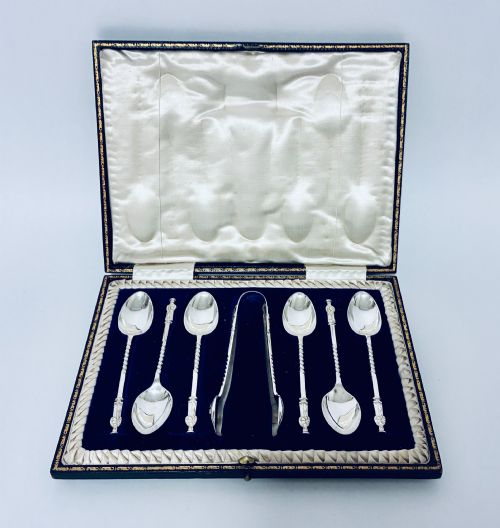
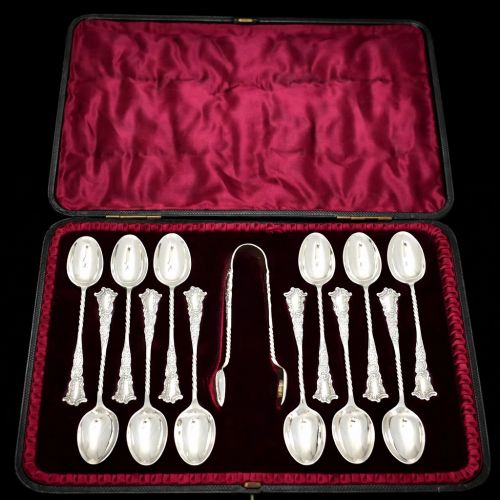
Solid silver tea tongs encompass small serving implements designed for sugar lumps, frequently appearing alongside spoons in fitted presentation cases or as standalone Georgian examples. The pieces on this page span the eighteenth century through the Art Deco period, taking forms such as sugar nips and sprung scissor actions. You will encounter Georgian Scottish designs alongside Victorian naturalistic foliate patterns and later Edwardian or George V boxed sets.
The most common variants on this page include nineteenth-century sterling silver sugar tongs and complete boxed teaspoon and tong sets bearing hallmarks from provincial and London assay offices. Makers range from specialist silversmiths like Francis Higgins and Josiah Williams and Co to international names such as Georg Jensen. Each style reflects the prevailing dining customs of its era, moving from early cast production to mechanised Victorian output.
Assessing quality and craftsmanship
Quality in solid silver tea tongs rests upon the crispness of the original cast or chased detail, particularly on naturalistic foliate designs where leaf and stem motifs should remain sharp rather than worn down from excessive cleaning. Substantial gauge metal prevents unwanted bending in the springing arms, ensuring the tongs retain their natural tension over generations of use. Maker marks and clear provincial or London hallmarks add archival weight to a piece.
For cased sets, the integrity of the velvet, silk, or leatherette lining and the secure fit of the internal compartments dictate the overall standard of survival. Items that retain their original fitted case by makers such as Francis Higgins or Georg Jensen demonstrate superior original curation. Superior examples exhibit balanced proportions and uncompromised silver thickness at the stress points.
Some nineteenth-century makers fashioned silver sugar tongs to resemble delicate bird claws clutching sugar lumps.
Georg Jensen·Josiah Williams and Co·Francis Higgins·Robert Stebbings·Philippe Berthier Paris
The Solid Silver Tea Tongs Glossary
- Sugar Nips
- A scissor-type implement with circular finger rings and pivoting bowls used for gripping sugar lumps before the prevalence of sprung tongs. They often date from the Georgian period.
- Cast Silver
- A manufacturing technique where molten silver is poured into a mould to create three-dimensional forms with thick, substantial walls. This method produces heavy, durable eighteenth-century items.
- Foliate Design
- Ornamentation employing natural leaf, vine, and flower motifs chased or engraved onto the silver surface. This style became popular during the Victorian era.
- Silver Gilt
- Silver objects that have been coated with a thin layer of gold, also known as vermeil. This technique adds a warm, lustrous finish to tea strainers and tongs.
- Hallmark
- A series of official marks stamped onto precious metal articles to guarantee the silver standard and indicate the maker, assay office, and year of testing.
Solid Silver Tea Tongs: Frequently Asked Questions
What are solid silver tea tongs?
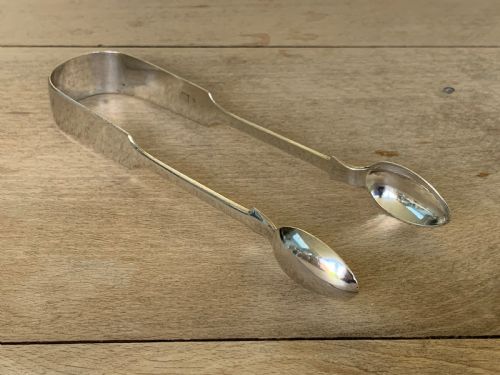
Solid silver tea tongs are small serving utensils created to handle sugar lumps during tea service. They evolved from scissor-action nips to sprung single-piece arms.
These implements frequently accompany teaspoon sets within fitted presentation boxes lined with silk or velvet. Examples span multiple centuries of British and European silversmithing.
How do I date antique silver tongs?
Dating relies primarily on the hallmarks stamped directly onto the silver surface. These official marks identify the assay office, the standard of the metal, and a specific date letter.
Stylistic shifts also provide clues, such as the heavy cast construction of mid-eighteenth-century pieces versus the naturalistic foliate chasing typical of Victorian manufacturing.
What is the difference between sugar nips and tongs?
Sugar nips feature pivoting handles with finger rings, resembling small scissors, and typically date from the earlier Georgian period. They offer a direct mechanical grip.
Tongs rely on a sprung arch of metal that compresses between the fingers to pick up sugar cubes. This sprung design became dominant through the Victorian and Edwardian eras.
How were cased tea tong sets used?
Cased sets containing teaspoons and matching sugar tongs were designed for formal hospitality and domestic tea rituals. The fitted interior kept the silver components organised and protected.
These sets were often given as wedding gifts or presentation pieces. The velvet and satin linings preserved the polished finish during storage.