




Vintage Sugar Nips
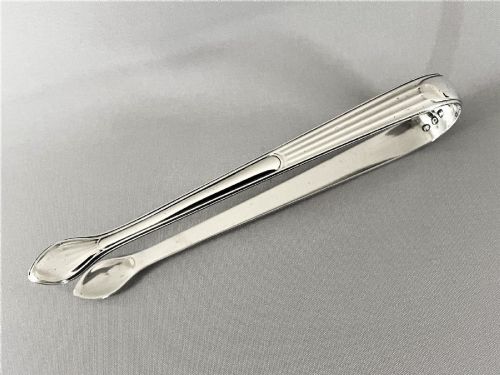
Vintage sugar nips are sterling silver tea tongs spanning the Georgian, Victorian, and mid-century periods, prized for precision in serving sugar lumps.
Vintage Sugar Nips
Vintage sugar nips appear primarily as sterling silver sugar tongs across this selection, bridging formal tea service traditions and mid-century dining. These pieces take forms shaped by Georgian, Victorian, and Art Deco aesthetics, with Danish Modern designs also represented.
The buyer encounters items originating from distinct eras including the eighteenth century, the Georgian and Regency reigns, and the nineteenth and twentieth centuries. Scottish, Irish, and English regional origins appear alongside Scandinavian manufacture.
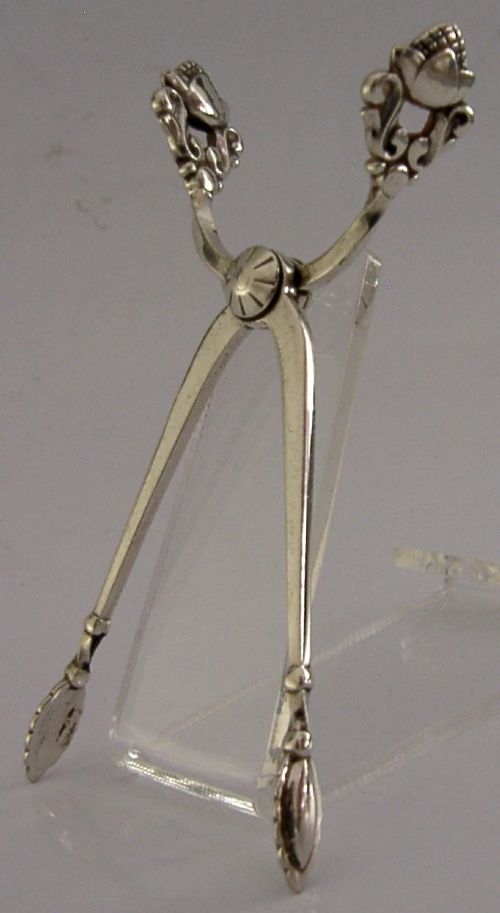
Makers and workshops range from historic silversmithing families to twentieth-century design houses such as Georg Jensen. The forms vary from restrained George III styles to ornate Victorian chased work and minimalist Acorn patterns.
How they were made
Makers relied entirely upon sterling silver, shaping the metal through casting and hand-forging techniques to achieve resilient spring arms. Eighteenth-century examples demonstrate cast construction methods.
Surface decoration involved piercing, engraving, and stamping to create ornate patterns along the arms and terminals. Silversmiths utilised traditional hallmarks to record the assay office, date letter, and maker's mark directly onto the silver.
The listings span sterling silver items from the eighteenth century through to the mid-twentieth century, encompassing Georgian, Victorian, and Art Deco styles.
What varies in quality
Quality rests upon the crispness of the original cast or chased ornament and the enduring spring tension within the bridge. Pieces by esteemed makers retain sharper detail in their motifs and cleaner punch marks from the silversmith.
The thickness of the sterling silver gauge dictates the weight and balance in the hand, separating standard production from exceptional examples.
Bateman Family·Georg Jensen·Josiah Williams And Co
The Vintage Sugar Nips Glossary
- Sterling silver
- A standard alloy consisting of 92.5 percent silver and 7.5 percent other metals, typically copper, used across all these items. This composition provides the necessary durability for functional tableware.
- Sugar nips
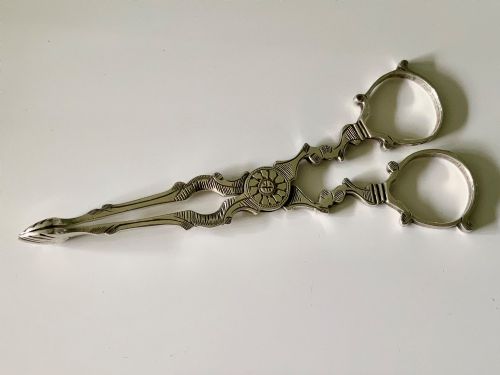
- A historical term for small tongs or scissors designed to grasp sugar lumps for tea service. They evolved from scissor-action cutters into spring-action bows.
- Hallmark
- An official stamp applied by an assay office confirming the purity of the metal and the year of manufacture. British pieces carry distinct sequences of marks.
- Acorn pattern
- A twentieth-century modernist motif designed by Johan Rohde, featuring distinct botanical details on the terminals. This style is closely associated with Georg Jensen.
Vintage Sugar Nips: Frequently Asked Questions
What are sugar nips used for?
These implements serve to lift individual sugar lumps from a bowl into a teacup without handling the cubes directly. They formed an essential part of formal tea service etiquette.
Their spring-action design allows the user to pinch the lumps securely between two shaped terminals.
How do I date sterling silver sugar tongs?
Dating relies upon the hallmarks stamped into the metal by official assay offices, which include date letters specific to the year of testing. Stylistic clues such as Georgian engraving or Art Deco geometry also indicate the period.
Maker marks help narrow down the exact decade of production.
Are these made of solid silver?
Every piece listed here is fashioned from sterling silver, meeting the strict legal standard for silver content. They contain no base metal plating.
Makers certified this purity by striking their work with the lion passant or equivalent regional standard marks.
What is the difference between tongs and nips?
While historic terminology sometimes distinguished between scissor-action cutters and spring-action bows, the terms are used interchangeably today. Both describe implements for handling sugar.
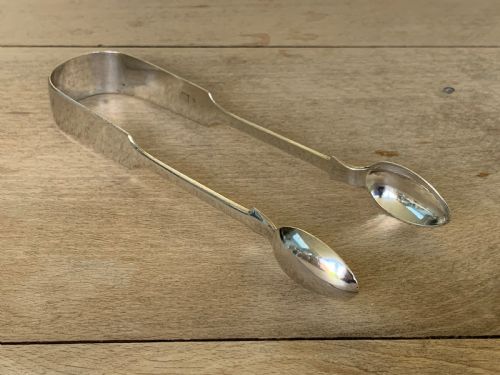
Most surviving examples utilise a single bent piece of silver forming a spring bow.