


.JPG)
Solid Silver Sifter
A solid silver sifter brings the refined ritual of casting sugar or spices onto food into daily domestic life.
Solid Silver Sifter
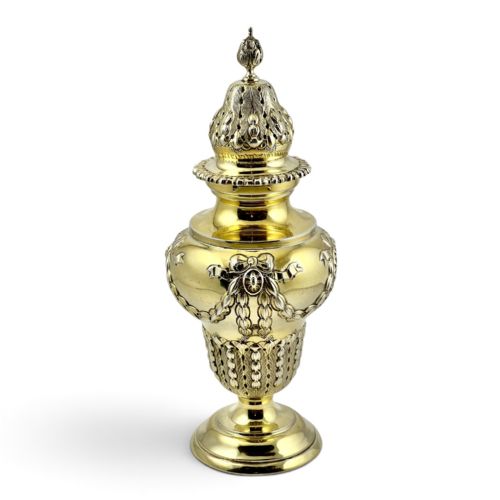
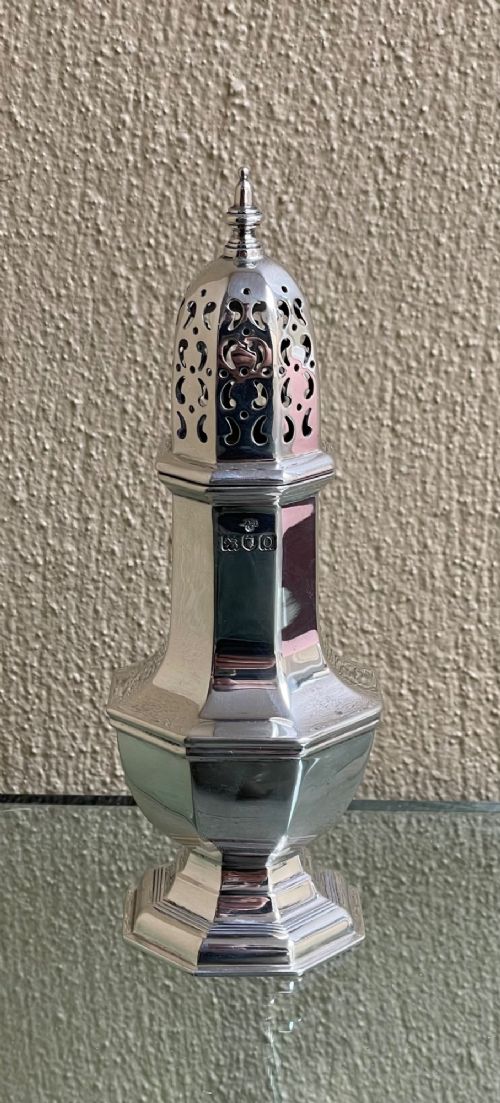
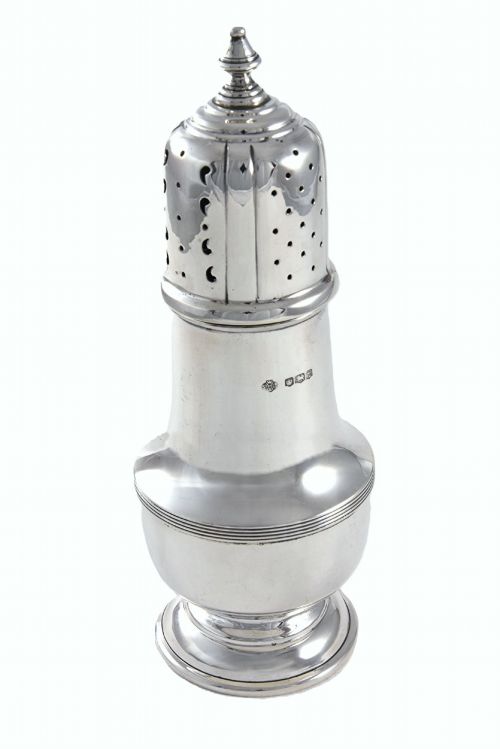
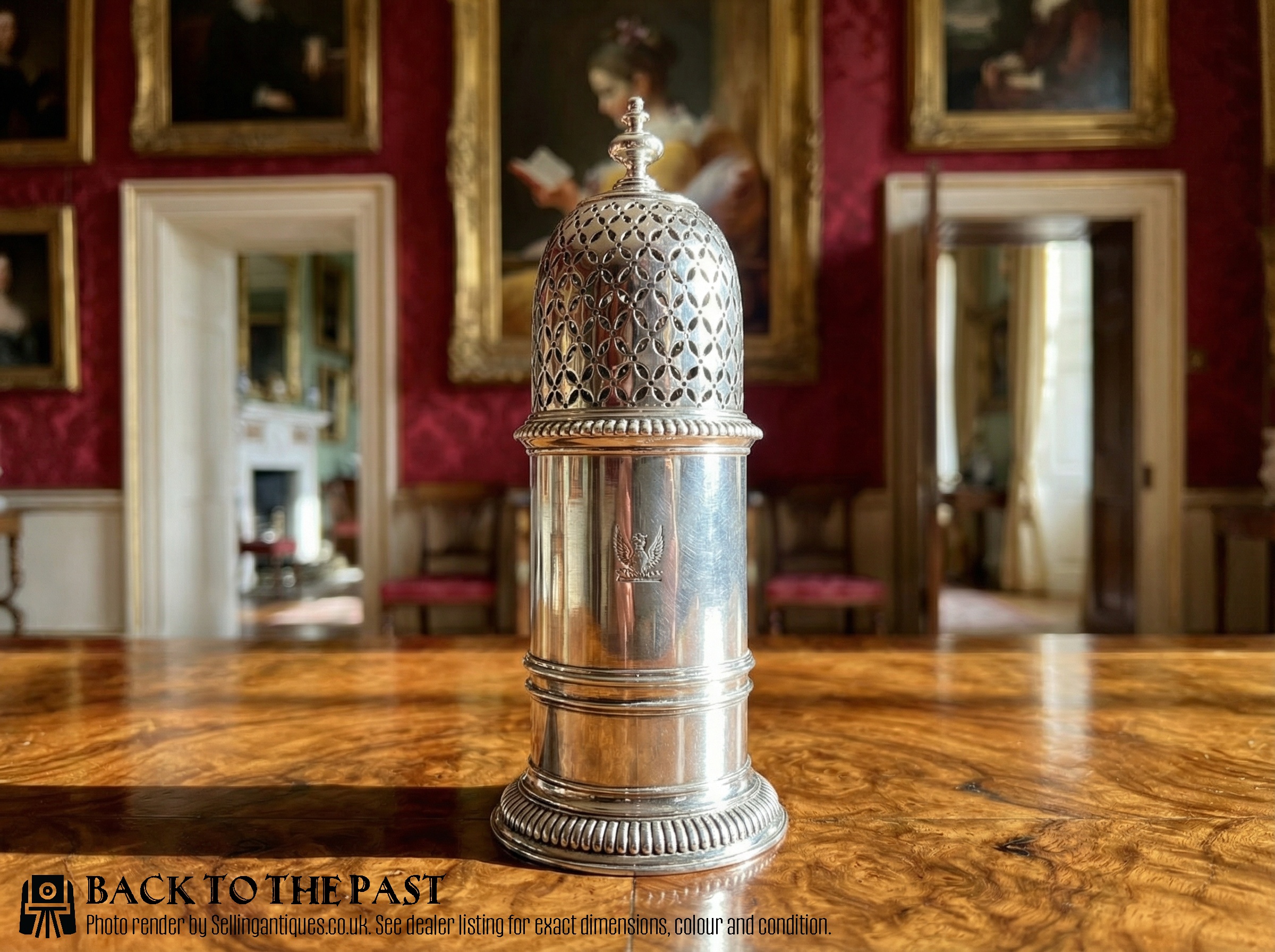
A solid silver sifter encompasses both tall standing cast vessels and broad flat spoons intended for dusting sugar or spices onto food. Collectors encounter forms ranging from early eighteenth century octagonal casters to nineteenth century pierced ladles and twentieth century Art Deco shakers.
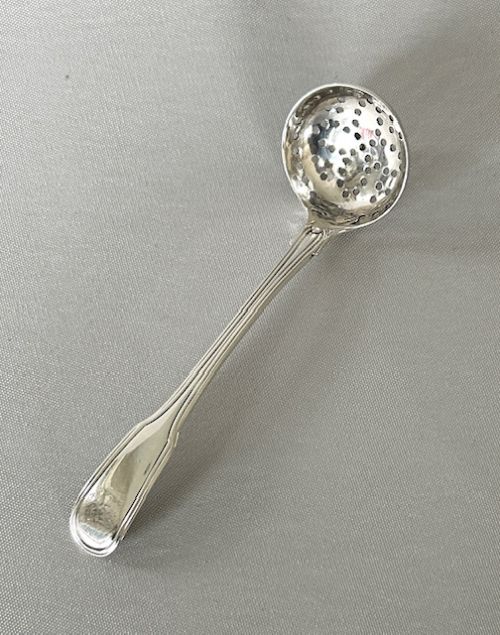
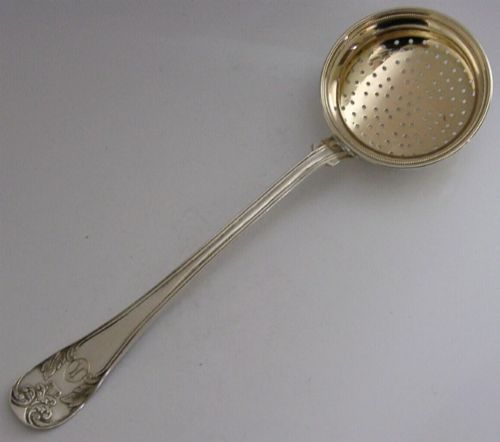
Standing casters typically feature perforated tops designed to distribute powdered sugar or spice evenly. Flat sifter spoons and ladles incorporate pierced bowls that allow excess sugar to fall away while retaining larger lumps.
The material record spans Georgian, Victorian, Edwardian, and later twentieth century periods. Makers utilise sterling silver, silver gilt, and occasionally combine silver with cut glass or velvet linings.
Materials and construction methods
Silversmiths constructed standing casters using heavy gauge sheet silver, raising the bodies into octagonal, polygon, or lighthouse forms. Pierced lids required precise hand-sawing or drilling to create decorative patterns for sifting.
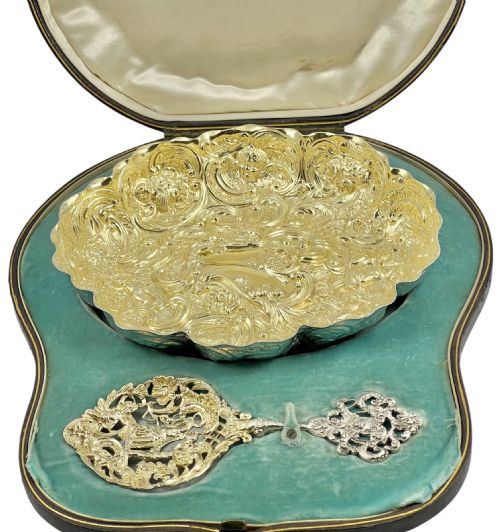
Sifter spoons and ladles were shaped by hammering sterling silver into bowls before piercing intricate geometric or floral motifs into the metal. Makers frequently applied gilt finishes or chased grape vine designs onto the handles.
Listings for this phrase include items spanning the eighteenth, nineteenth, and twentieth centuries, executed in sterling silver, silver gilt, and cut glass.
Distinguishing quality in silver sifters
Quality rests on the crispness of the piercing on caster lids and spoon bowls, where clean edges indicate skilled handwork rather than mass production. The thickness of the silver gauge dictates the substantial feel and balance of the piece in the hand.
Maker marks and clear hallmarks contribute significantly to the standing of a piece, alongside the preservation of original gilding and surface chasing. Pieces exhibiting distinct period styling, such as Art Deco geometric facets or Georgian octagonal lines, demonstrate superior design execution.
Stephen Adams·The Barker Brothers·Roberts And Belk·Francis Higgins·Taylor And Perry·Chawner And Co·Martin Hall And Co·William Hutton And Sons
The Solid Silver Sifter Glossary
- Caster
- A small standing vessel with a pierced top used for sprinkling sugar or spices. These objects date across the Georgian, Victorian, and Edwardian eras.
- Muffineer
- An alternative term for a sugar caster or spice dredger used at the tea table. The name derives from the practice of dusting warm muffins.
- Sifter spoon
- A large spoon or ladle with a pierced bowl designed for dusting sugar over fruit or desserts. Examples often feature elaborate handle patterns.
- Silver-gilt
- Silver that has been coated with a thin layer of gold on the surface. This technique adds warmth and protects the underlying silver from tarnishing.
- Hallmark
- A series of official marks stamped on precious metals indicating the standard of purity, the assay office, and the year of manufacture.
Solid Silver Sifter: Frequently Asked Questions
What is the difference between a caster and a sifter spoon?
A caster is a standing vertical container with a pierced lid designed to shake sugar or spices downwards onto a dish. A sifter spoon is a flat utensil featuring a pierced bowl used to scoop and dust sugar across food.
Both items served similar functions at the dining table but offered different methods of application depending on the food served.
How do I identify the date of a solid silver sifter?
Dating relies primarily on the assay office hallmarks stamped directly onto the silver body or the rim of the lid. These stamps include date letters and maker marks that cross-reference with official historical records.
Stylistic indicators such as Art Deco geometric polygons or Georgian octagonal profiles also help narrow down the period of manufacture.
Can I still use antique silver sifters for food?
Solid silver is safe for food use, provided the piece is thoroughly washed in warm soapy water before use. Modern acidic foods should not be left in contact with silver for extended periods to prevent tarnishing.
Many collectors enjoy integrating functional antique silver into contemporary dining routines for dusting icing sugar or spices.
How should I clean and care for silver sifters?
Cleaning requires a soft microfibre cloth and a reputable silver polish formulated to lift tarnish without abrasive scratching. Pierced areas on lids and spoon bowls need gentle attention with a soft brush to remove polish residue.
Storing pieces in dry environments away from direct sunlight helps preserve the polished surface and any original silver-gilt finishes.