
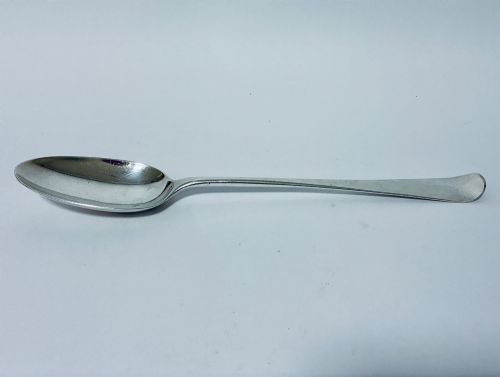
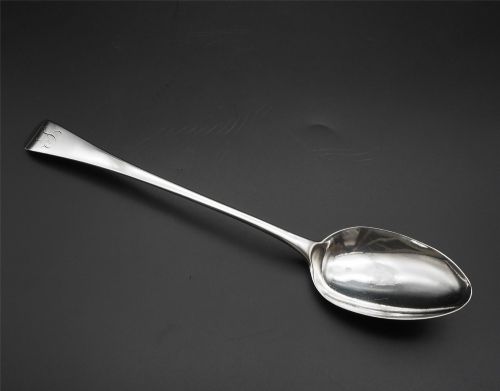
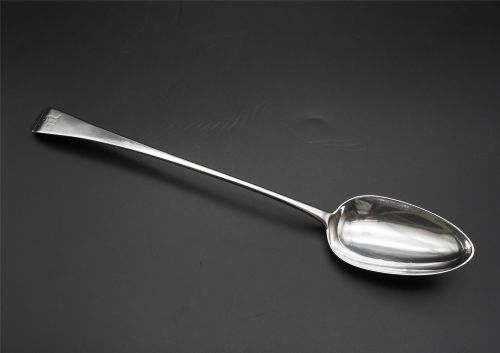
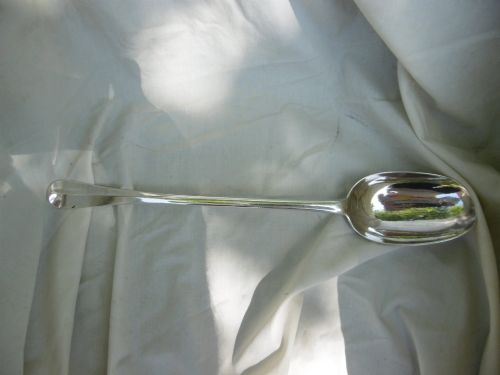
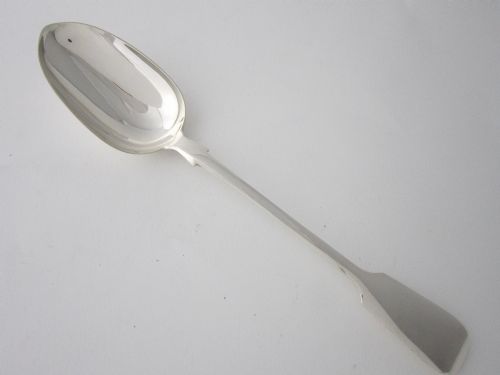
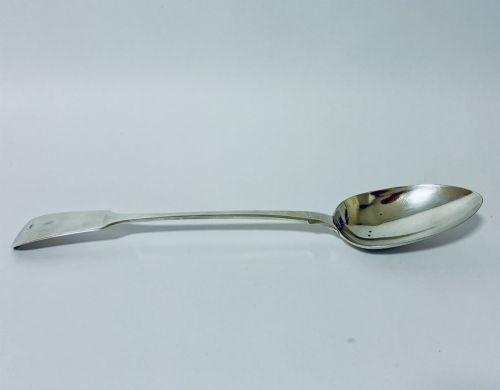


Solid Silver Basting Spoon
A solid silver basting spoon is a substantial dining tool designed for large joints of meat, offering both heft and elegance at the table.
Solid Silver Basting Spoon
A solid silver basting spoon provides an extended reach and generous bowl size, historically used in wealthy households for serving large roasts and gravies. Buyers seeking a solid silver basting spoon will encounter pieces spanning from the early eighteenth century through the Victorian era, with Georgian examples appearing frequently.
The form often overlaps with hash spoons, stuffing spoons, and gravy spoons, sharing the same elongated handle and deep bowl. Most examples seen here originate from English and Scottish silversmiths, working in sterling or Britannia standard silver.
Makers shaped these implements to endure heavy daily use in grand kitchens before they transitioned to formal dining tables and collector cabinets. The surviving pieces show a remarkable variety of regional British hallmarks, tracing domestic silver production across multiple centuries.
Materials and Construction
Silversmiths forged these large spoons from sterling silver or higher-purity Britannia silver, hammering the molten metal into thick blanks before shaping the bowls and handles. This heavy-gauge metal construction was necessary to withstand the physical demands of lifting and serving heavy cuts of meat.
Early eighteenth-century pieces often incorporate a rat tail reinforcement on the reverse of the bowl to strengthen the joint where handle meets bowl. Later nineteenth-century examples utilise stamped patterns such as Fiddle, Queens, and Kings, applied with steel dies for decorative uniformity.
Solid Silver Basting Spoon Retail Price Guide 2026
Typical asking prices for solid silver basting spoon among the pieces listed under this phrase on Sellingantiques today, from the lower quarter to the upper quarter. They describe what is for sale here now, not the wider market.
Listings for this phrase include examples in Britannia standard silver alongside traditional sterling silver pieces.
Judging Quality and Significance
Quality rests primarily on the thickness of the silver gauge and the crispness of the original handle ornamentation or rat tail attachment. Heavy-gauge metal prevents the long stem from bending under the weight of loaded portions during service.
The clarity and completeness of the maker marks and hallmarks greatly influence the standing of a piece among collectors. Well-preserved hallmarks stamped cleanly into the metal provide clear evidence of date, origin, and silversmith identity without excessive wear from past polishing.
Andrew Archer·William Scarlett·John Wilks·Robert Gordon
The Solid Silver Basting Spoon Glossary
- Britannia Standard
- An alloy of silver containing 95.84 percent pure silver, legally required in England between 1697 and 1719. This higher purity standard appears in early eighteenth-century pieces.
- Rat Tail
- A prominent tapering tongue of metal extending down the back of the spoon bowl from the handle base. This feature provides structural reinforcement on early spoons.
- Hash Spoon
- An alternative historical term for an exceptionally large serving or basting spoon. These oversized implements were designed for deep communal dishes.
- Hallmark
- A series of official stamps applied to precious metal items indicating the maker, city of assay, metal standard, and date of testing. British silver relies on these marks for provenance.
- Fiddle Pattern
- A nineteenth-century cutlery style featuring a handle shaped like an upright violin or fiddle. It became a standard domestic design across the Victorian period.
Solid Silver Basting Spoon: Frequently Asked Questions
How do I clean a solid silver basting spoon?
Wash the silver gently in warm soapy water using a soft cloth, avoiding harsh abrasive dips that strip the natural patina accumulated over centuries.
Dry the spoon thoroughly with a soft lint-free towel to prevent water spots and store it in a tarnish-resistant cloth wrap.
Can I use an antique basting spoon for modern dining?
These robust silver spoons remain entirely functional for serving large roasts, vegetables, and sauces at a modern dinner table.
Hand washing is essential, as modern automated dishwashers use harsh detergents and high heat that can damage the antique surface.
What is the difference between a basting spoon and a gravy spoon?
Basting spoons typically feature a larger, deeper bowl intended for lifting heavy joints of meat and dense portions during kitchen preparation or table service.
Gravy spoons often possess a slightly narrower, elongated bowl designed specifically for pouring liquids and pan juices cleanly into smaller vessels.