

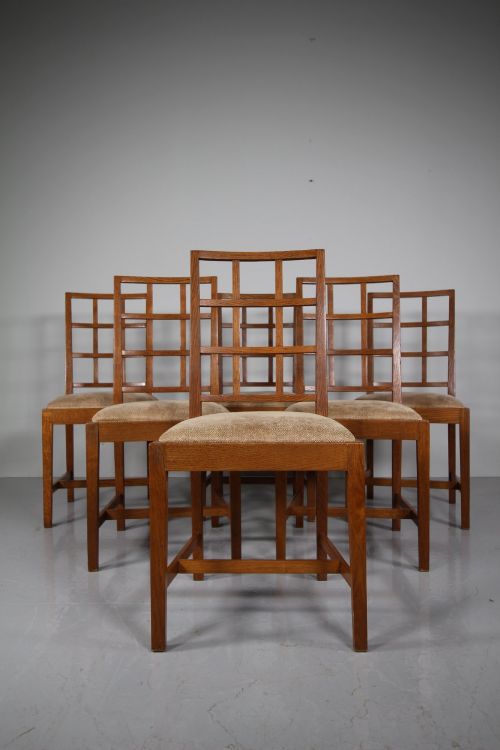
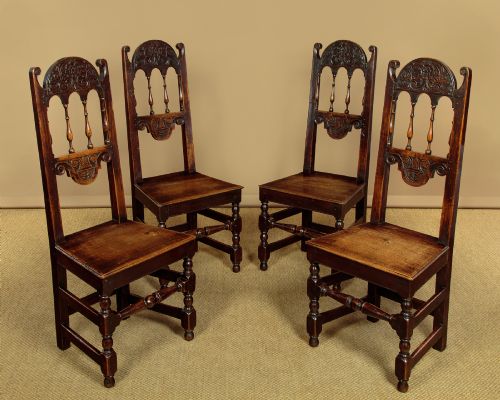
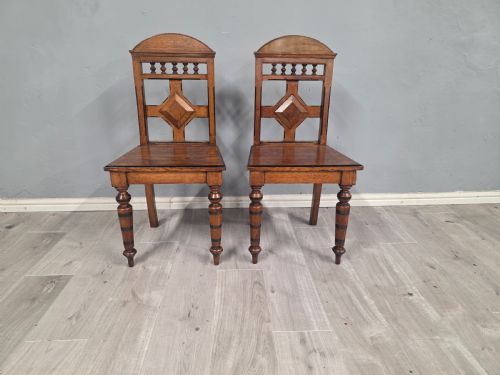
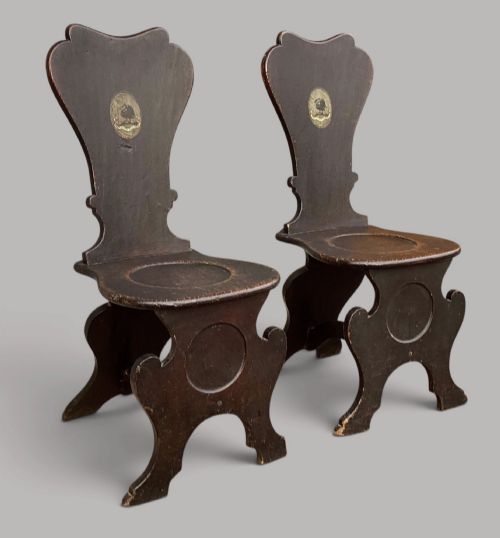
Solid Oak Side Chairs
Solid oak side chairs offer sturdy timber framing and timeless utility, bringing reliable seating to dining rooms and hallways alike.
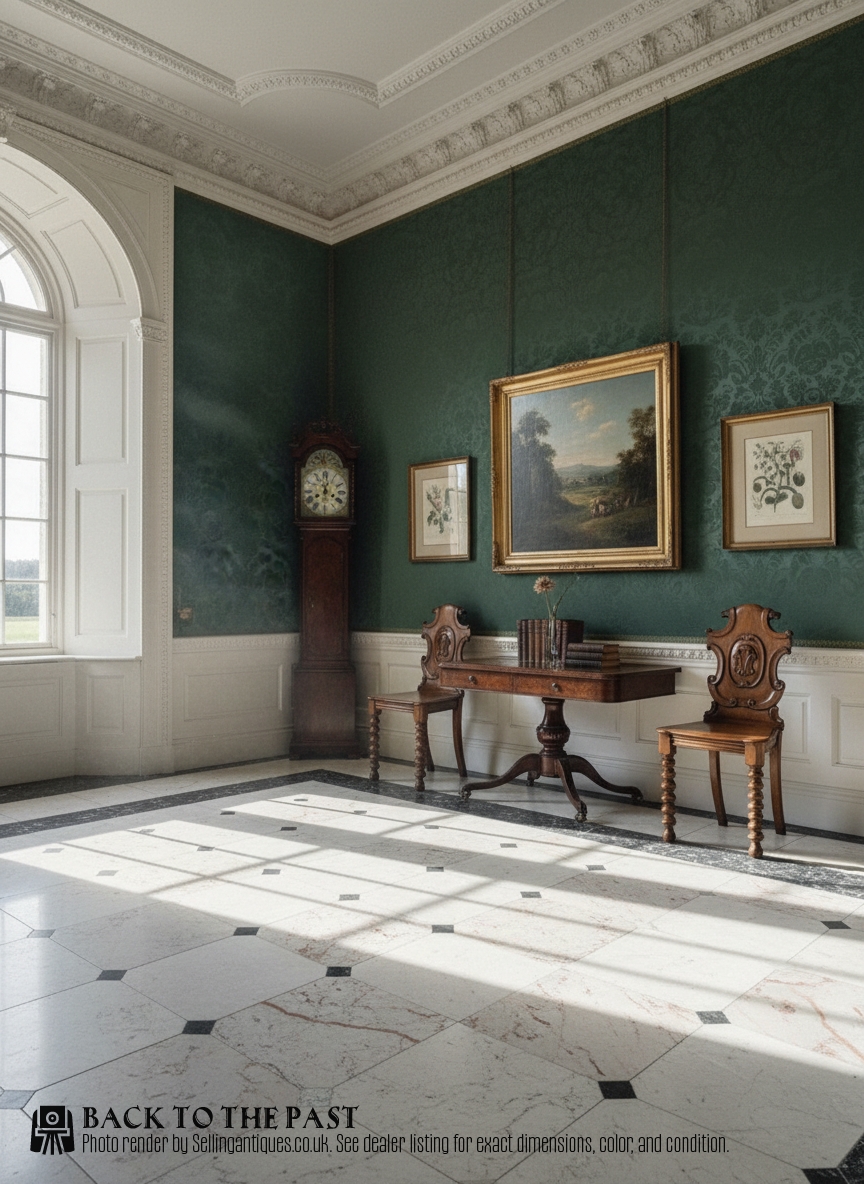
Solid Oak Side Chairs
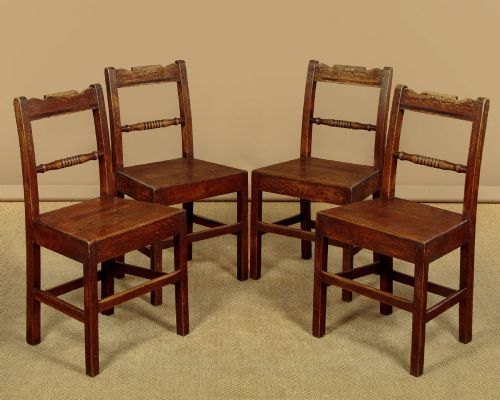
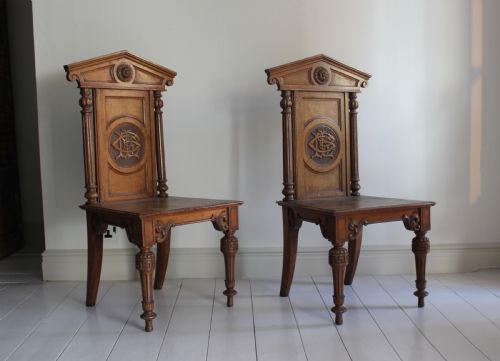
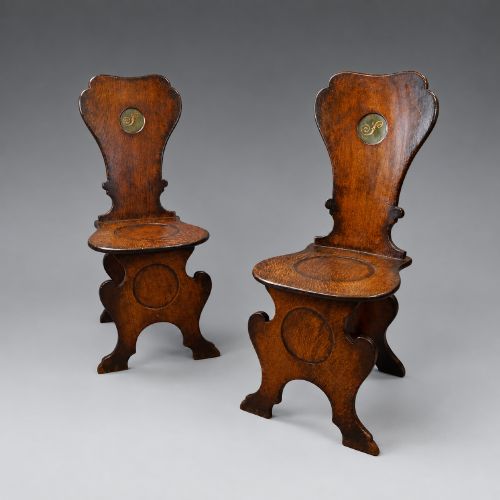
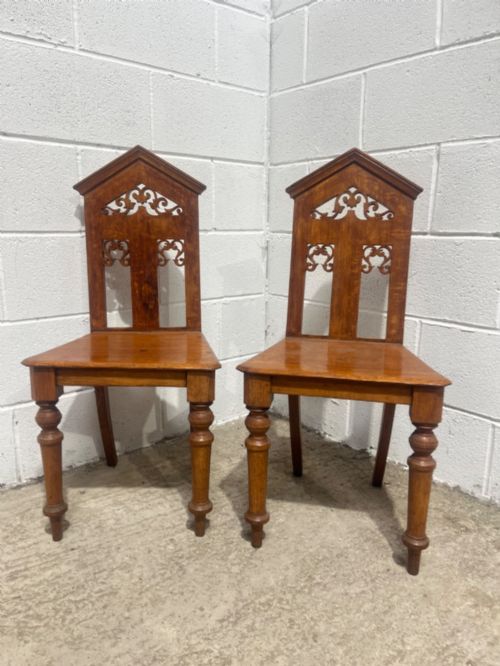
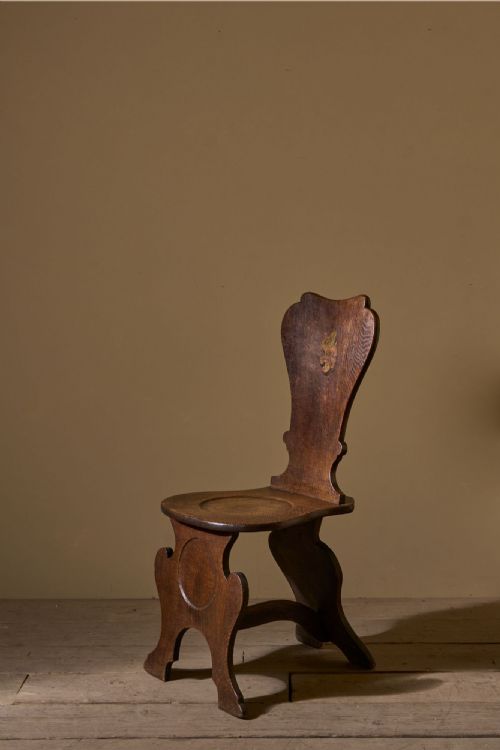
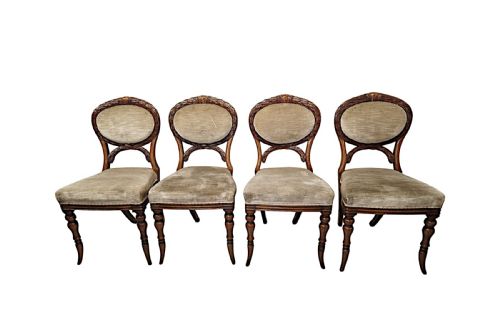
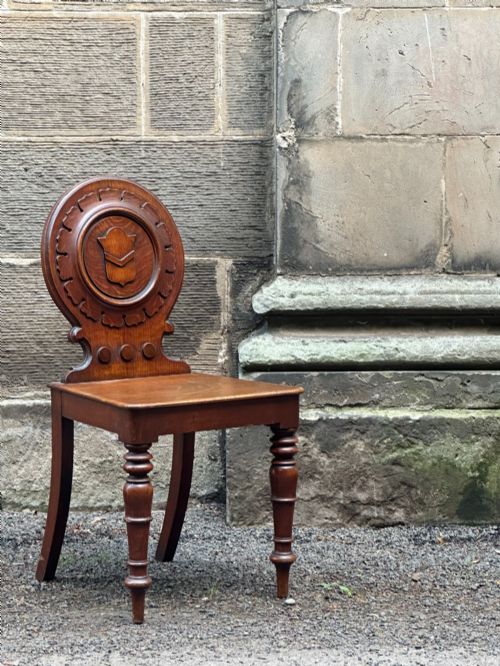
Solid oak side chairs encompass dining chairs and hall chairs fashioned from heavy hardwood timber. These pieces emerge from periods spanning the Georgian era, the Regency period, and the Victorian age, including specific dates such as eighteen sixty.
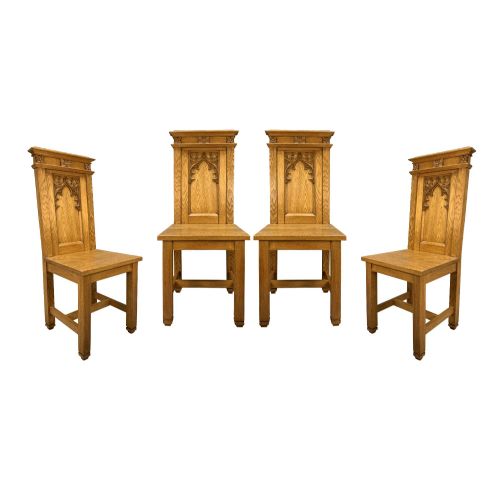
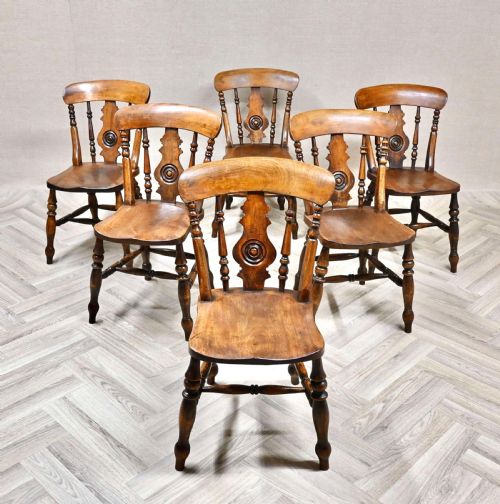
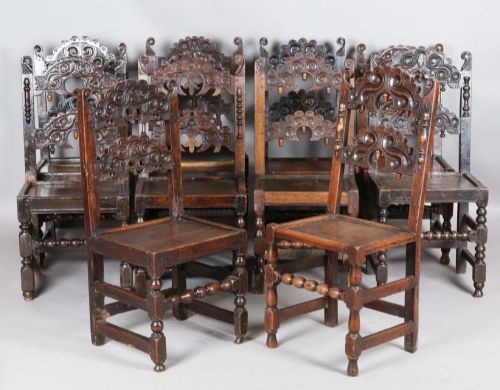
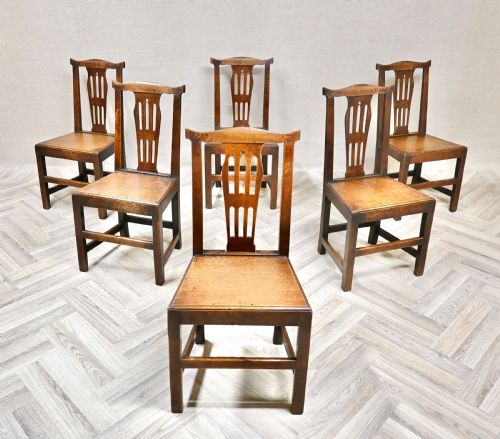
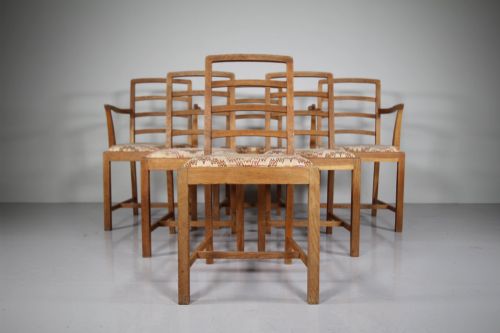
Buyers meet country kitchen dining chairs alongside decorative hall chairs featuring carved, turned, and pierced backs. Formats range from single kitchen chairs to matched pairs and larger sets intended for formal spaces.
Origins vary across stylistic lines from plain country designs to ornate Gothic Revival compositions and refined Regency proportions. The selection balances robust utility with decorative woodwork established across centuries of British cabinet making.
How they were made
Makers utilised solid oak throughout these frames, taking advantage of the timber's inherent density and strength for weight-bearing components. Joinery relied on traditional framing methods to ensure longevity without relying on metal fasteners.
Carving, turning, and piercing decorate the timber backs of hall chairs and dining seats. Artisans shaped structural elements by hand, leaving tool marks and subtle variations that record manual production methods.
Solid Oak Side Chairs Retail Price Guide 2026
Typical asking prices for solid oak side chairs among the pieces listed under this phrase on Sellingantiques today, from the lower quarter to the upper quarter. They describe what is for sale here now, not the wider market.
Current listings feature solid oak side chairs spanning the Georgian, Regency, and Victorian periods, including specific examples from eighteen sixty.
What varies in quality
Quality depends on the depth and crispness of the carved details applied to the oak backs. Sharply defined piercing and clean turning distinguish superior examples from simpler, softer execution.
The integrity of the timber joints and the matching of grain across sets govern the structural and visual coherence of the chair. Uniformity within multi-piece sets elevates the status of the grouping.
Gillows of Lancaster
The Solid Oak Side Chairs Glossary
- Hall chair
- A wooden seat intended for occasional use in entranceways, often featuring a solid timber seat and an elaborately carved back bearing armorial motifs or plain panels.
- Side chair
- A chair without arms, designed to sit alongside a dining table or against a wall when not in active use.
- Gothic Revival
- A nineteenth century design movement that revived medieval architectural motifs, visible in pointed arches and heavy tracery carved into oak furniture.
- Turned
- Wood shaped on a lathe to produce cylindrical or spindle-shaped components such as legs and vertical back stretchers.
Solid Oak Side Chairs: Frequently Asked Questions
Where should solid oak side chairs be placed?
These chairs suit dining tables or entrance halls where their sturdy timber construction handles daily foot traffic.
Their upright backs and lack of arms allow them to tuck neatly beneath tables or stand flat against hallway walls.
How do I identify a Victorian hall chair?
Victorian examples frequently display heavily carved, turned, and pierced wooden backs paired with solid timber seats.
They often reflect nineteenth century revivals, incorporating stylistic elements from earlier Gothic or classical traditions.
Are solid oak side chairs comfortable for dining?
Most historic side chairs feature solid wooden seats without upholstery, offering a firm and upright seating posture.
Buyers seeking softer seating often add loose squabs or cushions that complement the timber grain.
What distinguishes Georgian dining chairs?
Georgian country kitchen chairs focus on practical utility and robust construction using native hardwood.
Their simpler joinery and straightforward lines contrast with the ornate decorative carving found on later Victorian hall seating.