
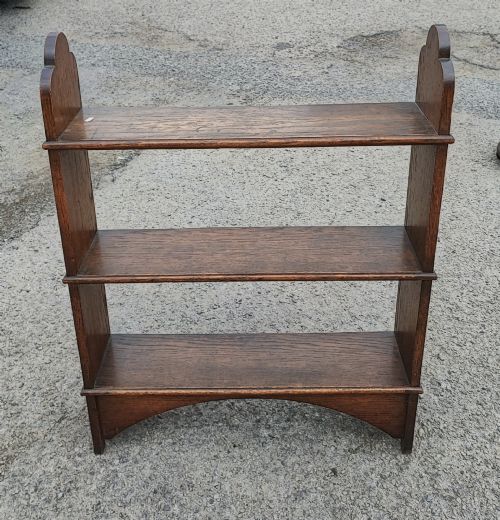
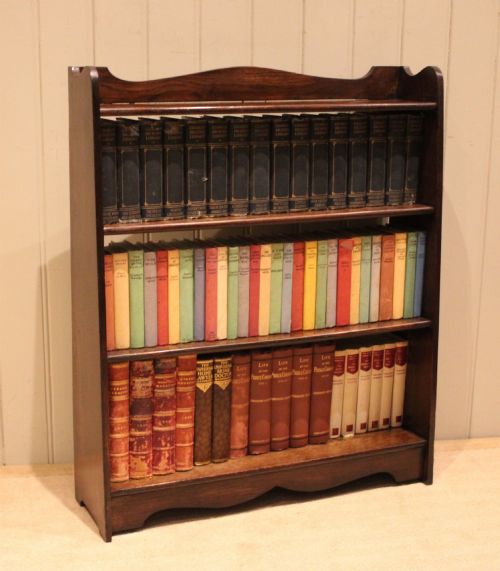
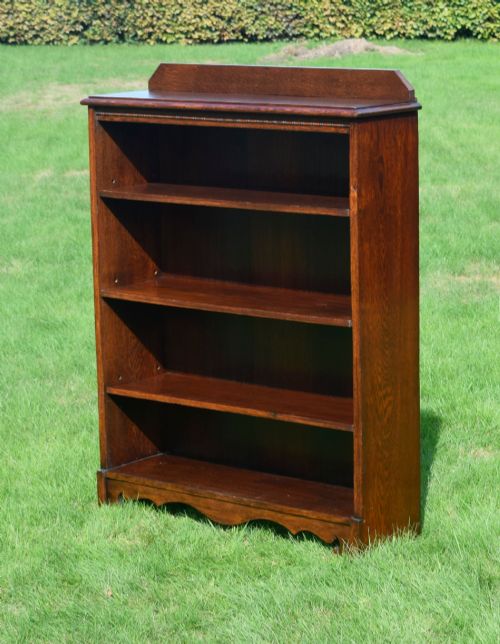
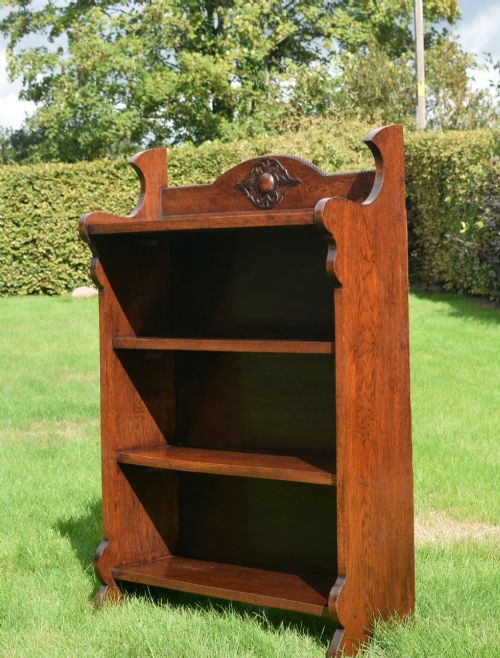
Solid Oak Open Shelves
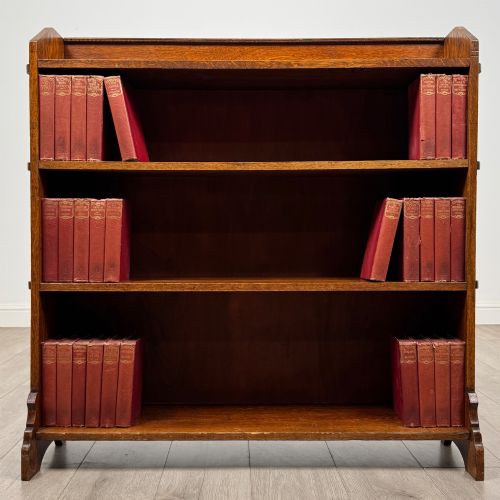
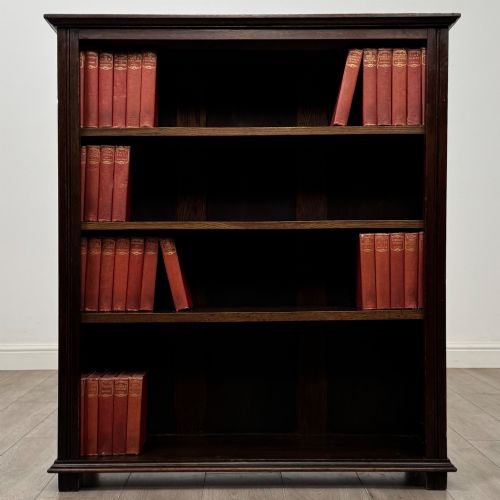
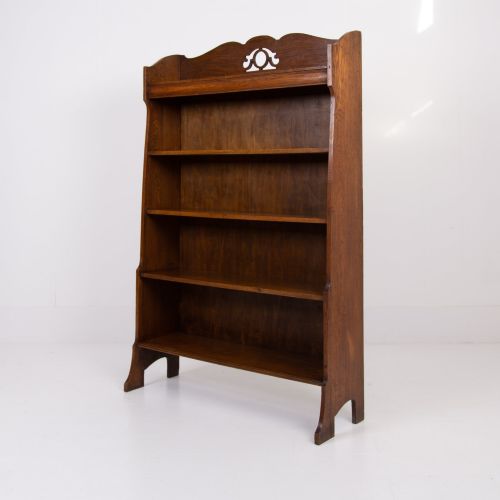
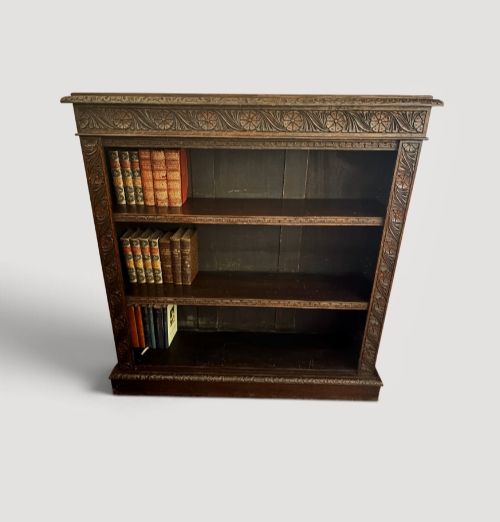
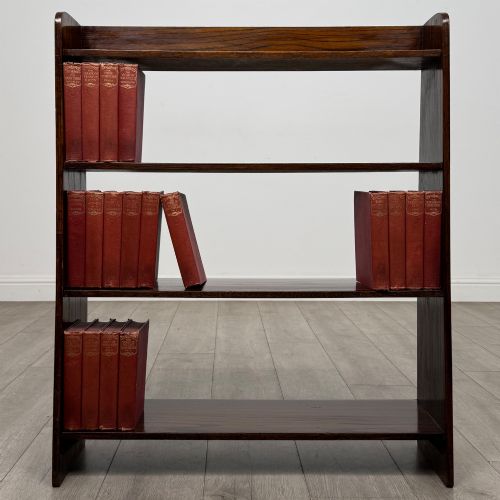
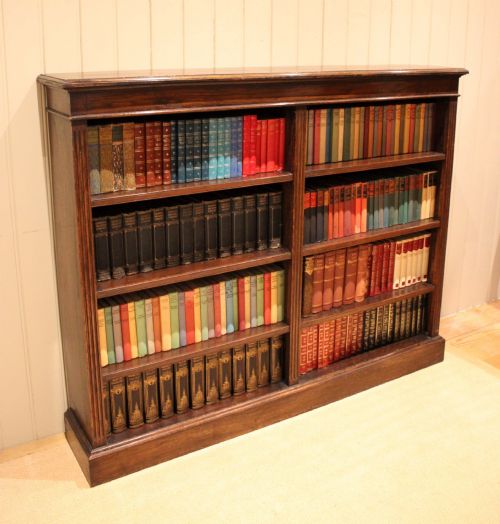
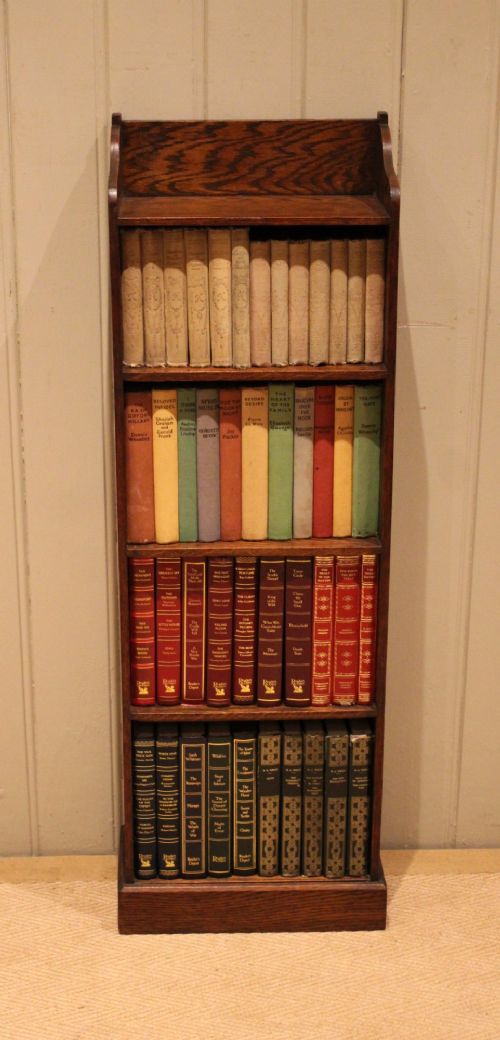
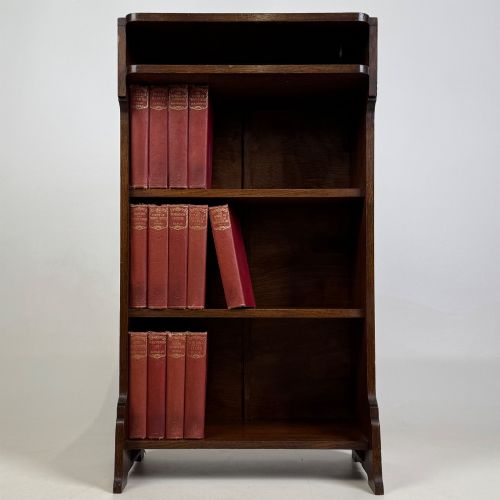
Solid oak open shelves offer sturdy, accessible storage, and you are looking at practical bookcases, dressers and wall units built to display books and objects.
Solid Oak Open Shelves
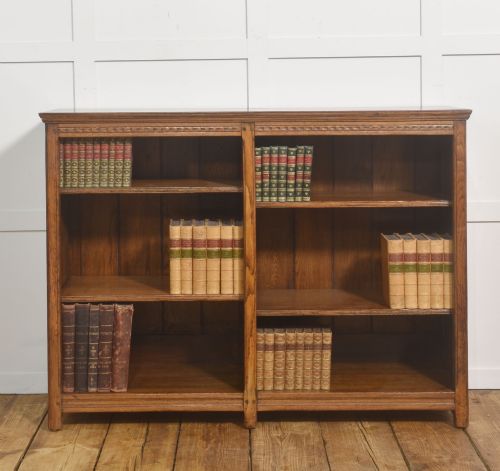
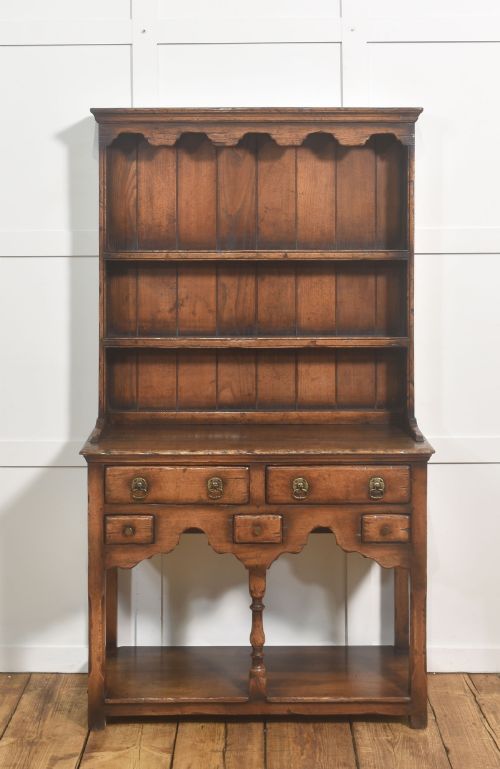
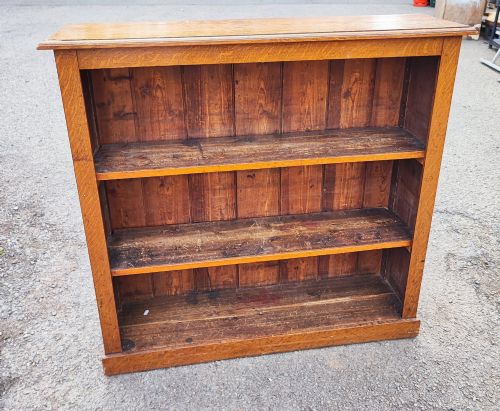
Solid oak open shelves take the form of open bookcases, tall library units, dressers with plate racks, and low book tables designed for everyday use. You will most frequently encounter Edwardian and early twentieth century pieces, alongside Victorian examples and occasional Arts and Crafts designs.
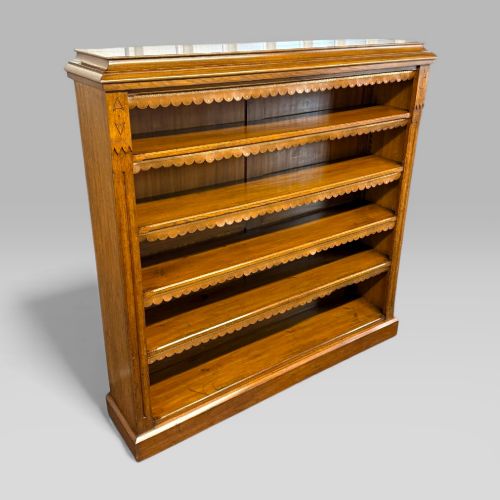
The selection ranges from slim, compact bookcases to large library units with adjustable shelves and waterfall configurations. Country dressers and side tables also appear, providing open display surfaces alongside enclosed storage.
Origins span British workshops of the late nineteenth and early twentieth centuries, with distinct stylistic touches borrowed from the Aesthetic Movement, Art Deco, and Jacobean Revival.
Materials and construction
Makers utilised solid oak throughout these pieces, frequently selecting golden oak or darker finishes depending on the period. Brass hardware, iron fixtures, and occasional marquetry or inlay provide functional and decorative accents.
Carpentry techniques include beaded edges, carved details, and adjustable shelf mechanisms that allow interior spaces to be adapted for different volumes. Open backs and framed plate racks are constructed to support the weight of heavy books and ceramics without warping.
Judging quality
Quality rests on the selection of timber, the crispness of carved mouldings, and the integrity of the joinery used in the uprights and shelves. Pieces attributed to notable makers display tighter tolerances and more refined proportions than standard workshop production.
The refinement of period details, such as the subtlety of Arts and Crafts chamfering or the balance of an Aesthetic Movement design, distinguishes the finest examples from utility furniture.
Heals·Waring and Gillows
The Solid Oak Open Shelves Glossary
- Golden oak
- A warm, light honey-toned finish applied to oak timber, popular during the Edwardian period. It highlights the natural grain of the wood.
- Arts and Crafts
- A design movement prioritising honest construction, simple forms, and visible hand-craftsmanship. Pieces in this style often feature exposed tenons and understated chamfered edges.
- Adjustable shelves
- Shelving supported by movable pins or racks, allowing the internal height between tiers to be altered. This feature is common in larger library bookcases.
- Aesthetic Movement
- A late nineteenth-century style that emphasised visual beauty over narrative content, often incorporating clean lines and subtle decorative carving. It bridges Victorian mass production and early modern design.
- Welsh dresser
- A traditional kitchen or dining furniture form comprising base cupboards and open plate racks above. Versions in this selection are constructed from solid oak.
Solid Oak Open Shelves: Frequently Asked Questions
How do I date a solid oak open bookcase?
Dating relies on stylistic markers such as carved Victorian mouldings, Edwardian golden oak finishes, and the geometric simplicity associated with the Arts and Crafts movement. Construction methods, including machine-cut versus hand-finished joints, also help narrow the decade.
Examine the backboards and shelf supports, as these often reveal period manufacturing techniques that changed between the late nineteenth century and the nineteen-thirties.
Are these shelves strong enough for heavy books?
Solid oak construction provides natural strength and load-bearing capacity suitable for heavy volumes and large collections. Many period examples include thick timber uprights and robust fixed or adjustable shelving designed specifically for libraries.
Distributed weight across adjustable wooden tiers remains secure, provided the support pins or rack systems are correctly seated.
How do I care for solid oak furniture?
Maintaining solid oak requires regular dusting with a dry cloth and occasional treatment with a quality beeswax to nourish the timber. Direct sunlight and sudden changes in room temperature should be avoided to prevent the wood from drying out.
Keeping the surface conditioned preserves the natural grain and protects the finish from daily wear without stripping the patina.
What is the difference between an open bookcase and a dresser?
An open bookcase consists primarily of vertical tiers designed for book storage and display. A dresser incorporates a lower section of enclosed cupboards or drawers beneath an open plate rack.
Both utilise solid oak construction, but dressers provide mixed storage options suited for dining rooms and kitchens.