
Solid Oak Lamp Table
A solid oak lamp table brings genuine grain and honest construction to a corner, meeting everyday needs with enduring timber.

Solid Oak Lamp Table
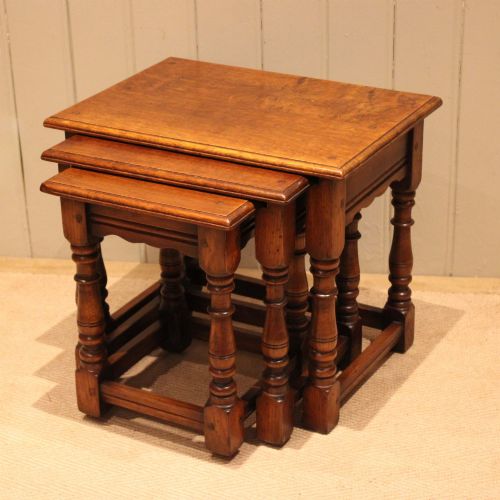
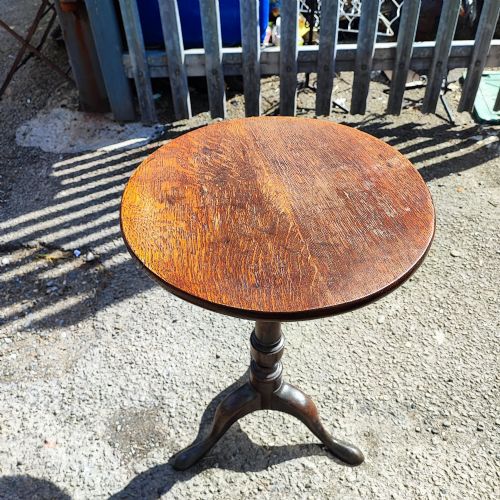
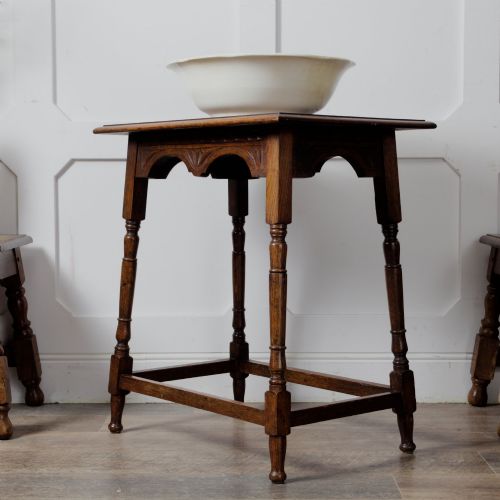
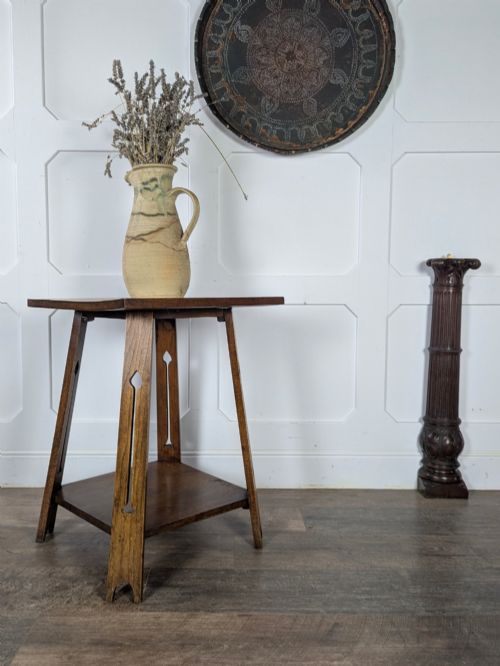
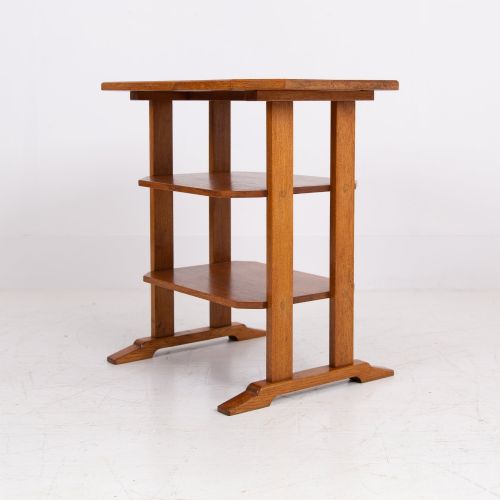
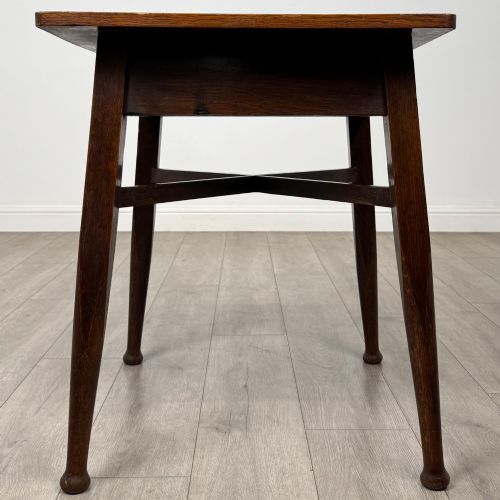
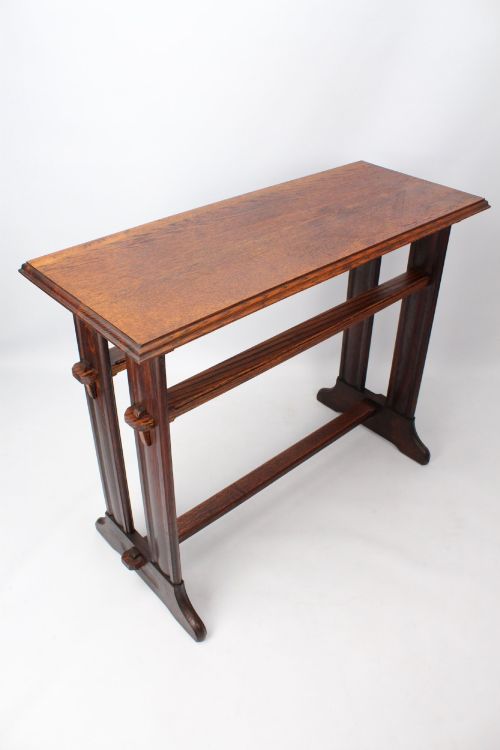
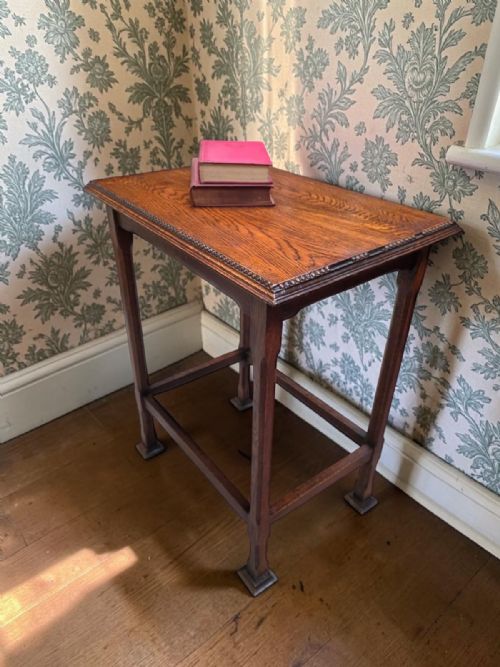
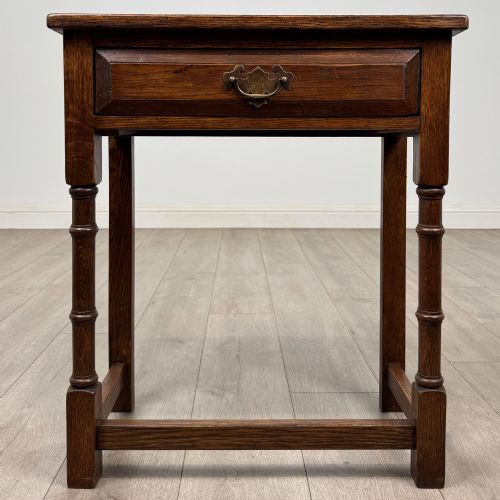
A solid oak lamp table provides a sturdy surface for illumination and small objects, appearing in forms from compact occasional tables to low wine stands and nests. When searching for a solid oak lamp table, buyers encounter pieces spanning the seventeenth century through the Edwardian era and the 1930s, reflecting centuries of cabinetmaking tradition.
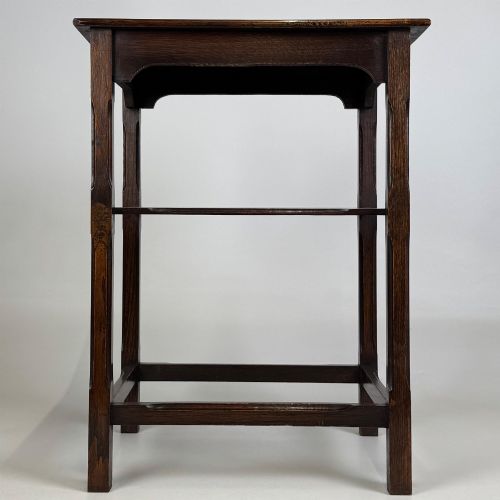
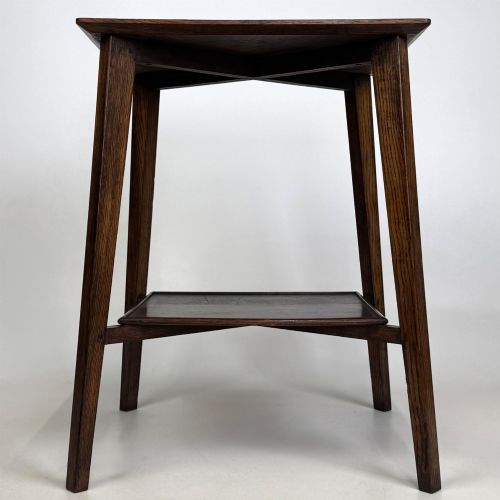
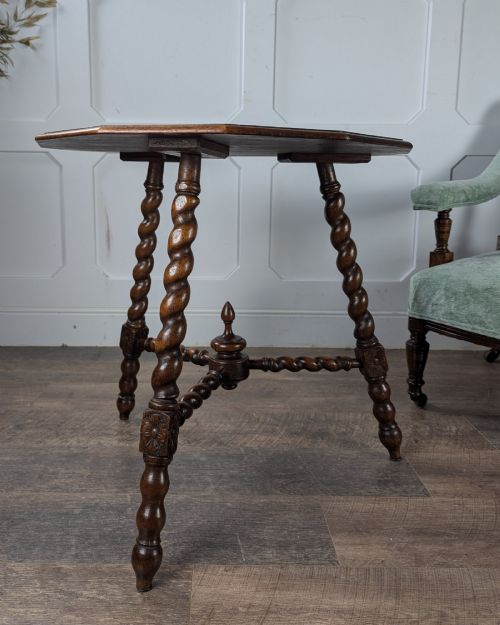
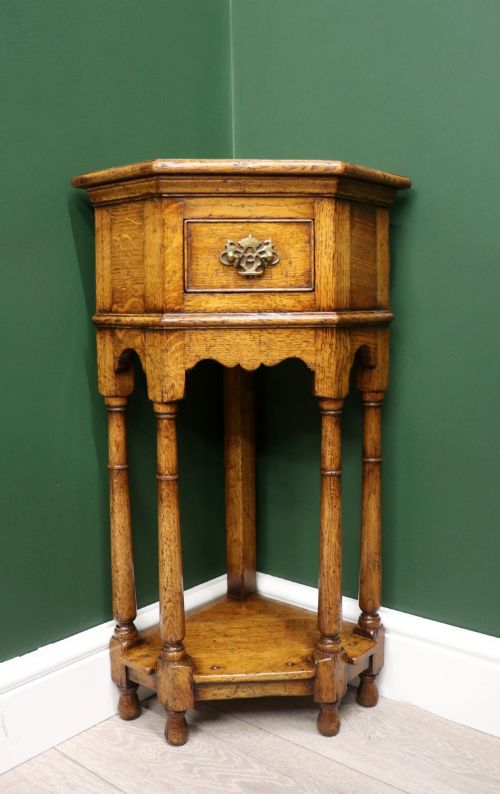
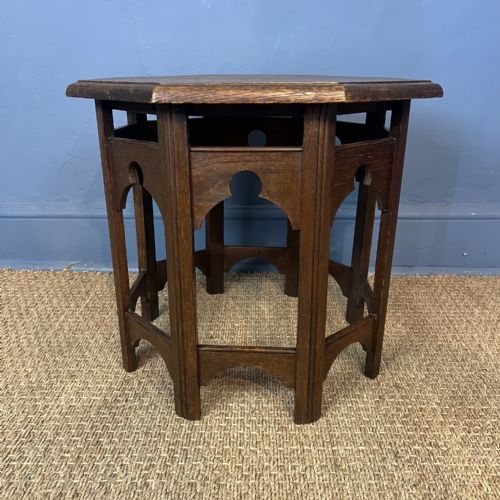
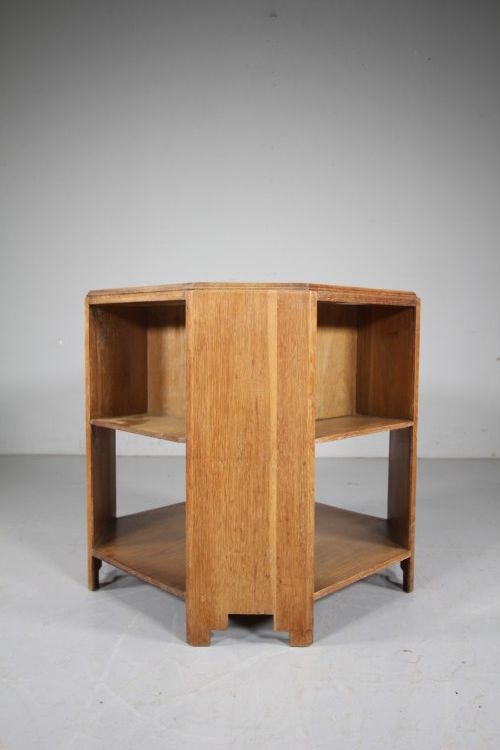
The domestic interior relies on these practical pieces for daily utility, often taking the shape of hexagonal tops, barley twist supports, or simple rectangular frames. Edwardian and Arts and Crafts examples dominate the selection, bringing functional design and honest material expression directly into modern rooms.
Earlier periods are represented by seventeenth and eighteenth-century tavern and low side tables repurposed for modern lighting needs. These diverse forms share a heavy reliance on solid timber construction, ensuring that each surface withstands the rigours of daily use.
How they were made
Cabinetmakers built these tables using solid oak planks joined with traditional methods, often incorporating brass hardware for handles or mounts. The natural timber grain was sometimes enhanced with limed finishes or ebonised details to achieve specific aesthetic effects popular in the twentieth century.
Turned legs, including barley twist designs, and carved ornamentation appeared frequently on Victorian and Jacobean Revival pieces, requiring skilled hand tool work. Arts and Crafts makers favoured unadorned surfaces that highlighted the natural figure of the oak through simple waxing and polishing techniques.
Solid Oak Lamp Table Retail Price Guide 2026
Typical asking prices for solid oak lamp table among the pieces listed under this phrase on Sellingantiques today, from the lower quarter to the upper quarter. They describe what is for sale here now, not the wider market.
Listings feature solid oak tables spanning from the 17th century to the 1930s, utilising brass, limed oak, and ebonised wood.
What varies in quality
The calibre of a piece rests upon the selection of the timber and the integrity of the joinery rather than surface decoration alone. Superior examples display thoughtful grain matching and robust construction methods that keep the table stable through generations of use.
Maker attribution and period authenticity significantly influence the standing of an individual table, particularly among Cotswold School or Glasgow School items. Subtle details in the turning and hand-carving separate standard utility furniture from pieces produced by skilled regional workshops.
Heals
The Solid Oak Lamp Table Glossary
- Barley twist
- A type of turning shaped like a spiral rope, frequently found on the legs of seventeenth-century revival and Victorian tables. This decorative form required precise lathe work.
- Limed oak
- A finish created by applying a white pigment to the open pores of oak timber to produce a pale, frosted appearance. It gained popularity during the early twentieth century.
- Tripod
- A three-legged base configuration commonly used on small wine and occasional tables to ensure stability on uneven floors. This design prevents rocking.
- Ebonised
- Wood treated with chemical stains or paint to imitate ebony, providing a sharp black contrast against natural golden oak. Makers utilised this technique for decorative emphasis in Art Deco pieces.
- Occasional table
- A small, movable table designed for a specific, intermittent domestic use such as holding a lamp or book. These versatile items fit easily into various room layouts.
Solid Oak Lamp Table: Frequently Asked Questions
How do I date a solid oak table?
Examination of construction marks, joint types, and tool signatures helps determine the age of a piece. Older tables often display hand-sawn timber marks and pegged mortise and tenon joints.
Style indicators such as Edwardian inlay or Arts and Crafts simplicity further narrow the manufacturing period. Comparing the hardware and finish against known historical examples confirms the era.
Can I use an antique table for a modern lamp?
These tables were built to support heavy objects and easily bear the weight of contemporary lighting fixtures. Their sturdy solid oak construction provides a stable platform for electrical cords and lamp bases.
Placing felt pads beneath lamp bases helps protect the historic timber surface from scratches. The proportions of these tables suit bedside or corner illumination perfectly.
What is the difference between side tables and lamp tables?
Lamp tables generally feature compact top dimensions specifically proportioned to hold a light source and little else. Side tables encompass a broader category that includes larger surfaces meant for serving or general storage.
Many antique tables functioned as wine stands or occasional pieces before modern lamps existed. Their heights and footprints adapt naturally to illuminating dark corners.
How should I care for limed oak?
Limed oak requires gentle dusting with a soft, dry cloth to prevent the white pigment from settling deeper into the grain. Avoid excessive moisture and modern chemical sprays which can strip the delicate finish.
Applying a traditional beeswax occasionally preserves the lustre of the timber. Keeping the table away from direct heat sources prevents the wood from drying out and splitting.