

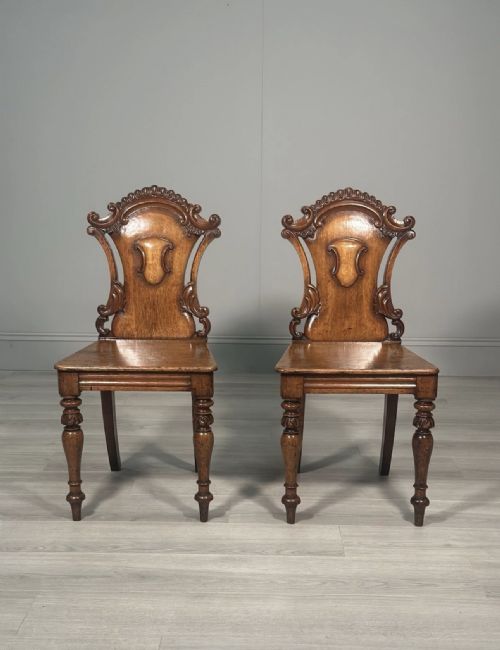


Solid Oak Hallway Seats
Solid oak hallway seats bring robust character to an entrance, offering practical seating built from durable timber.
Solid Oak Hallway Seats
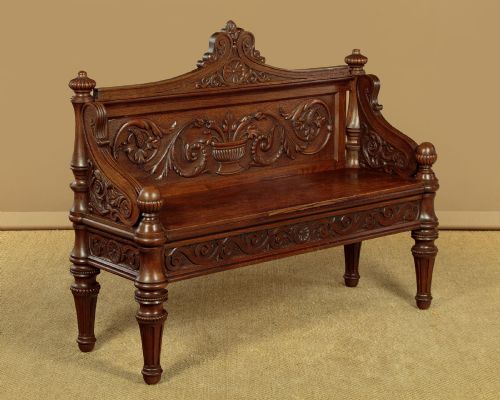
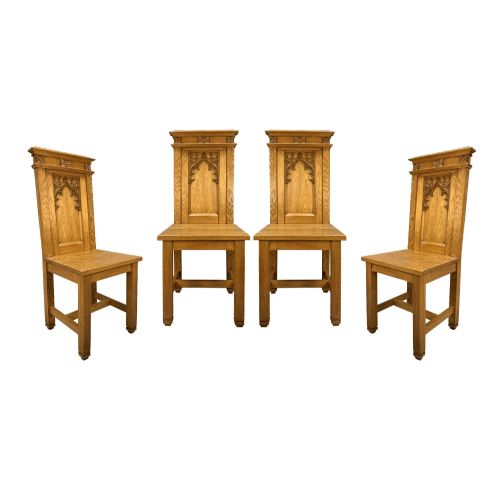
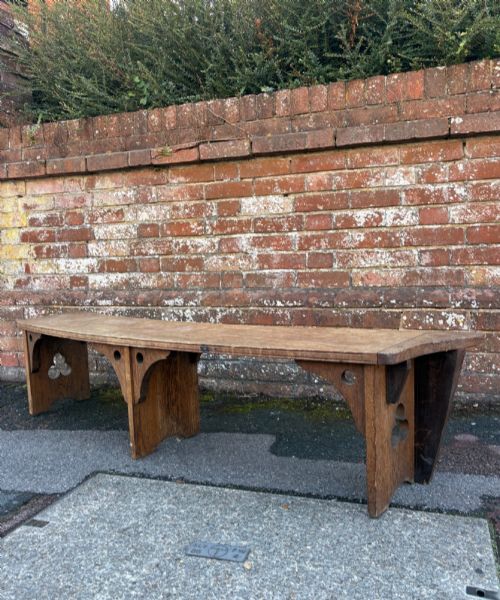
Solid oak hallway seats encompass benches, settles and hall chairs designed for entrance spaces from the Georgian, Victorian and Arts and Crafts periods. These items range from simple rustic farmhouse benches to elaborate Gothic Revival pieces with carved supports and shield backs.
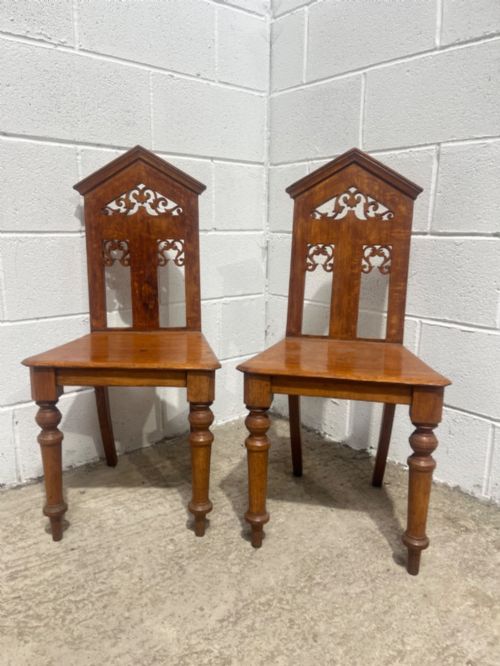
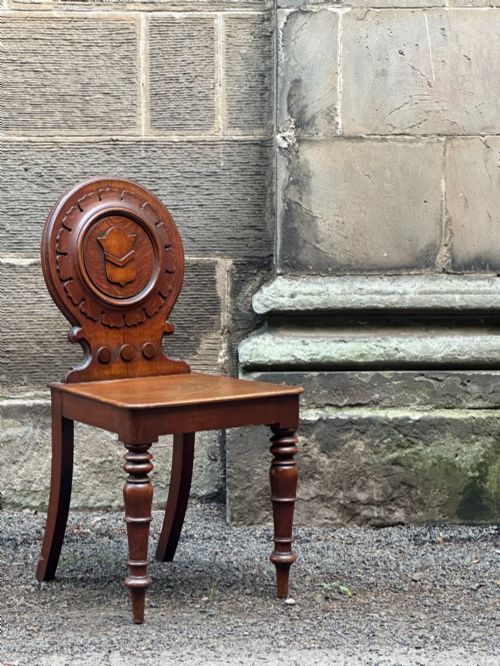
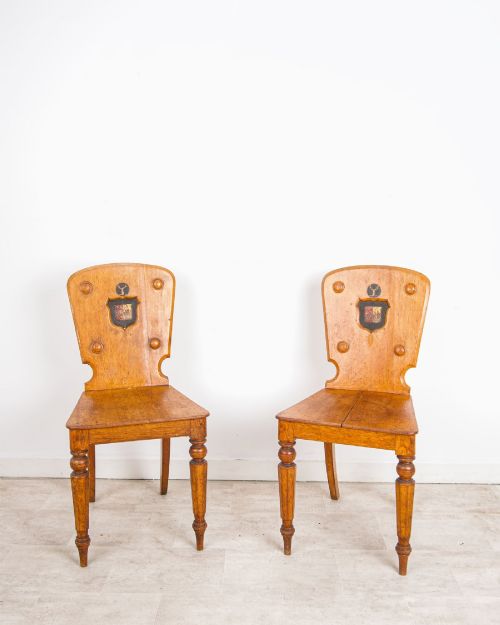
Buyers are most likely to encounter Victorian examples on this page, often appearing in pairs or as single carved hall chairs featuring turned legs and pierced panels. Settles with storage boxes and longer refectory forms also emerge across the nineteenth and early twentieth centuries.
Markers of Quality
Quality rests upon the depth and precision of the carved woodwork, from crisp Gothic tracery to smooth cabriole legs. Superior pieces display thoughtful proportions, balanced symmetry in pairs, and dense timber grain that has aged with a rich patina.
Construction integrity distinguishes finer examples, where joints remain tight and heavy panels stay flush without warping. The complexity of the design, such as pierced fret backs and integrated storage boxes, marks the distinction between standard utility items and ambitious workshop commissions.
The listings span multiple eras from Georgian origins through Victorian Gothic Revivals to early twentieth century Arts and Crafts workshops.
The Solid Oak Hallway Seats Glossary
- Settle
- A wooden bench with a high back, solid arms, and often a closed base or storage box beneath the seat. They stood in halls and kitchens to block drafts.
- Trefoil
- A graphic ornament composed of three rounded lobes arranged in a cloverleaf shape. This motif appears frequently in Gothic Revival and Arts and Crafts carving.
- Refectory table bench
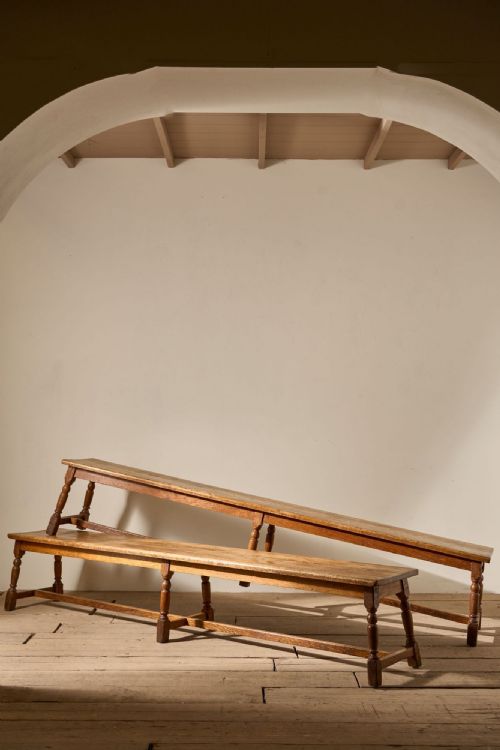
- A long, narrow bench originally designed to accompany large dining tables in communal halls. Examples span into the twentieth century in sturdy oak.
- Fret back
- A chair back featuring openwork patterns cut directly into the wood. This technique lightened heavy timber designs during the Victorian era.
Solid Oak Hallway Seats: Frequently Asked Questions
How do I maintain solid oak hall furniture?
Keep wooden seats away from direct heat sources and sudden temperature shifts to prevent the timber from splitting. Regular dusting and occasional application of appropriate wax help preserve the natural finish.
Avoid using harsh chemical cleaners on antique surfaces. Gentle care maintains the existing patina built up over decades of use.
Where were settles typically placed?
Settles stood in entrance halls, passages and farmhouse kitchens to provide seating while keeping draughts away from the doorway. Their high backs sheltered occupants sitting near cold entry points.
Box settles also served a dual purpose by storing blankets, boots or everyday items beneath the hinged seat.
What defines Gothic Revival oak seating?
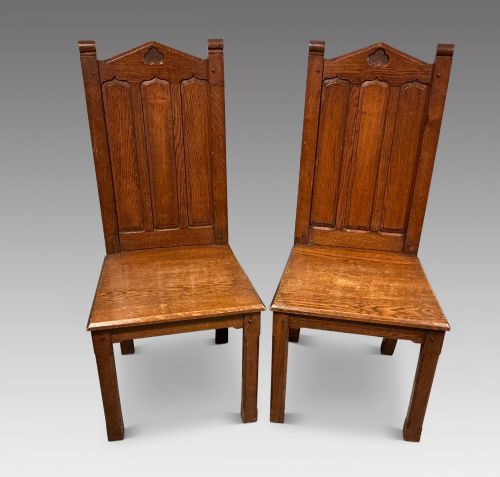
Gothic Revival pieces draw inspiration from medieval architecture, featuring pointed arches, trefoil cut-outs, and heavy panel construction. These designs gained popularity during the Victorian period through architects and designers reviving medieval aesthetics.
Chairs and benches from this style often display dramatic vertical lines and heraldic carvings.
Are hall chairs comfortable for daily sitting?
Hall chairs were primarily designed for brief sitting while putting on shoes or waiting in an entranceway, so they feature upright wooden backs without cushioning. While sturdy, they offer a firm upright posture rather than lounging comfort.
Pairs of these chairs often lined hallway walls as decorative architectural elements when not in active use.