


Entryway Accent Chairs
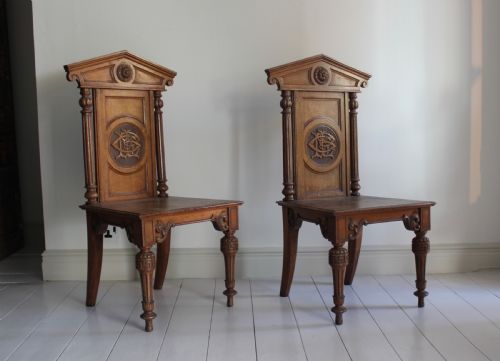
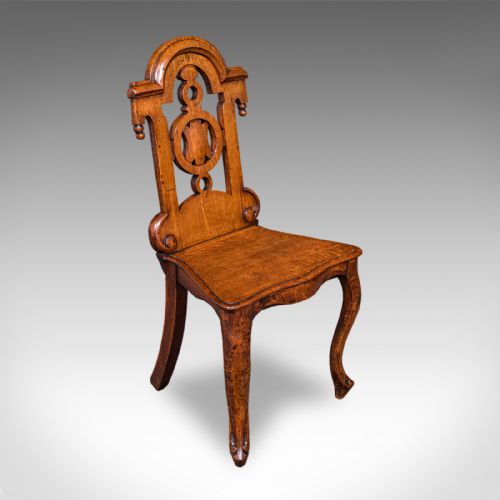
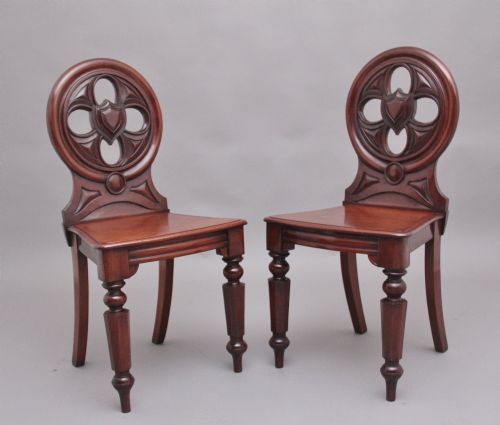
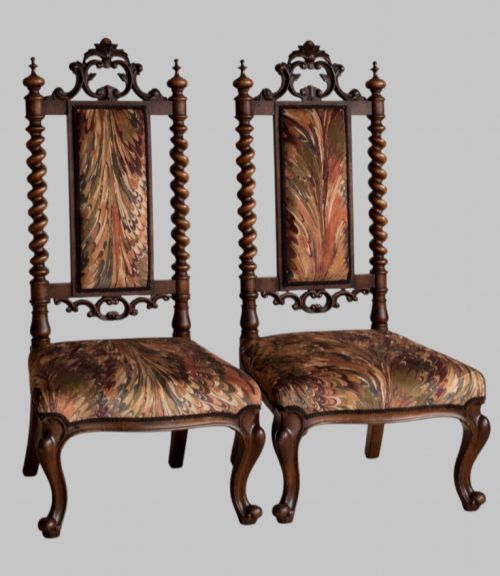
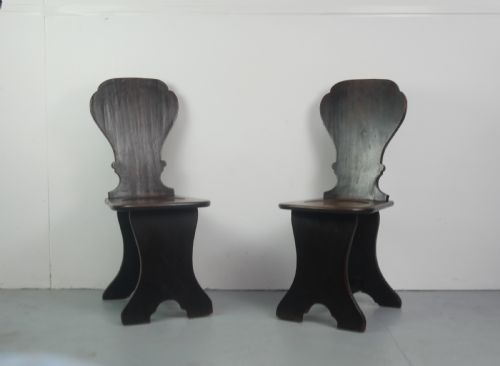
Entryway accent chairs take the form of antique hall chairs crafted in mahogany, oak, and walnut to anchor a hallway with firm presence.
Entryway Accent Chairs
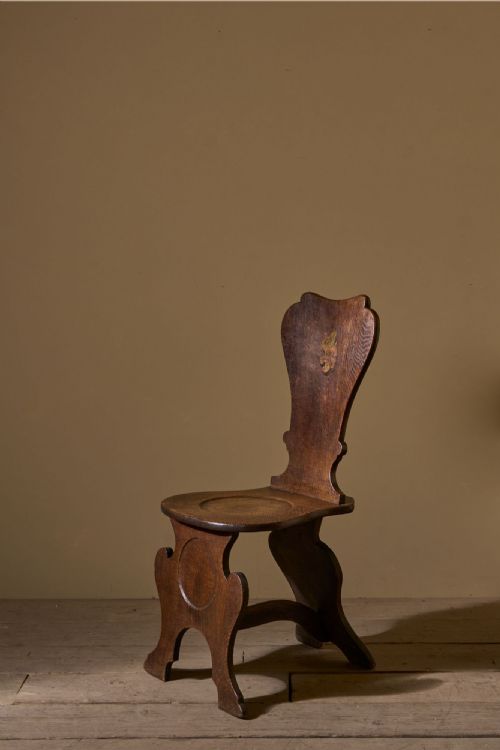
When searching for entryway accent chairs, a buyer looks at antique hall chairs originating from the eighteenth and nineteenth centuries. These pieces function primarily as occasional seating in a hallway or reception space, offering a striking profile rather than upholstered comfort.
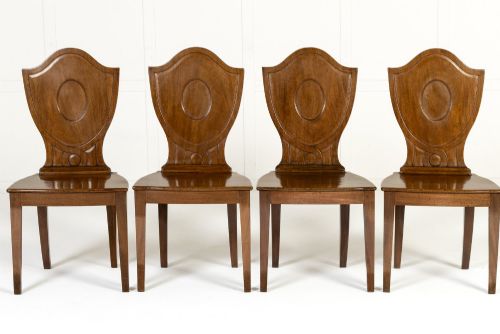
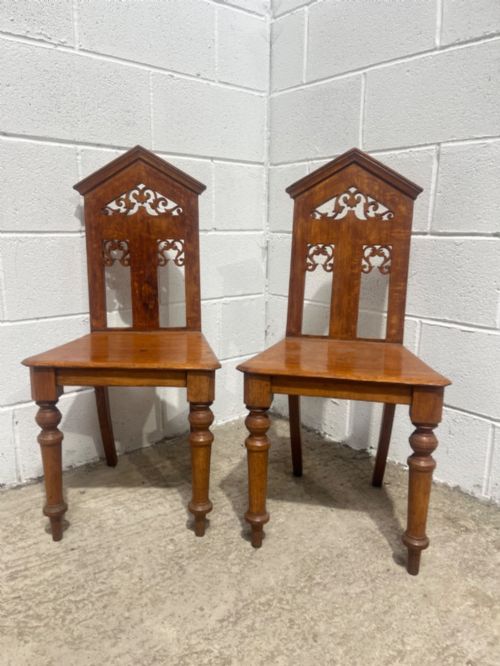
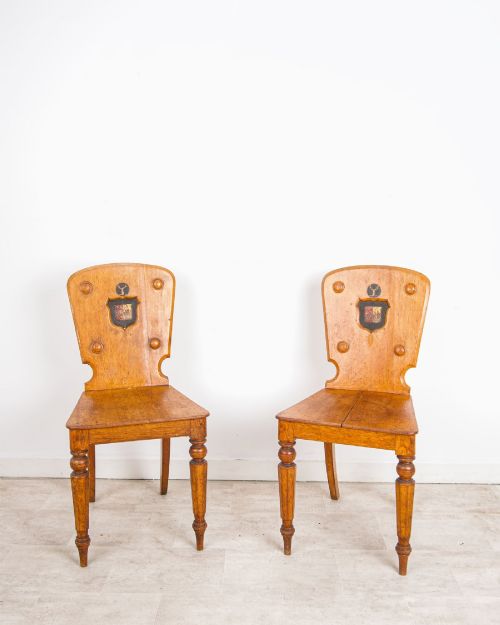
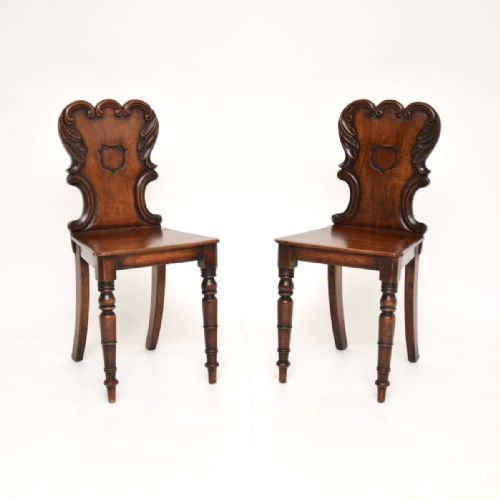
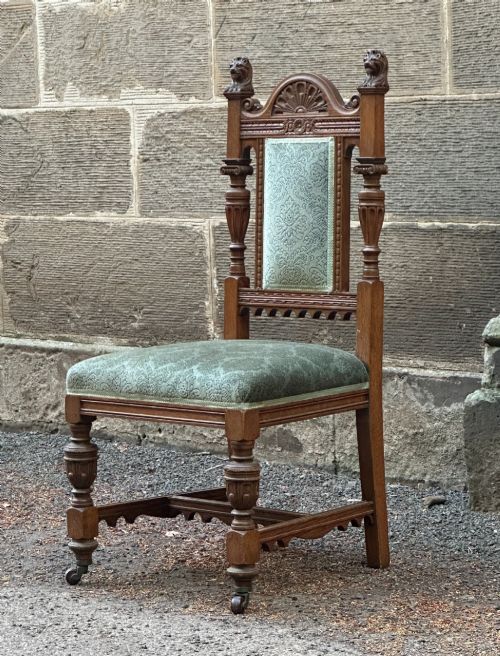
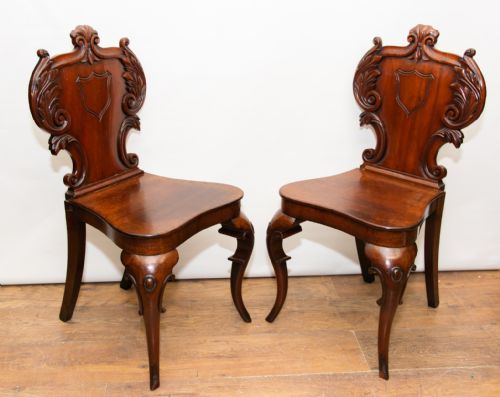
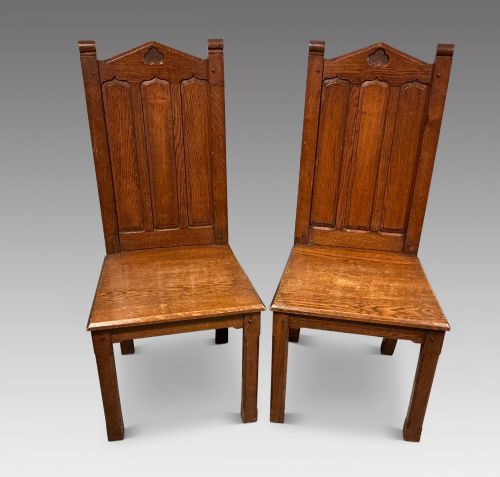
The selections available span Georgian, Regency, William IV, and Victorian periods, alongside Gothic Revival designs. Wooden seats dominate these listings, carved with heraldic shields, pelta backs, or shell motifs rather than fitted with cushions.
Makers and workshops of the nineteenth century produced these sturdy items in mahogany, oak, and walnut. Scottish and English origins appear frequently, showing regional variations in timber selection and carving depth.
How they were made
Makers constructed these chairs predominantly from dense hardwoods such as mahogany, oak, and walnut, chosen for structural endurance in busy entrance spaces. Wood was frequently turned, shaped, and heavily carved to form solid wooden seats and elaborate backrests.
Joinery techniques relied on rigid frames to support upright use without padding. Details such as barley twist supports and incised heraldic shields demonstrate cabinet-making skills applied to utilitarian forms.
Listings feature eighteenth and nineteenth-century forms, spanning Georgian, Regency, and Victorian periods in solid oak, mahogany, and walnut.
What varies in quality
Quality rests in the depth and crispness of the timber carving, particularly on shield backs and solid wooden seats. Master carvers achieved clean lines and distinct relief work that lesser workshops left shallow or muddled.
The selection of timber grain and the integrity of the frame construction dictate the durability of the piece. Superior examples maintain tight joints and substantial timber thickness without structural compromise.
Bruce Talbert·Gillows
The Entryway Accent Chairs Glossary
- Hall chair
- A rigid wooden seat designed for an entrance hall or corridor, typically featuring a carved back and no upholstery.
- Shield back
- A chair back shaped like a heraldic shield, frequently carved with crests or family insignia.
- Pelta back
- A backrest formed in the shape of a pelta, an ancient shield with a crescent-like indentation.
- Barley twist
- A turned wooden furniture leg or support resembling a twisted rope or column.
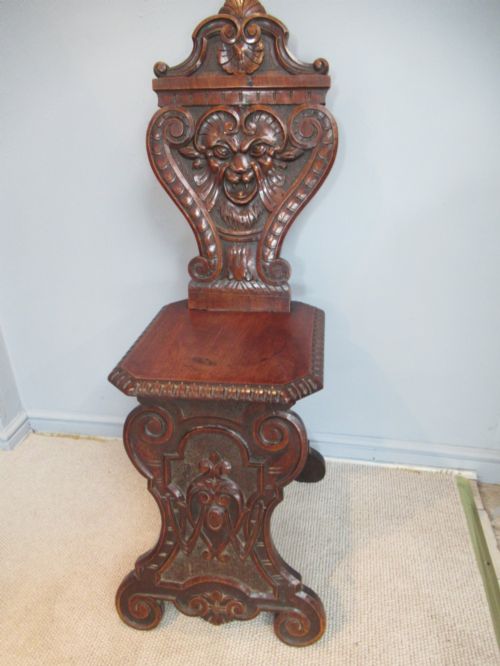
- Sgabello
- An early form of chair featuring a wooden seat supported by flat carved boards or trestles instead of legs.
Entryway Accent Chairs: Frequently Asked Questions
Where should I place an entryway accent chair?
These chairs suit narrow hallways, landings, and reception areas where floor space is limited. Their rigid wooden construction means they function best as occasional perches rather than lounging seats.
Position one against a wall to display the carved backrest and timber grain as a focal point upon entering a home.
How do I identify a Regency hall chair?
Regency pieces often display classical motifs, such as painted or carved heraldic crests, bold mahogany grain, and clean architectural lines. Look for shaped wooden seats and sabre legs that reflect the neoclassical taste of the early nineteenth century.
Proportions tend to be rigorous, reflecting the design vocabulary popular between eighteen hundred and eighteen thirty.
Are these chairs comfortable for daily sitting?
Hall chairs were originally intended for brief use by callers waiting in a foyer rather than long periods of sitting. The solid timber seats lack padding, which keeps the focus entirely on the carved wooden design.
Buyers usually select them for visual impact and historical presence in an entrance space.
What is the difference between oak and mahogany versions?
Oak examples often date to earlier periods or Gothic Revival styles, displaying a robust grain and deep, heavy carving. Mahogany versions frequently date from the Georgian and Victorian eras, offering a smoother reddish-brown surface and sharper detail.
Both timbers provide the structural strength required for heavy-use hallway furniture.