


Painted Shield Back Chair
A painted shield back chair brings refined neoclassical design and crisp colour to a room, offering both comfortable seating and striking decorative presence.
Painted Shield Back Chair
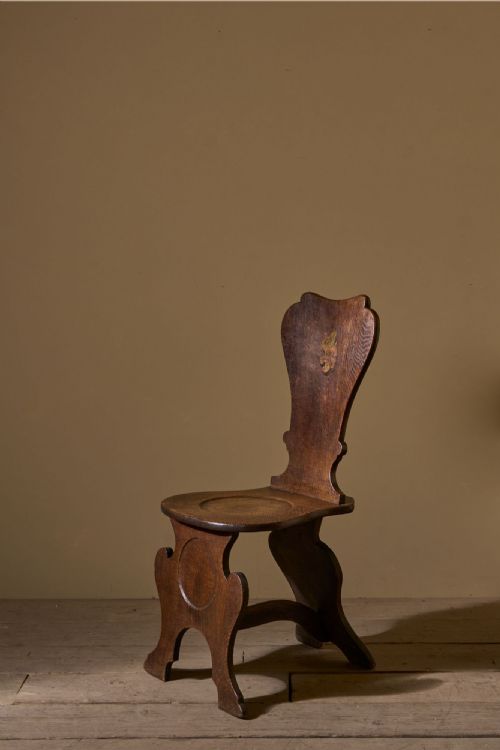
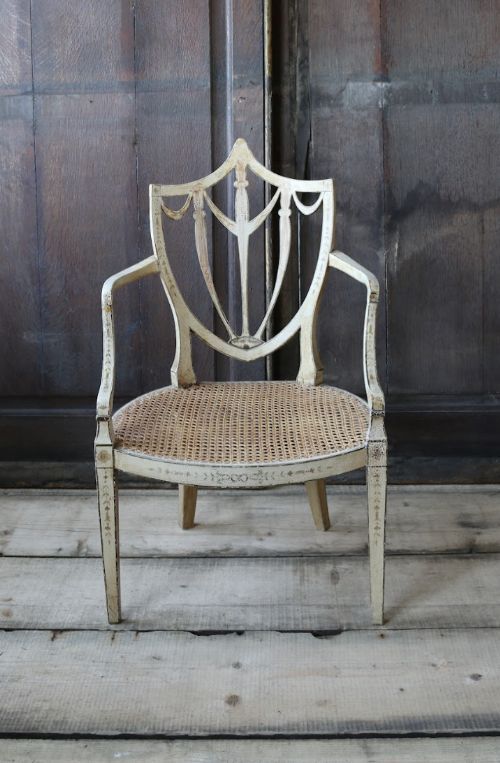
A painted shield back chair takes its name from the characteristic curved outline of the backrest, which resembles the shape of a heraldic shield. When you search for a painted shield back chair, you encounter forms that span from the eighteenth century to the nineteenth century, including armchairs, side chairs and hall chairs.
The selections on this page demonstrate origins in periods such as the Georgian era, the George III period and the Victorian era, alongside revival pieces from the late nineteenth century. Styles vary from George III Neoclassical and Sheraton Neoclassical to Hepplewhite Revival.
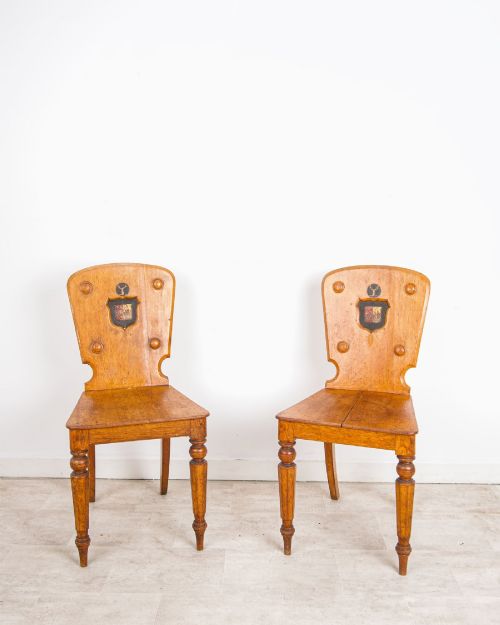
Armchairs and side chairs often feature painted wood frames, sometimes highlighted with polychrome decoration or ebonisation, while hall chairs frequently display simpler wooden construction with carved or heraldic shield backs. These seating options suit traditional dining spaces, studies and halls alike.
How they were made
Craftsmen built these chairs using timber frames of oak, beech, mahogany and general painted wood, shaping the distinctive shield backs and supports with traditional joinery. Artisans applied paint finishes directly to the wood, often incorporating polychrome decoration or ebonised surfaces to elevate the visual detail.
Seating portions frequently utilised cane or upholstered pads covered in fabrics such as velvet, fixed to the frame to provide practical comfort alongside decorative refinement. Structural elements like block feet and open arms added stability and architectural interest to the chair frames.
Some nineteenth-century makers could not resist painting heraldic shields onto chairs, ensuring every sitter felt like a medieval knight.
What varies in quality
The refinement of the painted surface decoration distinguishes standard examples from finer pieces, particularly where polychrome details or ebonised finishes remain crisp and well preserved. The precision of the carved shield outline and the proportional balance of the arms and legs dictate the overall elegance of the form.
The choice of underlying timber and the integrity of the original construction, whether utilising oak, beech or mahogany, influence the durability and structural character of each seat. Surviving upholstery materials and cane work also contribute to the authenticity and historical interest of the piece.
The Painted Shield Back Chair Glossary
- Shield back
- A chair backrest shaped like a heraldic shield, typically curving inward at the top and tapering towards the seat. This design became popular during the neoclassical period.
- Polychrome
- Decoration employing multiple colours on a single surface, frequently seen on painted wooden frames. It adds vibrancy and complex visual detail to neoclassical furniture.
- Ebonised
- Wood finished with a dark stain or paint to imitate ebony. This technique creates a formal, high-contrast appearance on nineteenth-century frames.
- Neoclassical
- A style drawing inspiration from classical antiquity, characterised by symmetrical lines and restrained ornamentation. It heavily influences eighteenth-century chair design.
Painted Shield Back Chair: Frequently Asked Questions
Where should I place a painted shield back chair?
These chairs suit studies, drawing rooms and hallways where their decorative painted frames can be appreciated. Side chairs and armchairs function well as accent seating against a wall or paired around a table.
Avoid placing them in areas with direct sunlight or excessive moisture to protect the painted wood surfaces and fabric or cane upholstery over time.
How do I care for painted wood surfaces?
Dust the painted frame regularly with a soft, dry cloth to prevent the accumulation of grit. Avoid using harsh chemical cleaners or abrasive cloths that might damage the painted or polychrome decoration.
Maintain stable indoor humidity levels to prevent the underlying timber from expanding or contracting, which can cause the paint finish to crack or flake.
What is the difference between an armchair and a side chair?
Armchairs feature structural side supports for the arms, offering a wider seat and a more commanding presence suited for desks or feature seating. Side chairs lack arms, making them compact enough to fit easily around dining tables or line a hallway.
Both forms utilise the characteristic shield back design, but their functional placement within a room differs according to their width and arm configuration.
How can I tell an eighteenth-century piece from a later revival?
Eighteenth-century examples typically display period construction methods, timber patination and hand-applied painted finishes consistent with Georgian workshops. Later nineteenth-century pieces often reflect revival interests such as Hepplewhite styles alongside distinct ebonised or decorated surfaces.
Examining the joinery, wear patterns and material choices helps clarify the period of origin and distinguishes original era items from later copies.