

Pair Victorian Oak Chairs
Pair victorian oak chairs bring distinct nineteenth-century craftsmanship into a room, offering sturdy timber framing and historic character that collectors prize for everyday utility.
Pair Victorian Oak Chairs
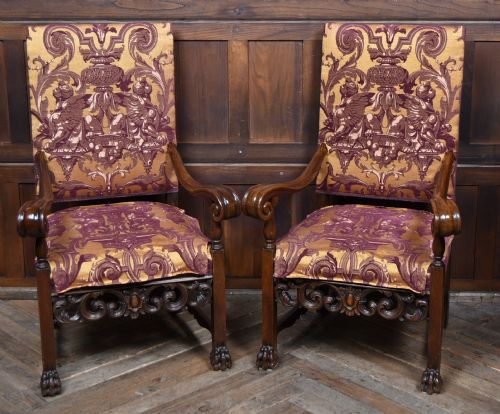
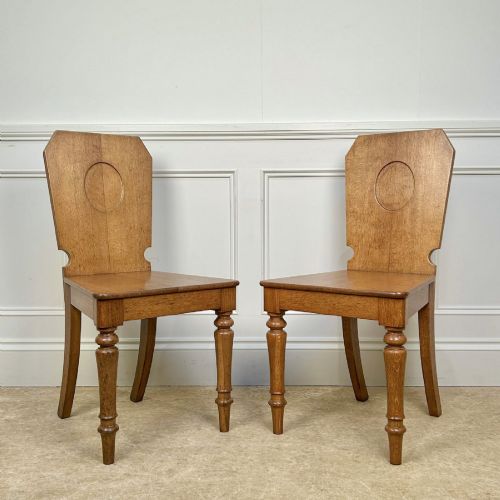
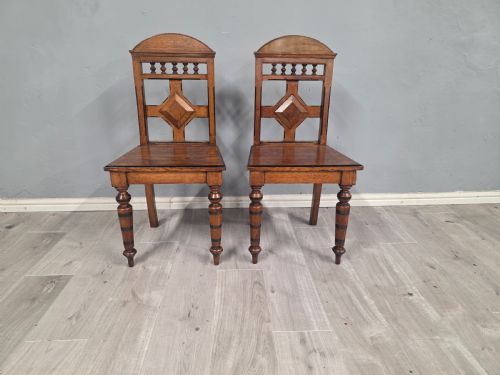
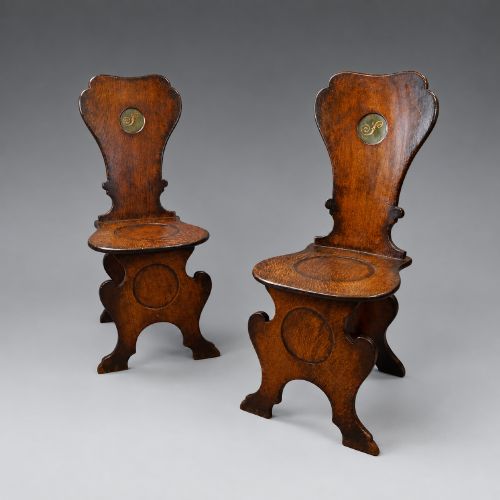
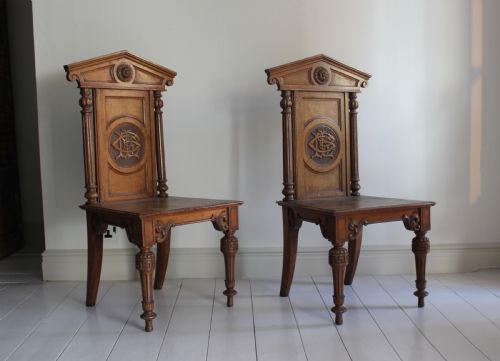
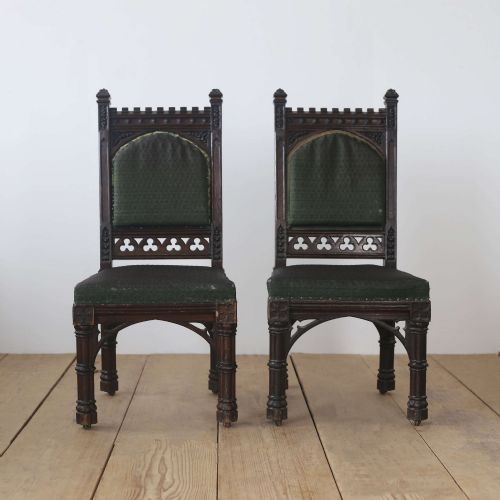
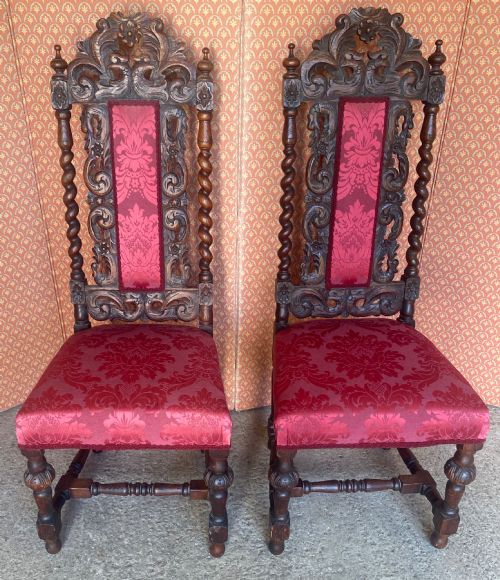
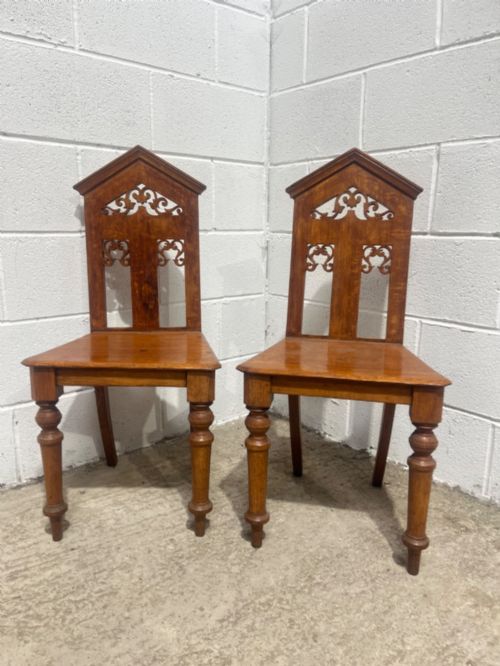
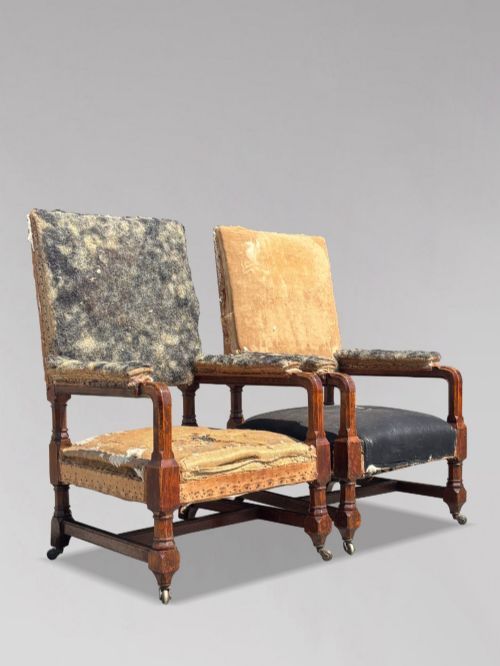
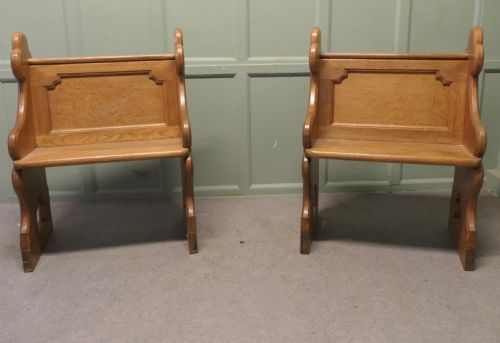
A buyer examining pair victorian oak chairs encounters a wide variety of forms spanning from severe Gothic revival hall seating to robust country kitchen Windsors and heavily carved throne chairs. These dual sets frequently originate from the mid to late nineteenth century, reflecting stylistic revivals ranging from Jacobean and Carolean influences to Arts and Crafts simplicity.
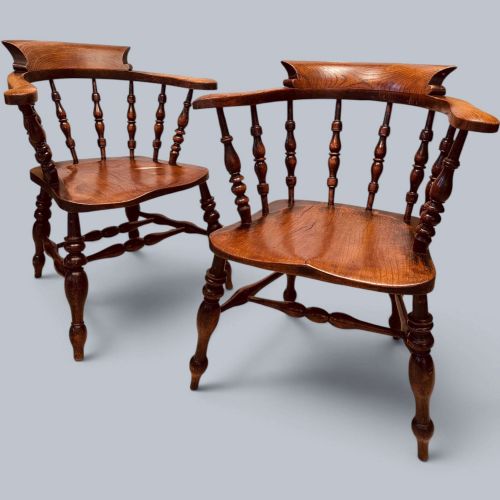
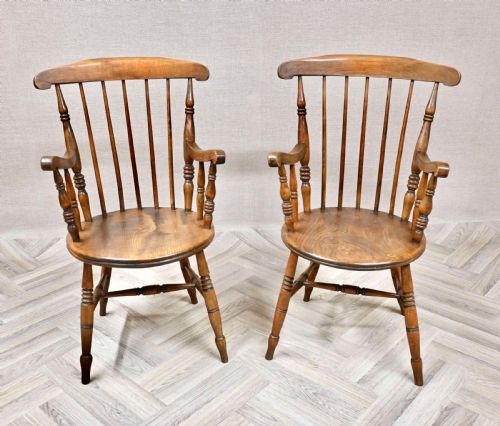
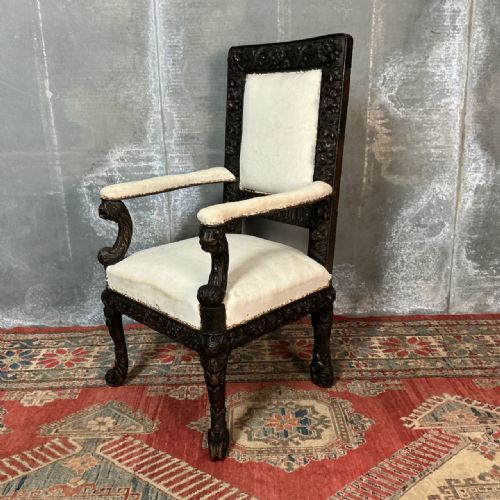
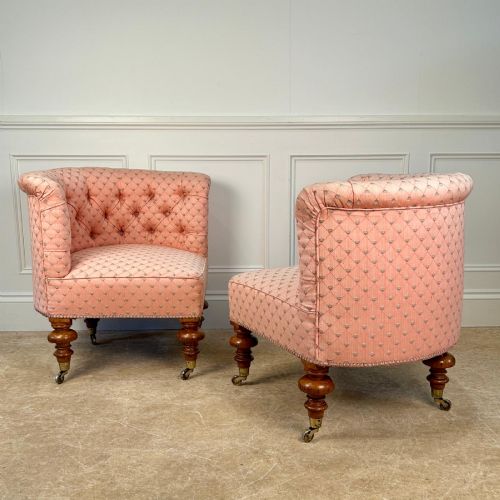
The most common versions met on this page are upright hall chairs featuring heraldic shield backs or carved panels, alongside vernacular kitchen and Windsor designs tailored for domestic use. Armchairs, corner chairs, and library seating also appear regularly, demonstrating how diverse the pairing of these wooden seats can be across different domestic settings.
Materials and construction
Oak forms the fundamental structural backbone of these pieces, selected for its dense grain and durability, while secondary timbers such as elm, beech, and ash often reinforce vernacular Windsor frames. Joinery typically relies on traditional pegged mortise and tenon joints to withstand decades of daily weight.
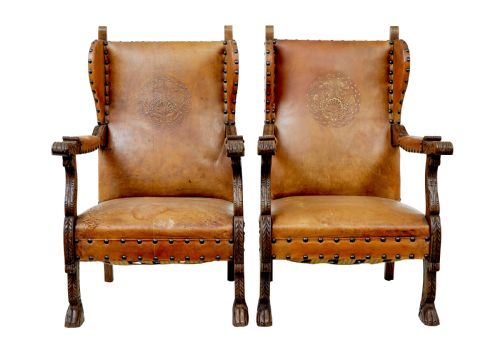
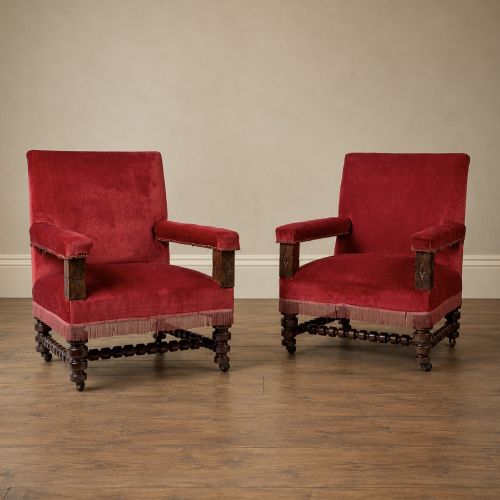
Upholstered variants integrate embossed leather, woven leather, velvet, and fabric fastened with decorative tacks or brass detailing. Surface finishes range from wax-polished natural grain to elaborate high-relief carving depicting green men, heraldic crests, and Gothic tracery.
Pair Victorian Oak Chairs Retail Price Guide 2026
Typical asking prices for pair victorian oak chairs among the pieces listed under this phrase on Sellingantiques today, from the lower quarter to the upper quarter. They describe what is for sale here now, not the wider market.
Listings feature nineteenth-century oak furniture incorporating brass, leather, and velvet across styles like Gothic revival and English country.
Markers of quality
Superior examples distinguish themselves through the depth and crispness of their hand-carved ornamentation, where botanical or heraldic motifs retain sharp relief rather than softened edges. The integrity of the timber framing, including tight joints and matching grain patterns across both seats, signals superior workshop origin.
The choice of secondary materials and upholstery also dictates the tier of the piece, with heavy embossed or woven leather surfaces and stamped maker details elevating certain seating far above standard utilitarian production.
Gillows of Lancaster·Liberty & Co·William Morris
The Pair Victorian Oak Chairs Glossary
- Gothic Revival
- An architectural and decorative style popular during the nineteenth century that mimics medieval pointed arches, tracery, and solemn ecclesiastical motifs. This aesthetic often manifests in tall chair backs and pointed finials.
- Windsor
- A traditional chair construction method where turned legs and spindle backs are wedged directly into a solid sculpted wooden seat. These vernacular pieces frequently utilise elm or ash alongside oak.
- Hall Chair
- An upright, decorative wooden seat traditionally placed in a grand entrance hall or corridor, typically featuring a solid carved back and no upholstery. They were designed more for visual heraldic display than prolonged lounging.
- Bergere
- An enclosed armchair featuring woven cane or wicker panels along the sides and back, offering a lighter visual profile within a heavy wooden frame. These chairs often incorporate upholstered seat cushions.
- Smoker's Bow
- A sturdy, low-backed Windsor armchair featuring a rounded continuous arm rail supported by turned spindles. These comfortable seats were common in nineteenth-century smoking rooms and country houses.
Pair Victorian Oak Chairs: Frequently Asked Questions
Were pair victorian oak chairs meant for sitting?
Many upholstered armchairs and Windsor models were designed for prolonged daily comfort in libraries or drawing rooms. Conversely, rigid hall chairs served primarily as architectural statements in entrance spaces rather than relaxed seating.
Over time, owners have adapted both types for modern dining rooms and studies, balancing historical authenticity with everyday domestic utility.
How do I spot a true pair?
Genuine pairs share identical timber grain patterns, matching tool marks, and uniform dimensions down to the fraction of an inch. Workshops constructed them simultaneously from the same stock of oak.
Slight discrepancies in hand-carved details or turned spindles often indicate a near pair assembled later from separate origins rather than a matched set.
What is the difference between Gothic and Jacobean styles?
Gothic revival pieces draw inspiration from medieval architecture, showcasing pointed arches, lancet panels, and solemn ecclesiastical severity. They emphasise vertical lines and religious symbolism.
Jacobean revival furniture looks back to the seventeenth century, favouring bold geometric mouldings, strapwork, and robust turned legs that project a heavier, domestic aesthetic.
How do I care for nineteenth-century oak furniture?
Maintain the timber by applying a microcrystalline wax periodically to nourish the dry oak grain and protect against surface moisture. Avoid placing antique seating near direct heat sources or strong sunlight.
Leather elements benefit from specialist conditioners to prevent cracking, while fabric upholstery requires gentle brushing to remove dust without disturbing historic fibres.