
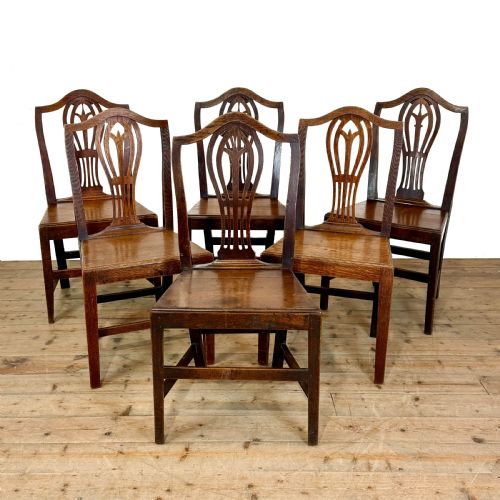

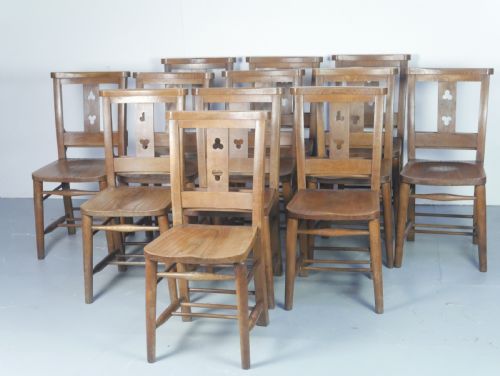

Gothic Oak Dining Chairs
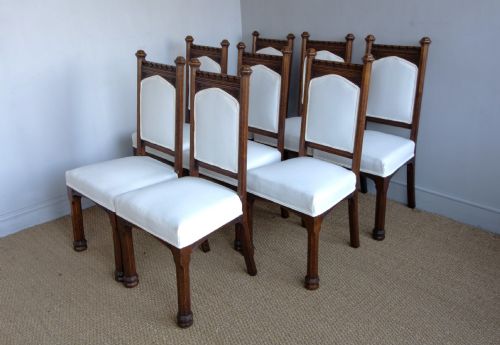
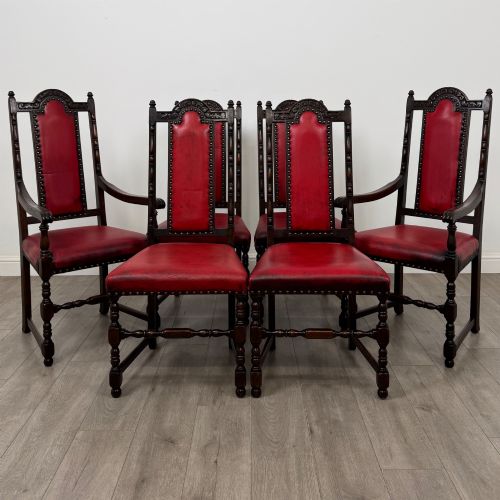
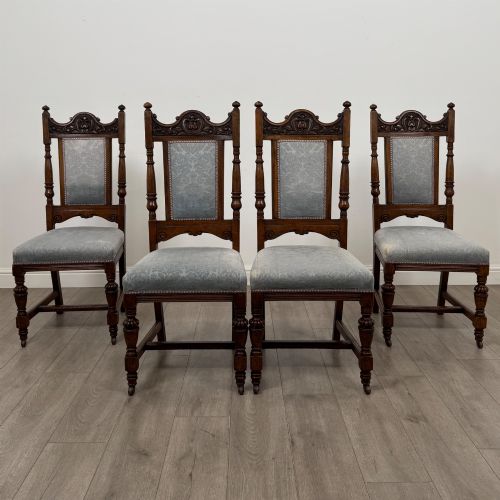
Gothic oak dining chairs bring centuries of architectural presence into a room through heavy timber, pointed arches and structural carved detail.
Gothic Oak Dining Chairs
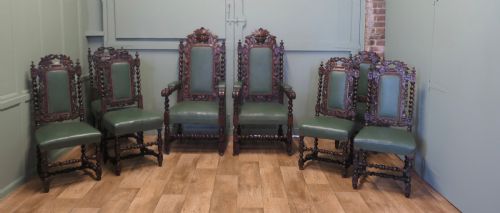
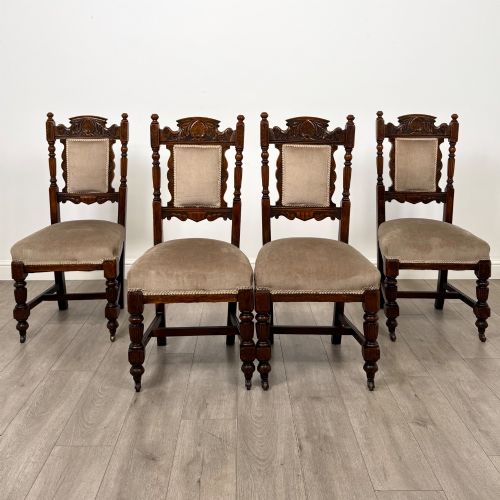
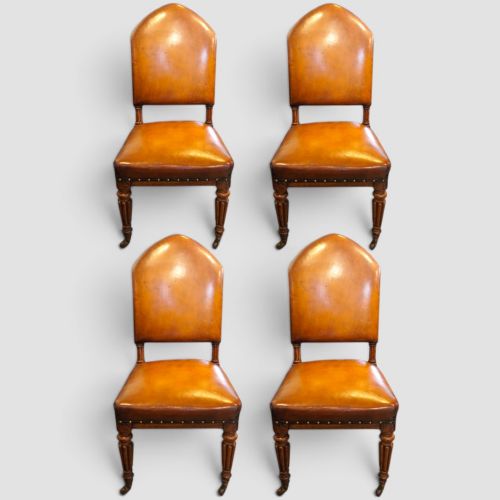
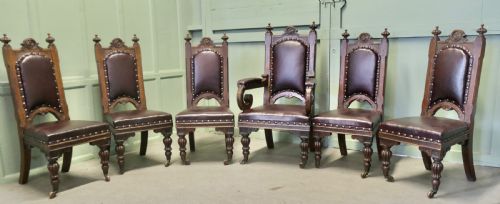
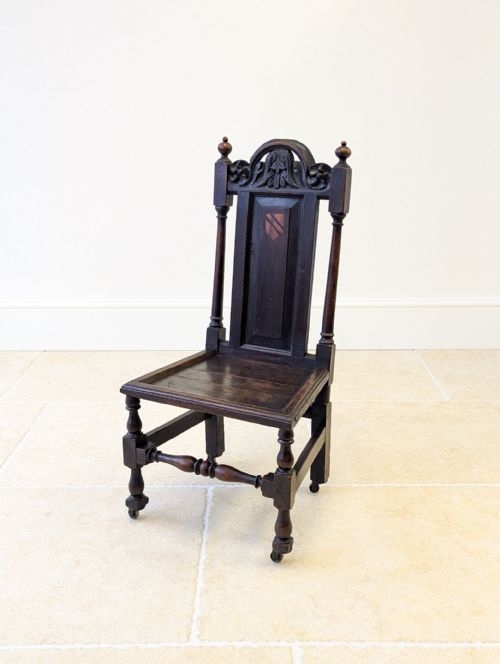
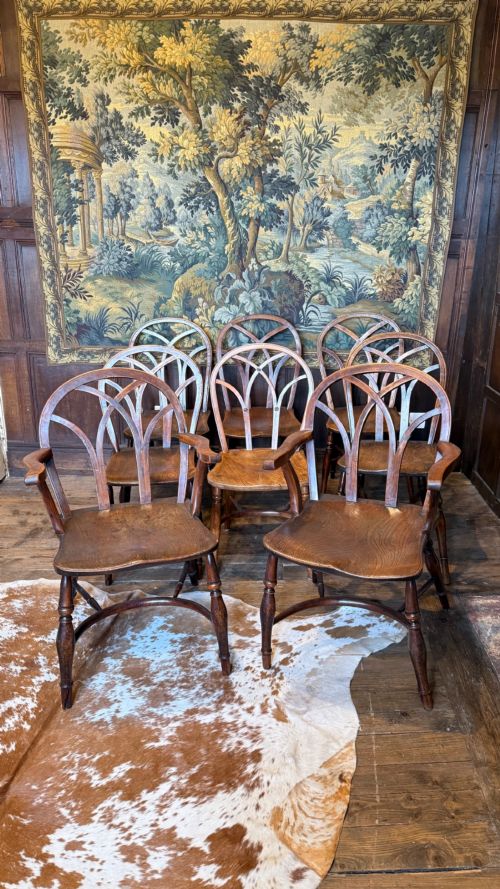
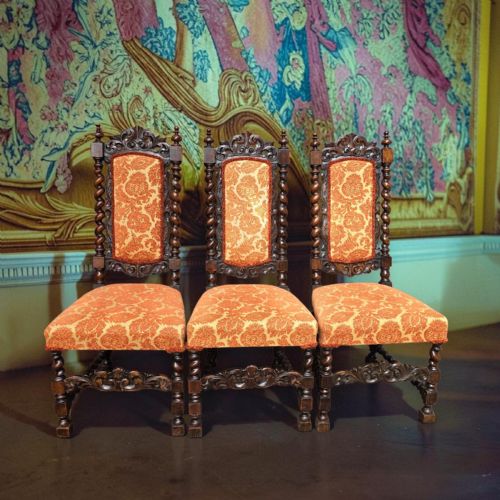
Buyers seeking gothic oak dining chairs encounter heavy timber frames shaped by nineteenth-century revivals, often found in matched sets of four, six, or eight pieces.
The aesthetic draws heavily on medieval ecclesiastical and secular architecture, translating stone tracery and pointed arches into sturdy wooden dining furniture.
Most examples date from the Victorian period onwards, combining vernacular construction with stylistic revivals ranging from Jacobean to Arts and Crafts interpretations.
Materials and construction
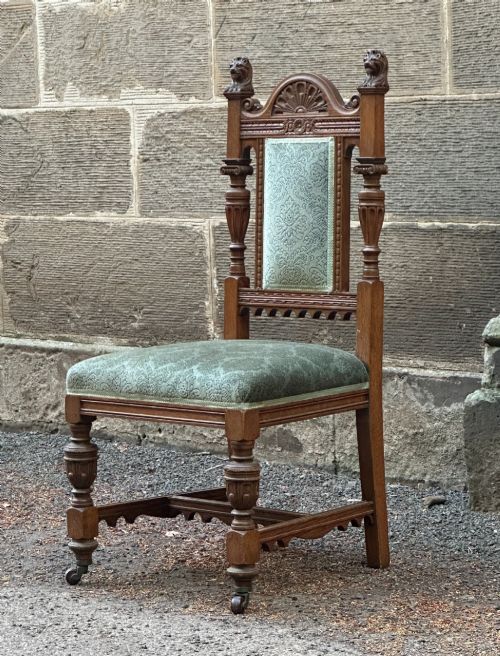
Makers relied on solid timber framing, utilising dense oak boards for legs, stretchers and high panelled backs that could bear substantial hand-carved detail.
Joints were typically pegged and tenoned for rigidity, supporting slip-in or upholstered pads covered in leather, velvet or heavy woven fabric.
Several chairs double as miniature architecture, complete with tiny wooden buttresses supporting the dinner table.
Judging quality and craftsmanship
Quality rests in the depth and sharpness of the carving, where crisply defined trefoils and tracery distinguish workshop pieces from simpler production items.
The integrity of the timber frame and the weight of the oak define durability, alongside the finish applied to the wood surfaces over generations of use.
Bruce Talbert·Gillows·Lamb Of Manchester·Liberty & Co·Charles Bevan·Shapland & Petter
The Gothic Oak Dining Chairs Glossary
- Gothic Revival
- An architectural and decorative movement spanning the nineteenth century that revived medieval forms, pointed arches and structural verticality. It heavily influenced domestic seating design.
- Trefoil
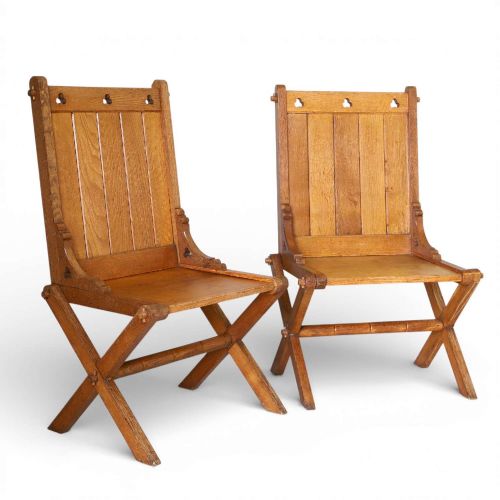
- A graphic ornament composed of three overlapping rings or lobes, frequently pierced through chair splats and back crests. It echoes medieval stone window tracery.
- Jacobean Revival
- A seventeenth-century revival style featuring turned legs, geometric panelling and strapwork carving applied to heavy oak furniture frames. This influence appears across many nineteenth-century dining seats.
- Cross-Frame
- A structural arrangement where intersecting diagonals form the main support beneath the seat or backrest. It provides notable geometric strength.
Gothic Oak Dining Chairs: Frequently Asked Questions
How do I date a gothic oak chair?
Dating relies on combining construction methods with stylistic evidence such as nineteenth-century revival details, timber patination and recorded maker attributions.
Earlier pieces from the eighteenth century show different hand-tool marks and joinery compared to mass-produced Victorian or Edwardian workshop iterations.
Are these chairs comfortable for daily use?
High-backed versions provide solid upright support, though their rigid wooden frames lack modern cushioning unless paired with padded leather or upholstered seat inserts.
Dining sets often feature sturdy proportions designed specifically around height requirements for domestic tables.
What maintenance does old oak need?
Solid timber benefits from occasional application of natural wax to nourish the grain and protect the surface from drying out in heated rooms.
Leather and fabric seat pads require gentle cleaning appropriate to their specific textile composition.
How do I spot a matched dining set?
Look for consistent timber grain, identical carving depths across every piece and uniform dimensions throughout the frame construction.
Slight variations in wear or minor tool differences often indicate a group assembled together later rather than commissioned as one original suite.