
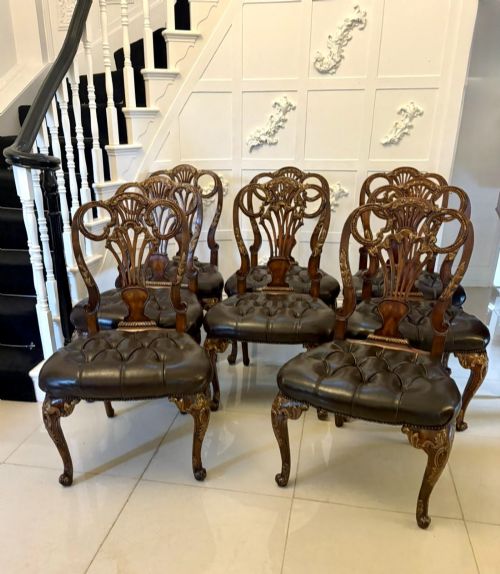
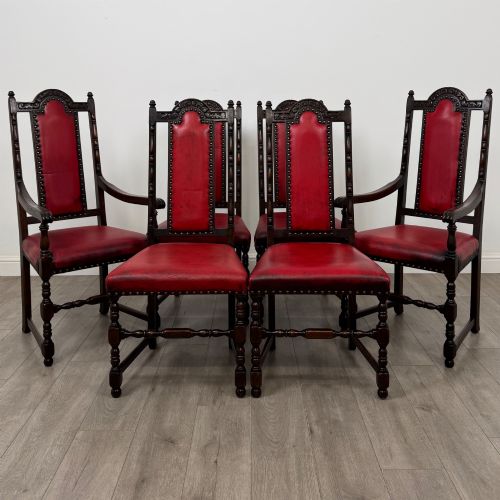
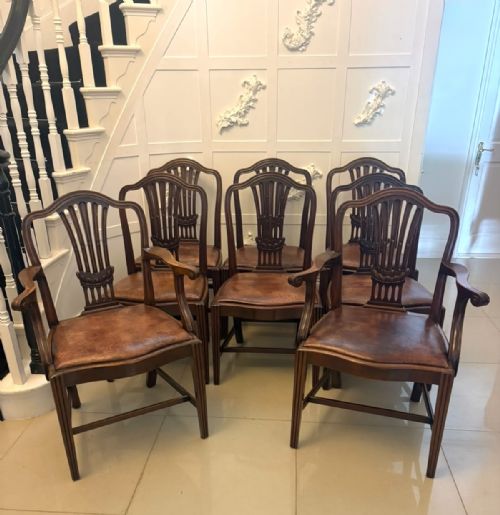

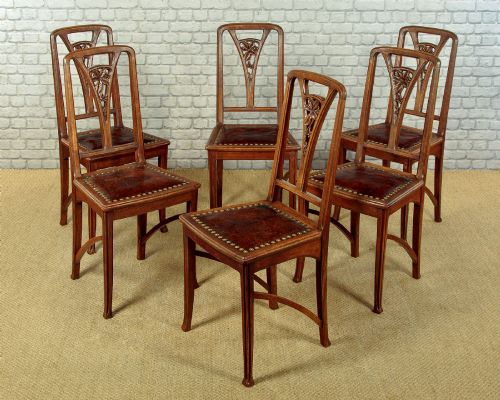




Edwardian Leather Side Chairs
Edwardian leather side chairs bring durable comfort and understated character to a room, combining period timber frames with practical hide upholstery.
Edwardian Leather Side Chairs
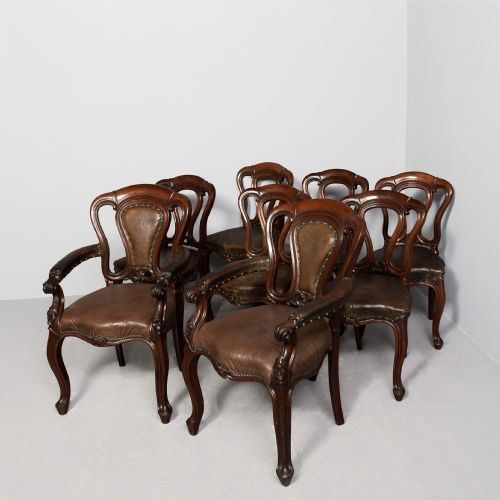
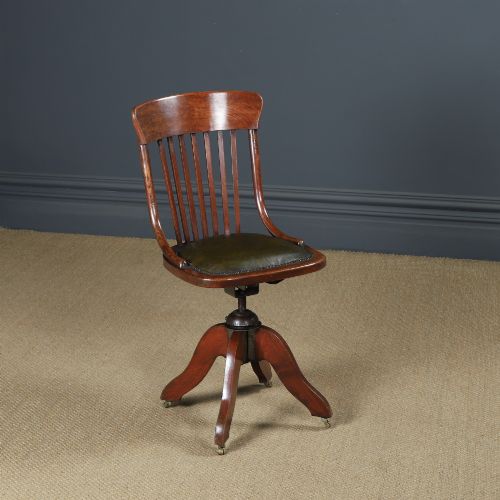
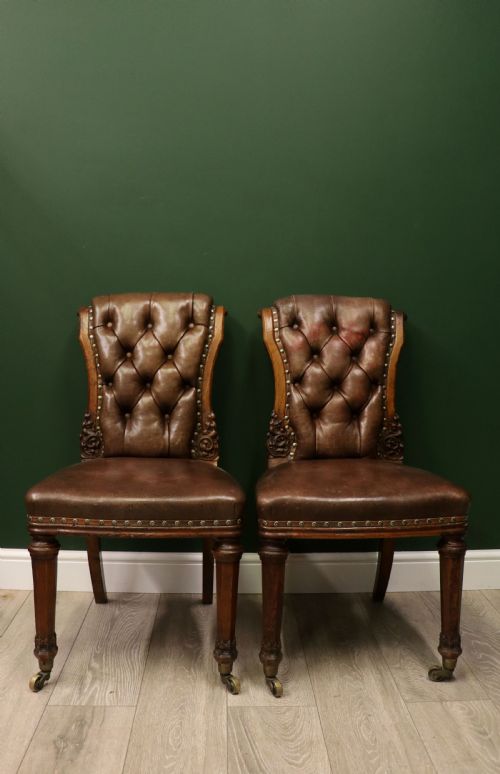
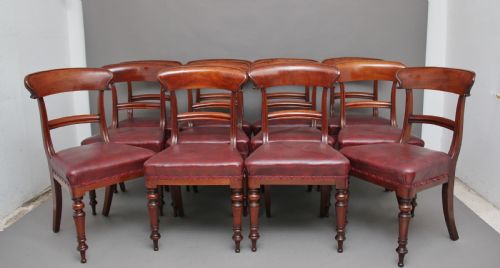
Edwardian leather side chairs occupy a practical space between formal dining seating and functional library or hall furniture. When seeking edwardian leather side chairs, buyers frequently encounter oak and mahogany frames paired with durable hide seats, often built with straightforward upright backs suited for dining or occasional desk use.
The pieces appearing on this page span the Edwardian period alongside neighbouring Victorian and early twentieth-century eras, reflecting overlapping revival styles such as Arts and Crafts, Jacobean, and Chippendale. While many examples function as dining sets, single side chairs and pairs also emerge from library and morning room contexts.
Makers and retailers of the era, including established firms like Shoolbred, supplied various iterations of these wooden and leather forms for domestic interiors. Buyers will find both simpler utilitarian oak versions and more elaborately carved walnut or mahogany models among the current selection.
Construction and materials
Frames rely on dense hardwoods such as mahogany, oak, walnut, and beech, chosen for structural stability and responsiveness to carving or turning. Joinery techniques from the period typically involve traditional mortise and tenon joints to ensure long-term durability under daily use.
Upholstery centres on fastened leather, frequently secured with brass studs along the seat rails or back panels. Caning and cane inserts occasionally supplement solid timber or leather components, particularly in bergère or armchair variants.
The listings here feature oak, mahogany, walnut, and beech frames combined with leather, cane, and brass fittings across multiple revival styles.
Distinctions in quality
The calibre of a piece is determined by the selection of timber and the precision of the cabinet work, such as hand-carving depth and joinery tightness. Finer examples display carefully matched grain patterns, substantial wood weights, and high-grade leather that retains natural texture.
Design ambition separates basic utility seating from high-end commissions, with superior items incorporating nuanced revival detailing, inlaid veneers, or structural framing by notable cabinetmakers and retailers. The integrity of the original frame construction dictates the long-term resilience of the chair.
Shoolbred·Heals of London·George Henry Walton·Charles Bevan·H. Samuel
The Edwardian Leather Side Chairs Glossary
- Bergere
- An enclosed armchair with a wooden frame and cane or leather upholstered back and sides. These seats frequently appear in library or drawing room contexts.
- Carver
- An armchair designed to match a set of smaller side chairs, usually placed at the heads of a dining table. They share the stylistic motifs of the accompanying dining chairs.
- Arts and Crafts
- A design movement prioritising traditional craftsmanship, visible construction, and simple forms over mass-produced ornamentation. Oak is a prevalent material in this style.
- Chippendale Style
- A classical revival aesthetic featuring carved cabriole legs, interlaced splat backs, and ornate woodwork. It draws inspiration from eighteenth-century cabinet maker Thomas Chippendale.
- Elbow Chair
- A term for an armchair with shorter armrests designed to tuck beneath a desk or dining table. They offer modest lateral support without dominating the floor space.
Edwardian Leather Side Chairs: Frequently Asked Questions
How do I spot an Edwardian chair?
Edwardian chairs typically display lighter proportions and simpler lines than heavy Victorian predecessors, often drawing on earlier eighteenth-century revival motifs.
Look for refined woodwork, inlaid mahogany, or straightforward oak frames that balance decorative appeal with domestic utility.
Were these chairs used for dining?
Many side chairs from this era were built specifically as part of larger dining suites for formal households.
Their compact, armless profiles allowed numerous seats to fit comfortably around a dining table without crowding the room.
What is the difference between oak and mahogany?
Oak frames tend to appear in Arts and Crafts, Jacobean revival, or utilitarian pieces, offering a robust and visibly grained texture.
Mahogany was preferred for formal dining and drawing room seating, providing a smoother, darker surface suited to Sheraton or Chippendale styles.
How should I care for antique leather?
Antique leather benefits from occasional cleaning with a damp cloth and the application of suitable leather balms to maintain flexibility.
Keep these chairs away from direct sunlight and heat sources to prevent the hide from drying and cracking over time.