
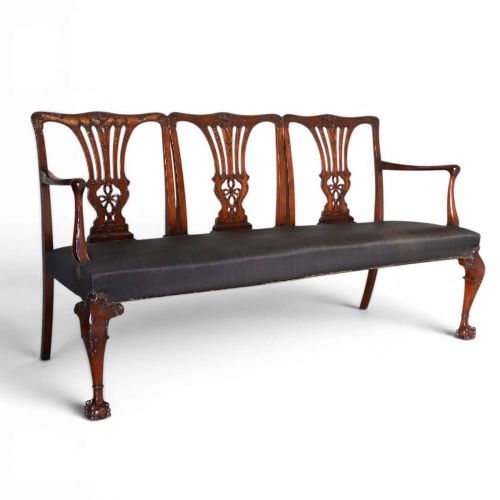
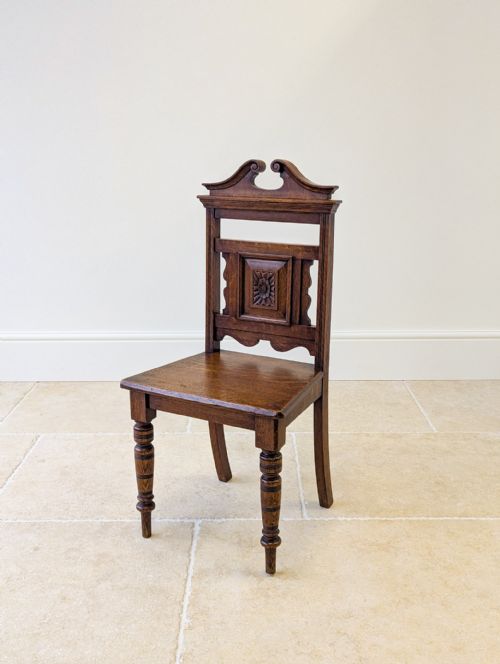
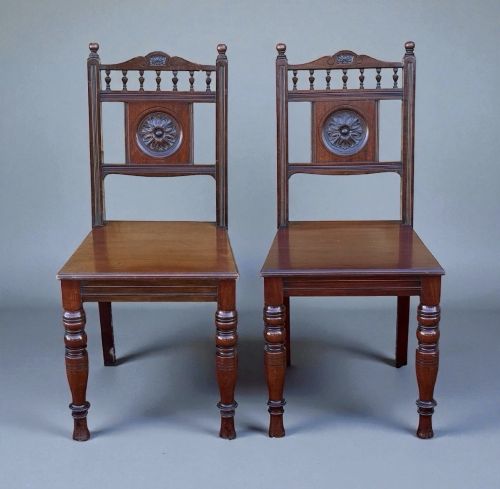
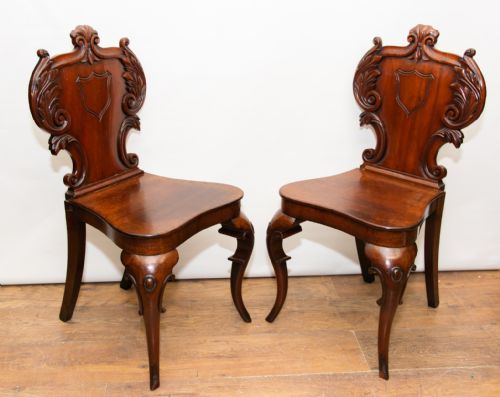
Wooden Hallway Chairs
Wooden hallway chairs bring historic character to an entrance, offering sturdy seating and practical storage built from solid timbers.
How they were made
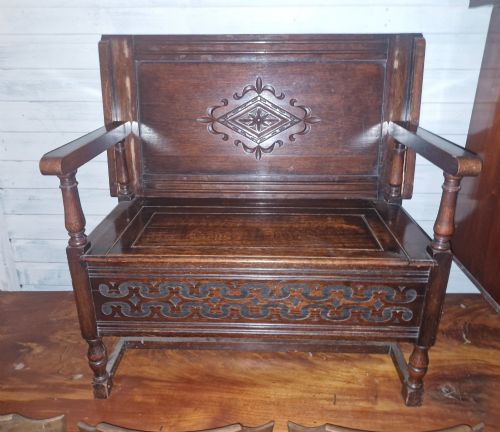
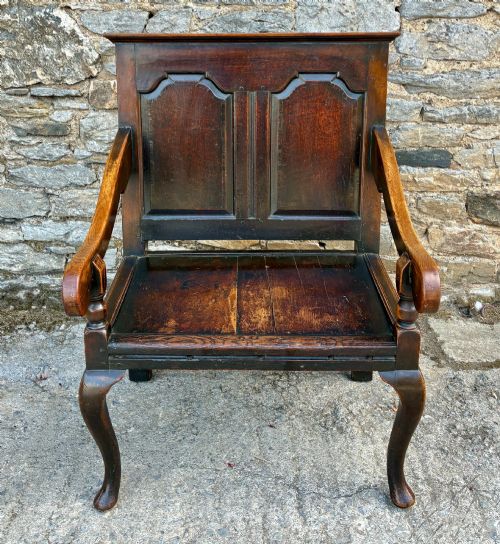
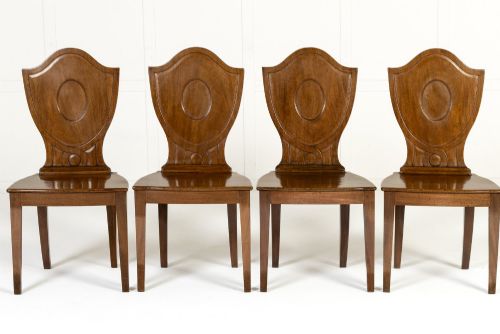
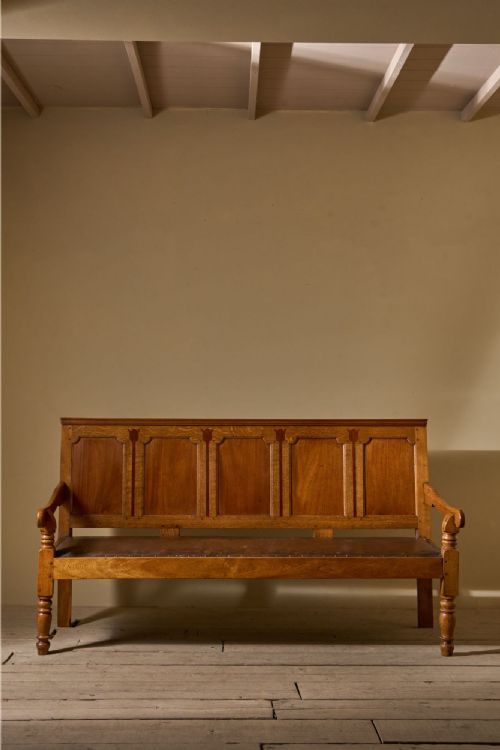
Cabinetmakers utilised solid timbers including oak, mahogany, elm, walnut, and pine, selecting heavy woods to withstand regular daily use in busy entrance spaces. Construction relied heavily on traditional joinery techniques such as mortise and tenon joints to ensure rigidity in upright chairs and settles.
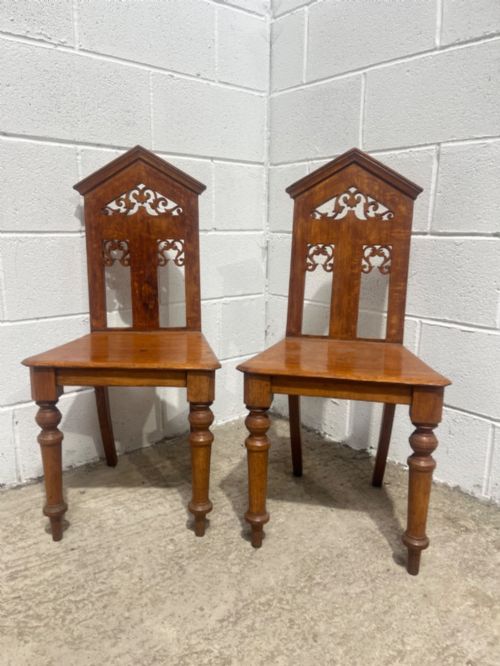
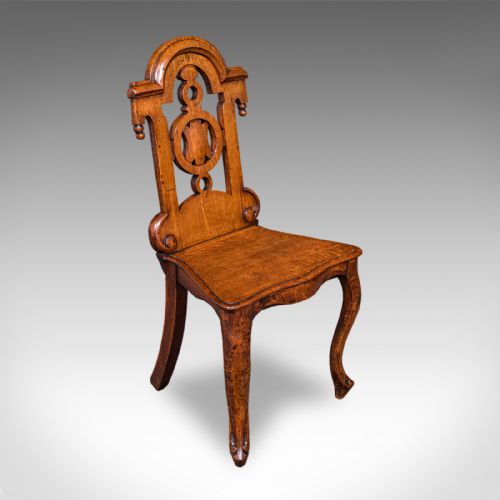
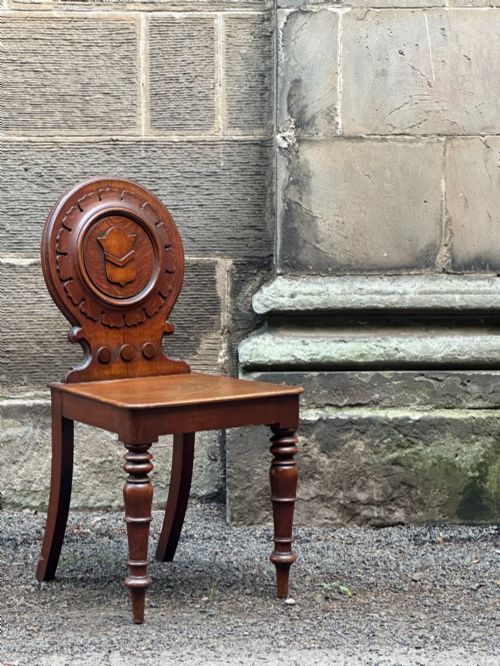
Carving served as the primary method of ornamentation, executed directly into the solid wood on chair backs and panels. Surface finishes involved applied wax, paint, or polish to protect the timber while highlighting its natural grain and colour.
What varies in quality
Quality in these pieces depends upon the selection of timber and the crispness of the hand-carved detail on the backrests and panels. Heavier gauge solid woods and sophisticated joinery distinguish formal parlour or reception examples from utilitarian country pieces.
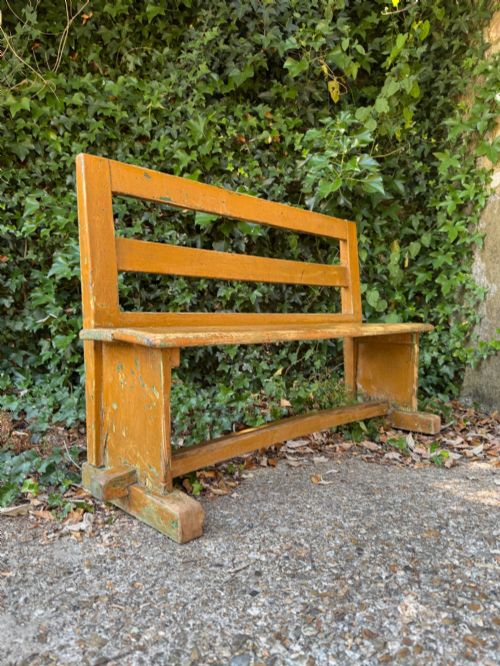
Proportion and the integrity of the original structure dictate the standing of a piece, particularly in larger items like settles and benches with integrated storage compartments.
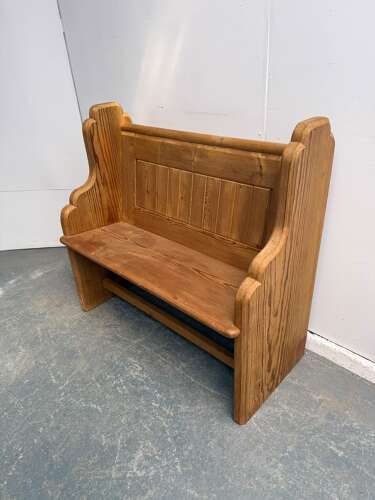
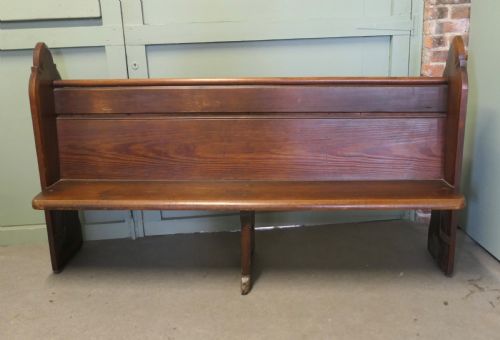
Several pews preserve the sturdy build required to withstand centuries of shifting sitters in rustic country pubs and rural churches.
The Wooden Hallway Chairs Glossary
- Settle
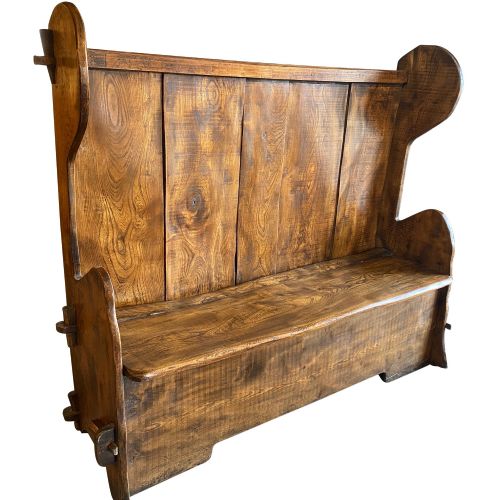
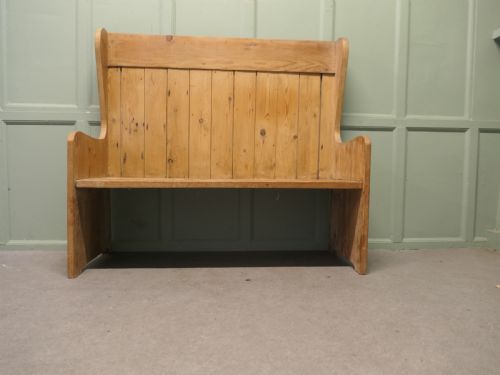
- A wooden bench with a high back, solid arms, and often a hinged seat opening to a storage box underneath.
- Hall chair
- An upright wooden side chair placed in an entranceway, frequently featuring a solid carved seat and an elaborately shaped back.
- Pitch pine
- A resinous softwood derived from North American pine species, utilised for its durability and prominent grain pattern in nineteenth-century benches.
- Gothic Revival
- An architectural and decorative style popular during the nineteenth century that reintroduced pointed arches, tracery, and medieval motifs into furniture design.
Wooden Hallway Chairs: Frequently Asked Questions
What is a settle bench?
A settle is a traditional wooden bench featuring a high back to block draughts and solid wooden arms. Many examples include a box compartment beneath the hinged seat for storing household items.
Historically placed in hallways, kitchens, and public houses, they provided communal seating before the widespread use of upholstered armchairs.
How do I date a wooden hall chair?
Dating relies on identifying the prevailing style, timber choices, and construction methods characteristic of specific eras like the Georgian or Victorian periods. Regional vernacular pieces often retain simpler country characteristics that span multiple decades.
Examining the wear patterns, tool marks, and fixings helps establish whether a piece originates from the nineteenth century or later revival periods.
Are hall chairs comfortable for daily sitting?
Traditional hall chairs were primarily designed for short-term seating in entrance halls rather than long periods of relaxation. Most feature rigid solid wood seats and upright carved backs that encourage an upright posture.
Some buyers add loose cushions to soften the seat when utilising them in modern living spaces.
Where should I place a settle in my home?
Settles suit narrow corridors, boot rooms, and entrance hallways where their shallow depth provides practical seating without obstructing walkways. Their built-in storage makes them useful for hiding away shoes and everyday clutter.
They also function effectively against dining tables or as feature seating in large reception rooms.