




Solid Oak Extending Table
A solid oak extending table gives a dining room lasting substance, adapting easily from everyday meals to large gatherings.
Solid Oak Extending Table
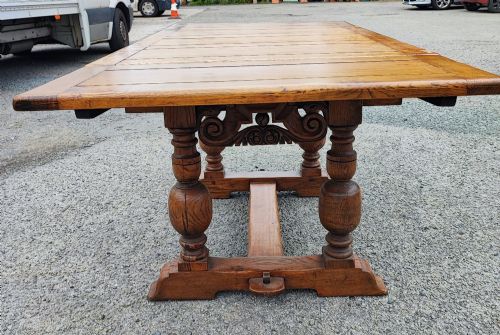
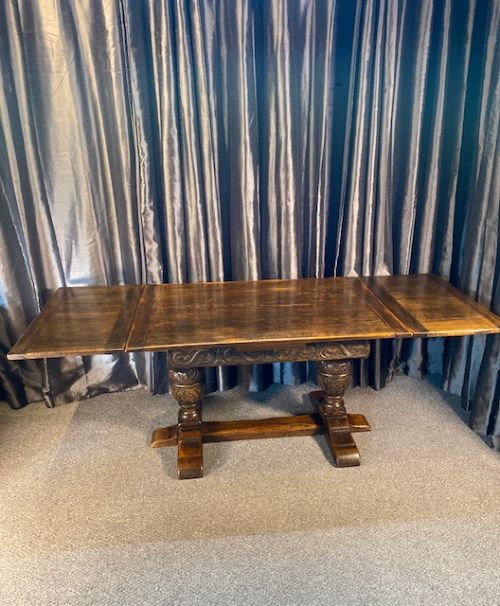
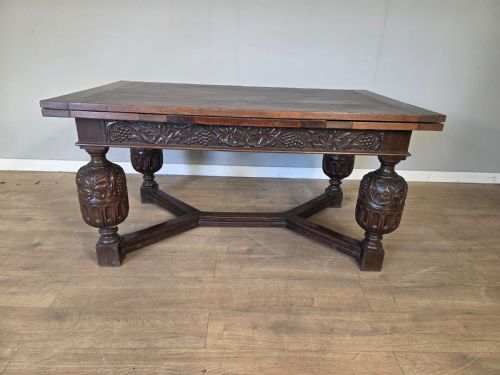
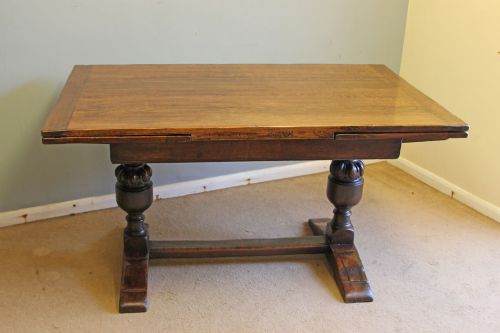
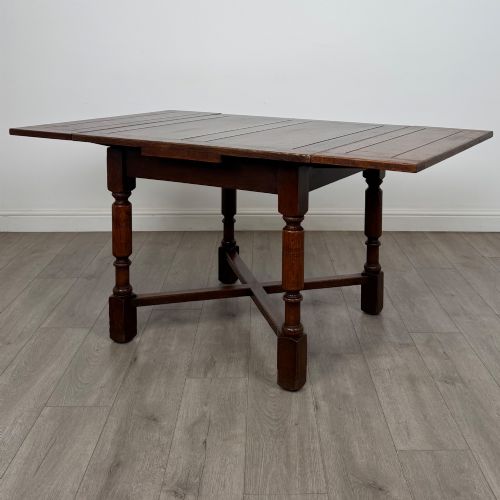
A solid oak extending table combines sturdy timber construction with practical mechanisms designed to increase surface space when needed. Buyers searching for a solid oak extending table encounter examples spanning the Victorian era through the Edwardian period and into the nineteen-twenties and nineteen-thirties.
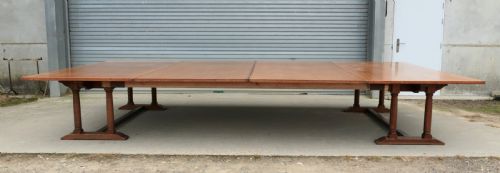
The selection ranges from substantial wind-out mechanisms and refectory draw-leaf formats to gate-leg designs and large boardroom tables. Victorian and Edwardian pieces dominate the offerings, often reflecting revivalist influences like Jacobean, Elizabethan, and Arts and Crafts styles.
Quality factors in extending tables
Quality rests upon the execution of the extension mechanism, whether a smooth screw winding action or a well-fitted draw-leaf slide. Superior examples maintain rigidity across the entire span when fully opened, without sagging or misalignment.
The selection of the oak timber itself determines the visual appeal, noting how quartersawn grain and rich colour depth elevate a piece above standard utility furniture. Good proportion in the legs and aprons, relative to the top's overall scale, marks out better workshops.
Some extended tables stretch long enough to host a medieval feast, requiring a brisk walk just to pass the salt.
Richardson Leeds
The Solid Oak Extending Table Glossary
- Draw-leaf
- A table with pull-out leaves stored beneath the main top that slide out to extend the surface. This mechanism allows quick expansion without removing separate boards.
- Wind-out
- A mechanical system utilising a turning handle and internal metal screws to pull table sections apart for the insertion of central leaves. Victorian examples often rely on this clever gear setup.
- Refectory
- A long, narrow table style traditionally used in communal dining halls, often featuring sturdy stretcher bases. Modern revivals adapt this imposing format for domestic and boardroom use.
- Gate-leg
- A table with hinged flaps supported by swing-out legs that resemble a swinging gate. This design provides flexible surface area in compact or multi-use rooms.
- Arts and Crafts
- A design movement valuing visible hand-craftsmanship, honest construction, and simple, sturdy forms over machine-made ornamentation. Pieces in this style emphasise the natural character of the solid oak.
Solid Oak Extending Table: Frequently Asked Questions
How do wind-out tables work?
A removable metal handle turns internal screws that draw the two halves of the table apart.
Once separated, additional timber leaves drop into the central gap to increase the seating capacity.
How many people can these seat?
Capacities vary widely depending on the length of the leaves, ranging from seating for six up to large boardroom tables accommodating over twenty guests.
Draw-leaf versions offer quick adjustments for everyday family dining versus larger gatherings.
How do I identify the period?
Victorian and Edwardian models often show distinct stylistic revival cues, such as heavy turned legs or carved aprons.
Hardware details like brass wind-out mechanisms and specific joint construction help narrow down the manufacturing era.
Are these suitable for daily use?
Solid oak provides exceptional durability and resilience for busy kitchens and dining rooms.
Regular care and simple maintenance keep the timber surface and extension mechanisms operating smoothly for generations.