
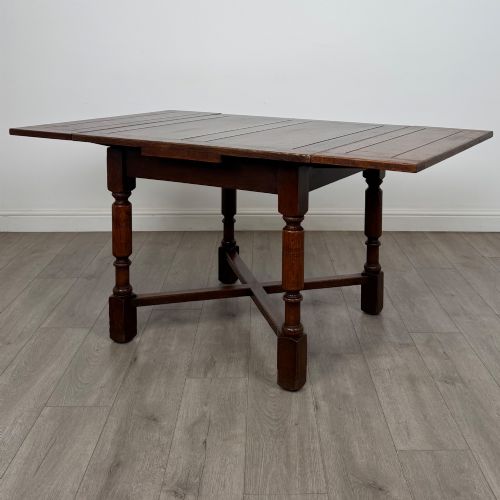
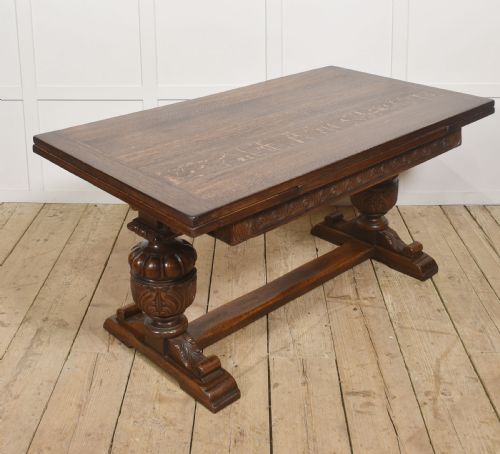


Traditional Oak Extension Table
A traditional oak extension table brings robust joinery and expanding utility to the dining room, built for everyday use and large gatherings alike.
Traditional Oak Extension Table
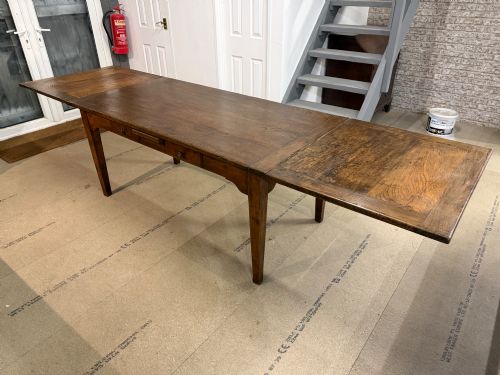
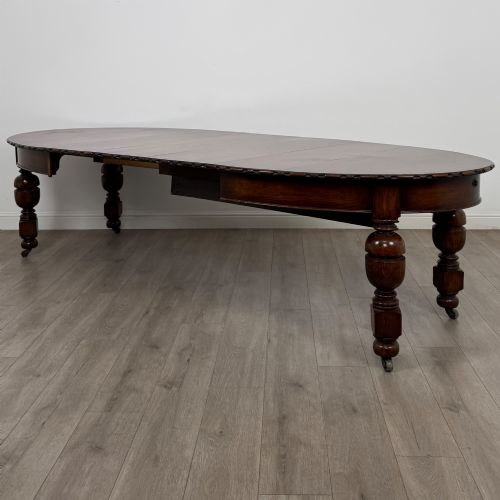
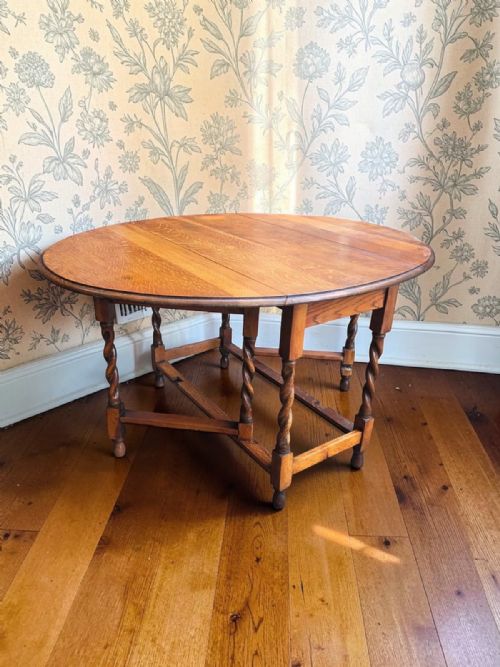
A traditional oak extension table is a dining piece designed to expand its surface area through mechanisms such as draw leaves, drop leaves, or gatelegs. These tables accommodate various seating numbers by pulling out or folding sections of the top.
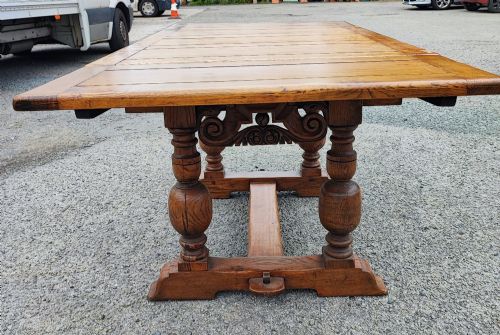
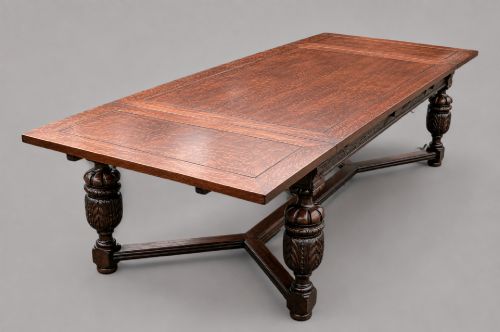
The pieces on this page span from the mid-eighteenth century through the Victorian and Edwardian eras into the twentieth century. Styles range from plain farmhouse and rustic designs to revivalist forms including Jacobean, Elizabethan, and William IV.
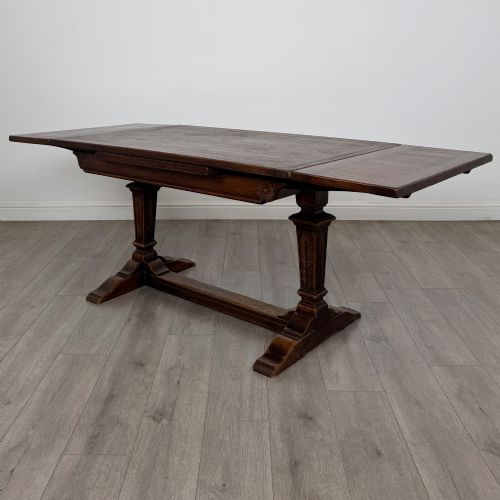
Solid oak and pollard oak dominate the construction, often complemented by brass and iron hardware. Buyers frequently encounter draw-leaf formats alongside refectory tables and gateleg variations.
Materials and construction methods
Makers utilised solid oak and pollard oak as the primary timber, valued for durability and distinct grain patterns. This heavy wood provides the structural integrity required for large extending surfaces and daily dining use.
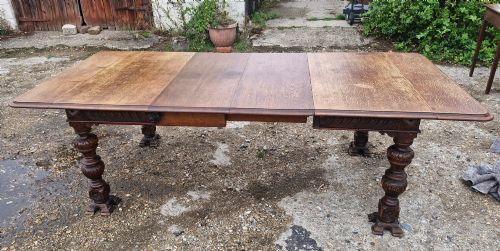
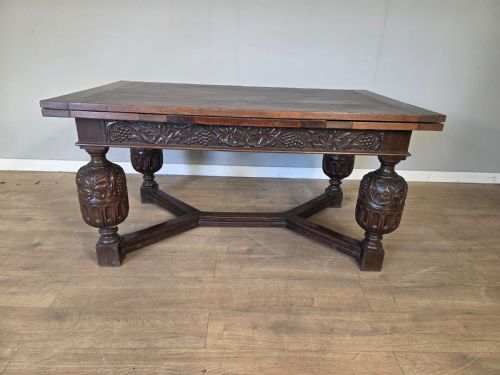
Metal components in iron and brass appear in the mechanisms and hinges that allow leaves to pull out or drop down. Traditional joinery methods secure the heavy timber frames and legs, which often feature carved details or barley twist turnings.
Listings feature pieces spanning from the mid-eighteenth century to the twentieth century, constructed primarily in solid oak and pollard oak with iron and brass hardware.
Distinctions in quality and execution
Quality rests in the precision of the extension mechanism and the stability of the timber when fully opened. Smooth operation of draw leaves or gateleg supports indicates superior initial joinery and careful maintenance over time.
The choice of timber grain, particularly figured pollard oak or selected solid oak boards, distinguishes standard utility pieces from finer examples. Carving depth and the crispness of turned legs also separate simpler farmhouse builds from ornate revivalist pieces.
The Traditional Oak Extension Table Glossary
- Draw leaf
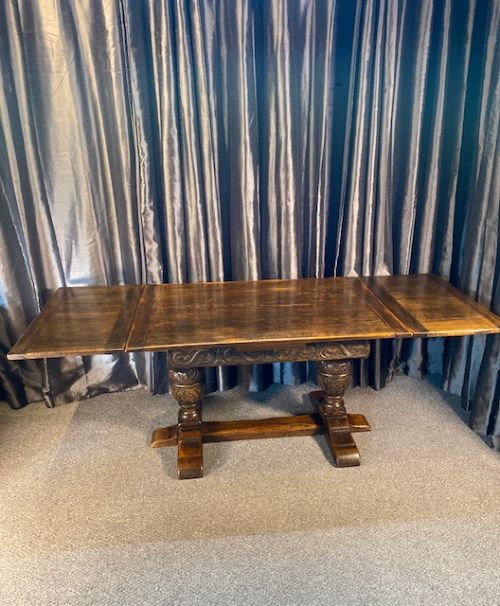
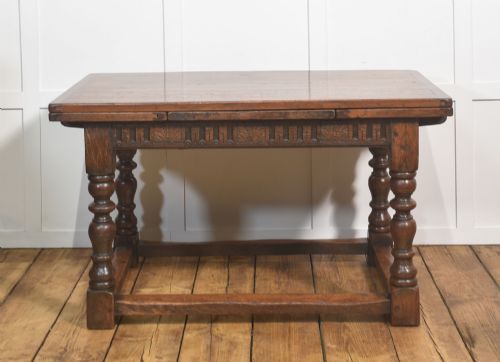
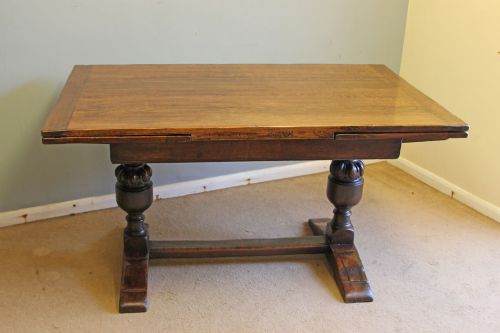
- A table top with hidden leaves stored beneath the main surface that pull out to extend the length. This mechanism allows the surface area to increase without removing the central top.
- Gateleg table
- A table with hinged leaves supported by legs that swing out like a gate. This design permits the sides to drop down when not in use to save space.
- Refectory table
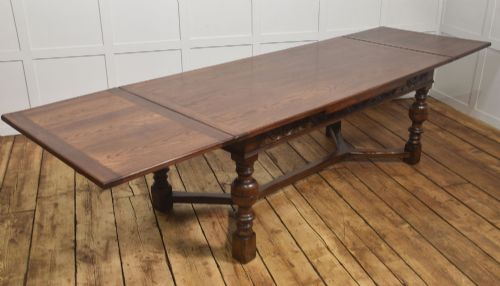
- A long, narrow dining table traditionally used in monasteries and large halls. These sturdy forms often feature trestle bases or heavy four-leg underframes.
- Pollard oak
- Oak timber taken from pollarded trees, exhibiting a dense, clustered grain pattern. Cabinet makers prize this decorative wood for tabletops and cabinet fronts.
- Barley twist
- A turned column resembling a rope twisted in a spiral. This decorative woodwork appears frequently on table legs from the seventeenth century onwards.
Traditional Oak Extension Table: Frequently Asked Questions
How do draw leaf tables work?
Draw leaf tables utilise two hidden leaves positioned underneath the main tabletop. To extend the surface, you pull the main leaves apart slightly and slide the lower leaves out from the ends.
Once pulled fully, the main top settles back down to lock the extension flush with the rest of the surface. This mechanical simplicity allows for rapid adjustment without storing loose boards elsewhere.
What is pollard oak?
Pollard oak is timber harvested from trees that were cut back close to the trunk to encourage dense branch growth. This process produces wood with highly figured, mottled grain patterns.
Cabinet makers used this decorative timber for prominent surfaces such as dining tabletops to showcase the rich texture. It offers the durability of standard oak combined with a distinct visual appearance.
What distinguishes Elizabethan style tables?
Elizabethan style tables typically feature heavy proportions, substantial turned legs, and elaborate carved ornamentation. The designs draw inspiration from sixteenth-century English architecture and furnishings.
Revival pieces from later periods replicated these robust structural elements and decorative motifs. They provide a commanding presence in a dining room compared to simpler farmhouse styles.
Are gateleg tables stable when extended?
Gateleg tables achieve stability through swinging leg frames that lock into position beneath the drop leaves. When the hinged legs swing out to a right angle, they bear the downward weight of the extended surface.
Properly maintained hinges and tight joints ensure the leaves remain level during use. These tables fold down compactly when extra space is needed in the room.