



Solid Oak Entry Chairs
Solid oak entry chairs are sturdy reception seats built from durable timber to handle heavy hallway use, bringing historic presence straight to your threshold.
Solid Oak Entry Chairs
Solid oak entry chairs serve primarily as formal or practical reception seats in hallways and vestibules, appearing across Georgian, Regency, and Victorian periods. When you search for solid oak entry chairs, you encounter robust timber forms designed to anchor a hallway with architectural authority.
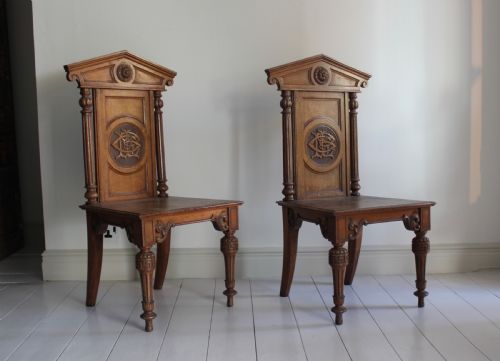
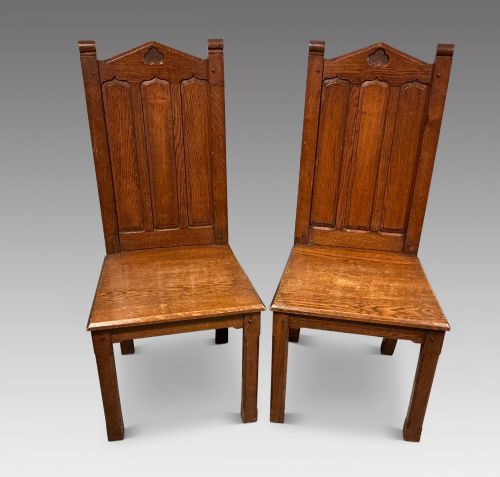
The pieces listed on this page span several distinct revival movements and eras, including Gothic Revival, Renaissance Revival, and the mid nineteenth century. Makers shaped these oak frames into tall, upright silhouettes intended for temporary seating rather than long lounging.
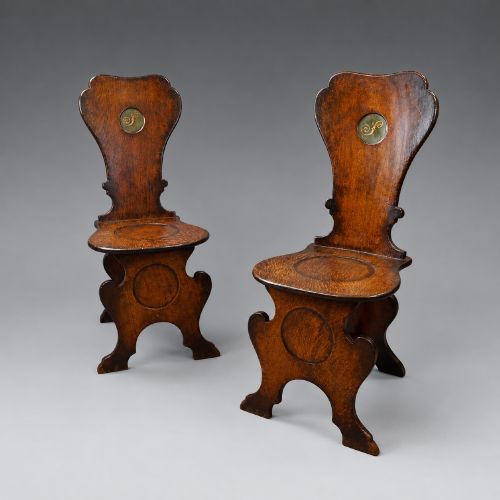
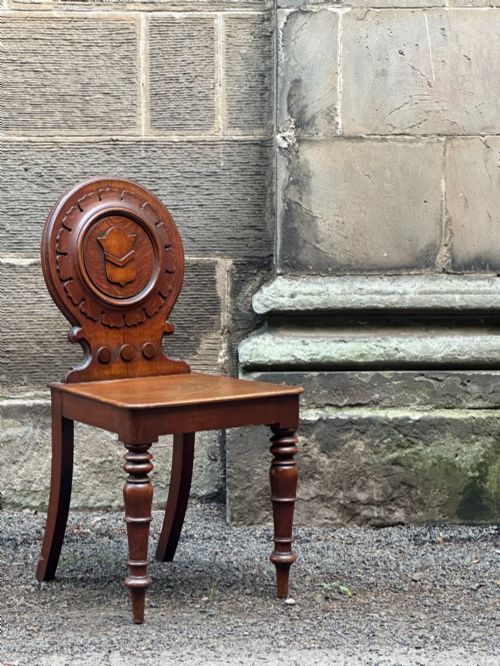
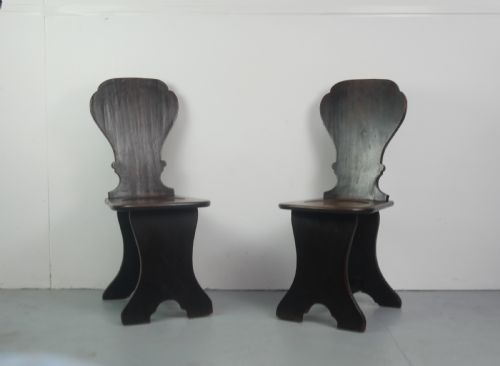
Many examples emerge in pairs or larger sets, featuring carved backs, shield motifs, or Sgabello profiles that echo earlier historical furniture. Their structural design reflects a period when entrance spaces demanded formal architectural statements rather than simple utility.
Materials and construction
Makers relied entirely on solid oak timber, sometimes finished with carved detailing or paint accents to accentuate the grain and structural lines. The wood was selected for its dense weight and hard-wearing capability, essential for furniture placed near busy entrances.
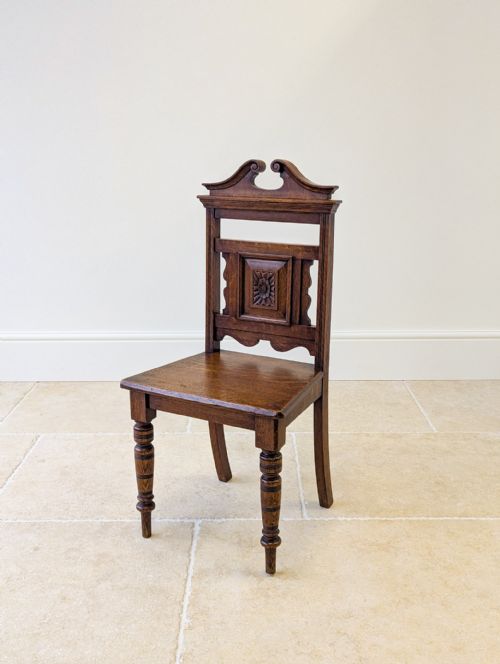
Joinery techniques from the eighteenth and nineteenth centuries involved mortise and tenon frames, allowing the heavy oak components to withstand daily upright pressure. Carved panels and shield backs were shaped directly into the solid timber stock rather than applied as thin veneers.
The listings on this page span multiple periods, ranging from mid eighteenth century pieces to late Victorian interpretations in solid oak.
Distinguishing quality in the selection
The distinction between standard examples and superior pieces rests upon the depth and crispness of the carved detail, particularly across the backrests and legs. Sharply defined Gothic tracery or deeply chiselled shields indicate a higher standard of cabinet work.
Proportion and timber selection also divide the range, with select pieces displaying rich golden oak grain and balanced cabriole or turned supports. The integrity of the solid timber construction and the harmony of the period revival style determine the standing of each chair.
Gillows of Lancaster
The Solid Oak Entry Chairs Glossary
- Sgabello
- A Renaissance style of chair featuring a distinct octagonal or trestle-like base with a high carved back. These early forms were often positioned in grand halls as decorative seating.
- Gothic Revival
- An architectural and design movement drawing heavily from medieval pointed arches, trefoils, and heavy tracery. Pieces from this style display strong ecclesiastical motifs.
- Shield back
- A chair back shaped explicitly in the form of a heraldic shield, frequently carved from solid wood during the Victorian era. This design element offers a broad canvas for decorative woodwork.
- Cabriole leg
- A furniture leg that curves outward and then tapers inward, finishing in a pad or scroll foot. This curved form appears on select Victorian oak seating.
- Regency
- A style period spanning the early nineteenth century defined by classical restraint and archaeological revival forms. Furniture from this era often incorporates clean architectural lines.
Solid Oak Entry Chairs: Frequently Asked Questions
Where were entry chairs placed?
These chairs stood primarily in entrance halls, corridors, and reception rooms to provide immediate seating for guests waiting to be announced.
Their upright proportions ensured they occupied minimal floor space while making a strong decorative impression upon entering the home.
How do I date a Victorian oak chair?
Dating relies on observing stylistic markers such as Gothic Revival tracery, shield back designs, and the specific tone of the golden oak timber.
Cabinet-making techniques and documented maker attribution further help narrow the decade of production across the nineteenth century.
Are these chairs comfortable for daily sitting?
Solid oak entry chairs were engineered for architectural presence and brief structural utility rather than long, relaxed lounging.
Their stiff, upright wooden backs and solid seats encourage correct posture during short intervals in a hallway or vestibule.
What is a Sgabello chair?
A Sgabello is an early Renaissance style chair supported by solid board legs or a trestle base rather than conventional four-legged framing.
This historic form was revived during the nineteenth century to provide striking, sculptural seating in formal entrance spaces.