

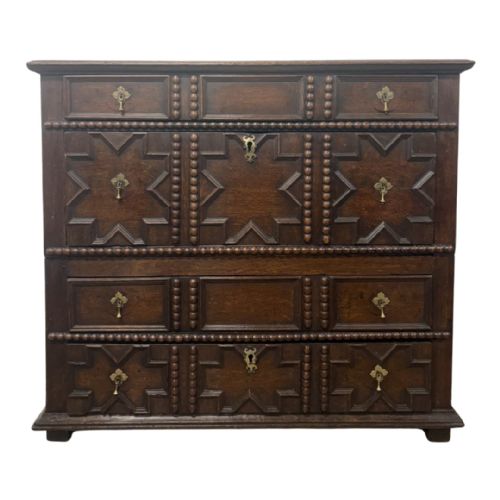
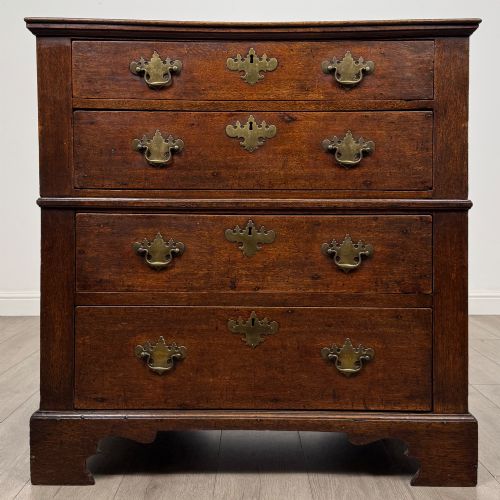
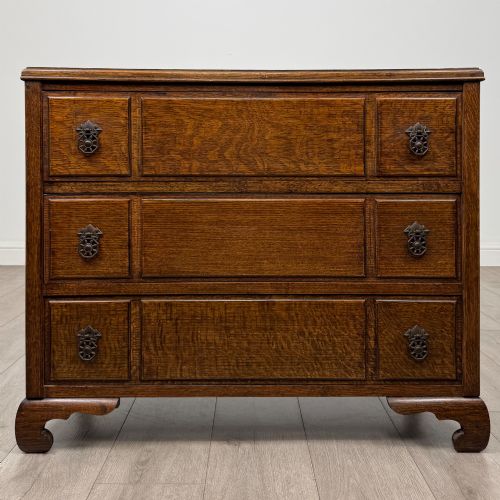
Solid Oak Dresser
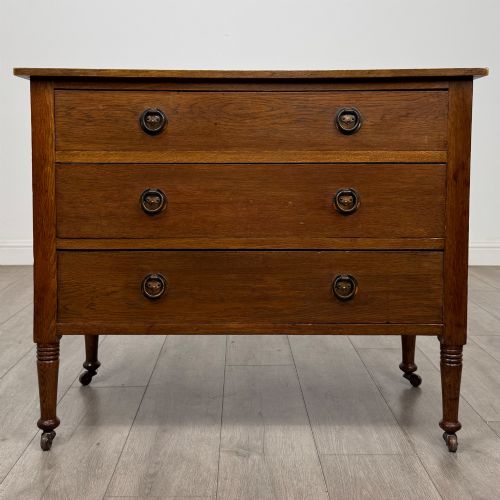
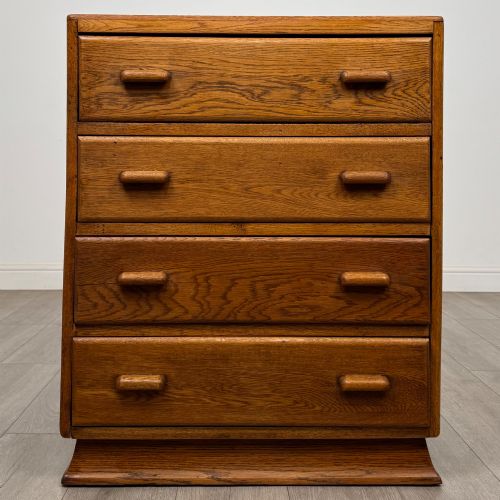
These solid oak dresser pieces combine sturdy timber storage with practical display surfaces, offering enduring utility for traditional dining rooms.
Solid Oak Dresser Forms and Periods
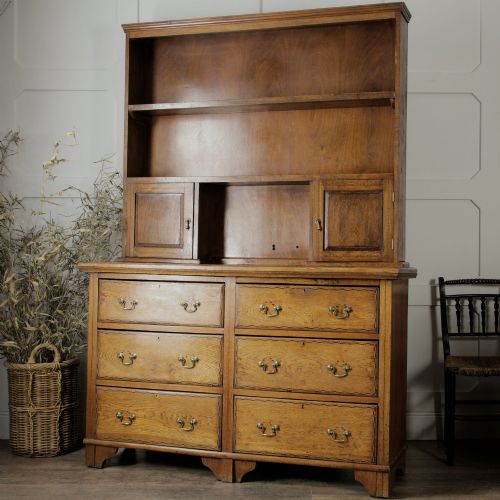
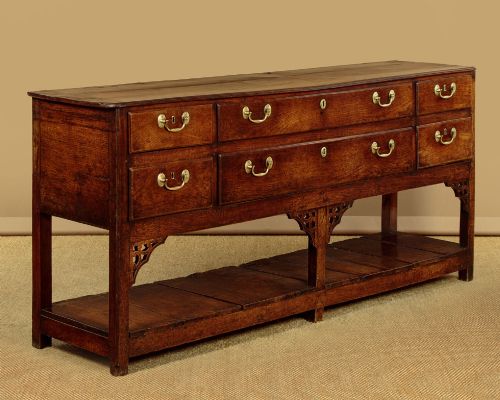
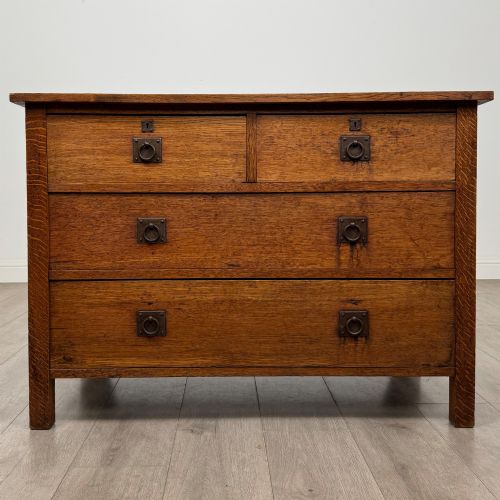
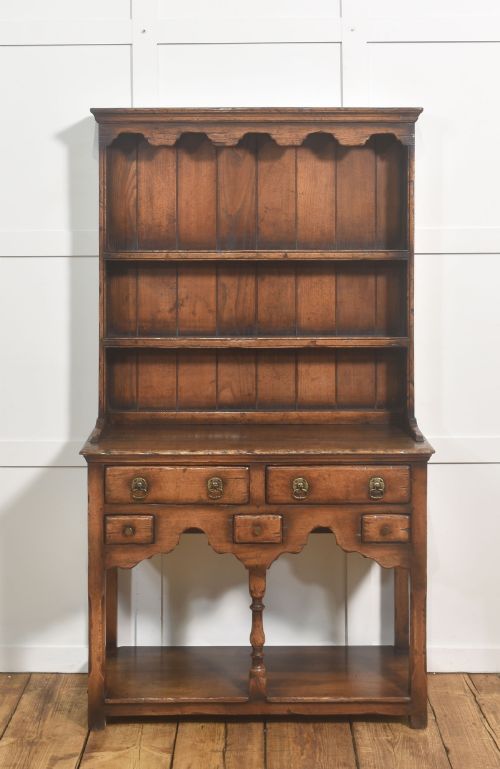
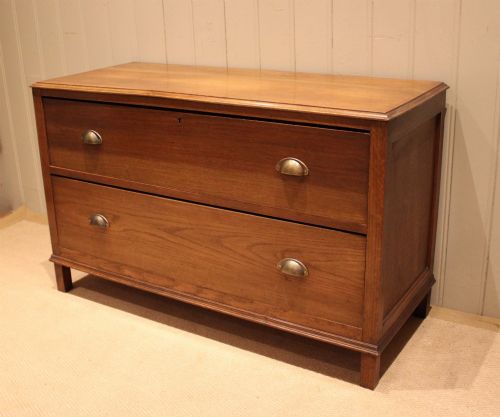
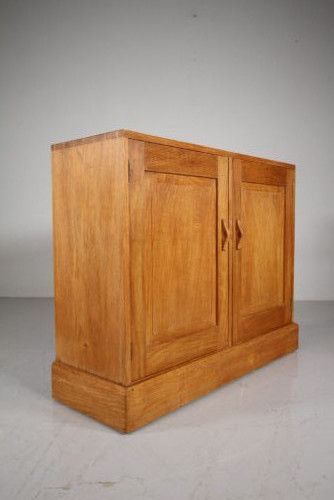
A solid oak dresser search reveals utilitarian storage furniture spanning several distinct eras, with eighteenth-century pieces sitting alongside Georgian, Victorian, and Arts and Crafts examples. Buyers most frequently encounter two-part dressers featuring plate racks, open pot board bases, and simpler drawer configurations.
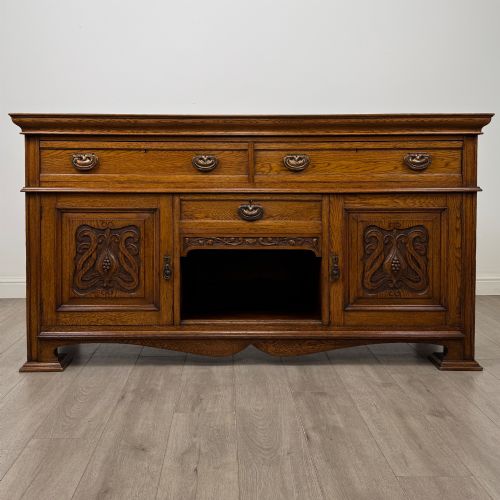
The archive shows forms ranging from small cottage-sized cupboards to large Welsh and French regional variations, including sideboard bases and servers executed in the Jacobean manner. English country pieces appear alongside revival styles from the early twentieth century.
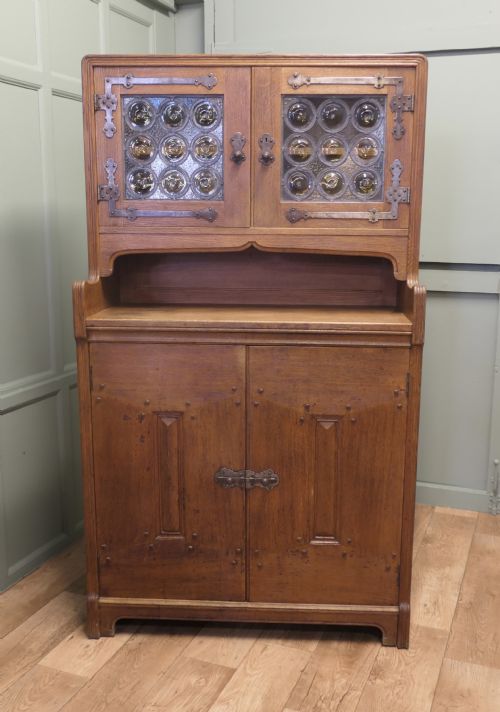
Makers and workshops of the Arts and Crafts period produced substantial oak furniture alongside traditional kitchen dressers designed for domestic service. Surviving examples demonstrate how forms adapted from open plate racks to enclosed bookcase dressers over time.
Materials and Construction
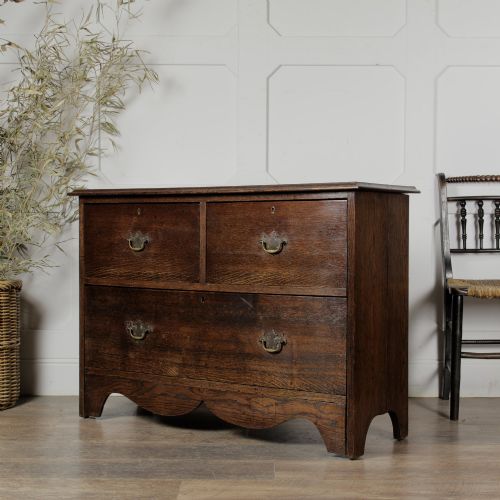
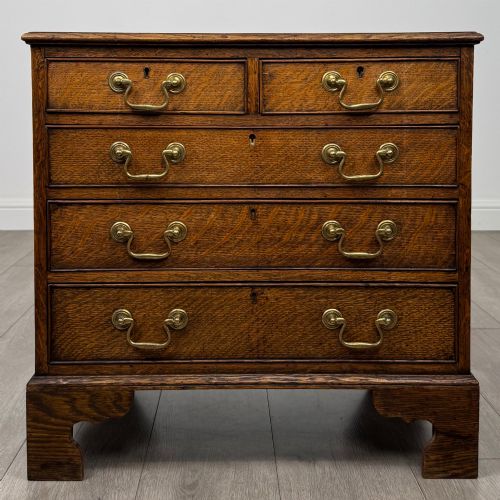
Construction relies upon solid oak timber, frequently accented with brass hardware such as drop handles and key escutcheons. Joinery methods include traditional techniques suited to heavy domestic timber.
Surviving surfaces display varying degrees of hand carving, panel construction, and turnings such as barley twist supports. Open plate racks attach securely to dresser bases to support heavy ceramic tableware.
Retail Price Guide 2026
Typical UK retail prices for solid oak dresser, calculated from the Sellingantiques database of over a million retail prices indexed since 2003. This retail price guide relies exclusively on Sellingantiques data; no external sources or auction records are used, so the figures do not describe the wider market.
The listings span multiple centuries of oak furniture production, featuring both eighteenth-century vernacular pieces and early twentieth-century Arts and Crafts revivals.
Quality and Proportion
Quality rests in the selection of timber grain, the crispness of any carved detailing, and the integrity of regional proportions. Pieces constructed with substantial oak boards and well-balanced open pot boards represent the finer tier of domestic output.
The degree of original hardware preservation and the harmony between upper plate racks and lower dresser bases distinguish standard utility furniture from finer vernacular examples.
Heals of London
The Solid Oak Dresser Glossary
- Pot Board
- An open lower shelf fitted beneath a dresser base, traditionally used for storing pots and heavy kitchen utensils.
- Welsh Dresser
- A traditional form featuring an upper plate rack integrated with a lower base containing drawers and cupboards.
- Dresser Base
- The lower section of a dresser comprising drawers and cupboards, often functioning independently as a sideboard or server.
- Barley Twist
- A turned column resembling a spiralling rope, frequently found on the legs and supports of late nineteenth and early twentieth-century oak furniture.
- Plate Rack
- The upper wooden shelving unit designed to display ceramic plates and platters upright against a wall.
Frequently Asked Questions
How do I date an oak dresser?
Dating relies upon examining construction methods, timber thickness, and stylistic details such as hardware and leg turnings. Eighteenth-century examples display hand-cut joinery and vernacular proportions distinct from later revival pieces.
Twentieth-century interpretations often incorporate revival motifs from the Arts and Crafts movement. Comparing drawer linings and backboards helps establish the manufacturing era.
Are Welsh dressers different from standard dressers?
Welsh dressers typically incorporate an upper plate rack specifically designed for displaying pottery alongside a substantial lower base of drawers. They emerged from rural domestic traditions where kitchen storage and display combined into one unit.
Regional variations across England, France, and Wales introduced different proportions and cupboard configurations. The fundamental utility, however, remained centred on dining and kitchen storage.
How do I care for a solid oak surface?
Solid oak surfaces respond best to regular dusting with a dry cloth and occasional applications of natural beeswax to nourish the timber. Avoiding direct sunlight and excessive moisture prevents the wood from drying or warping over time.
Maintaining stable room humidity protects traditional joinery from seasonal expansion and contraction. Gentle care preserves the natural patina accumulated over generations of use.